Outlet tester lights are simple indicators that help you quickly identify wiring issues and safety concerns in your outlets. Typically, one light shows the outlet is wired correctly, while multiple lights or particular patterns reveal problems like open grounds, reversed polarity, or miswired connections. Recognizing these signals helps you verify your home wiring is safe and functioning properly. If you’re curious about what each pattern means and how to interpret them, keep exploring to learn more.
Key Takeaways
- Single light usually indicates correct wiring; multiple lights or specific patterns reveal issues like open ground or reversed polarity.
- Different light combinations signal specific problems, such as grounding faults or swapped hot and neutral wires.
- Understanding the light patterns helps identify wiring safety issues before using the outlet, reducing shock and fire risks.
- Regularly interpreting tester lights ensures ongoing electrical safety and helps detect hidden wiring or grounding faults.
- Proper knowledge of what the lights mean enables quick diagnosis and necessary corrective actions for home electrical safety.
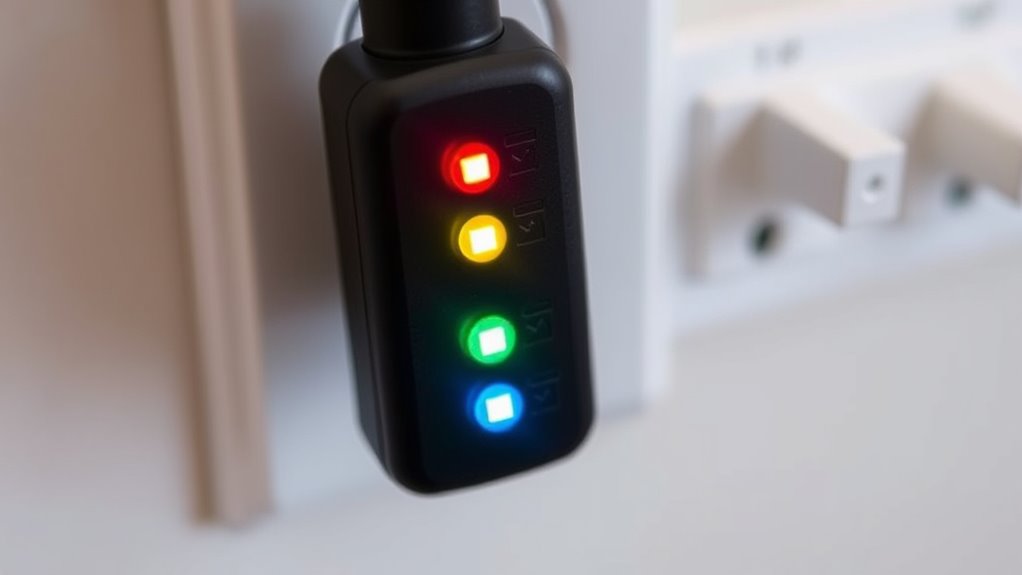
Have you ever wondered if your electrical outlets are safe and functioning properly? It’s a common concern, especially when you notice things like flickering lights or outlets that feel warm to the touch. Using an outlet tester can give you peace of mind, but understanding what those tiny lights actually mean is essential. These testers are simple devices designed to quickly identify wiring safety issues and grounding problems, but interpreting their signals correctly makes all the difference.
Understanding outlet tester lights helps identify wiring safety issues and keep your home safe.
When you plug an outlet tester into a socket, those small indicator lights will illuminate in various combinations. Each pattern points to a specific wiring condition, helping you determine if your outlet is wired correctly or if there’s a potential hazard. For example, a common scenario is seeing one light on, which often indicates a proper connection, but multiple lights or a specific sequence can reveal wiring safety issues. If the tester shows a pattern suggesting open ground, it points to a grounding issue — meaning your outlet isn’t properly grounded, which could increase the risk of electrical shock. Grounding issues are particularly dangerous because they compromise your safety, especially in the event of a fault or short circuit. Recognizing these signals promptly allows you to take corrective action before an accident occurs.
Understanding what these lights mean also helps you identify issues related to wiring safety. For instance, if the tester indicates reversed polarity, it means the hot and neutral wires are swapped, which can cause appliances to behave unpredictably or become unsafe. A miswired outlet can be a hidden hazard lurking behind your walls, but a quick test can reveal it. It’s essential to address wiring safety concerns immediately, either by fixing the wiring yourself if you’re qualified or by calling a professional electrician. Proper grounding and correct wiring ensure your devices work safely and efficiently, reducing the risk of electrical fires or shocks.
In essence, those little indicator lights are your first line of defense in spotting electrical problems. They’re simple tools that, when used correctly, can alert you to grounding issues, wiring safety violations, or faulty connections. Regularly testing your outlets helps maintain a safe home environment and prevents potential electrical disasters. Remember, even if your outlet looks fine on the surface, an outlet tester can reveal hidden issues that could pose serious safety risks. So, next time you plug in a device, consider using an outlet tester and pay attention to the lights — they’re telling you more than you might realize about your home’s electrical health.

PuraFlame 24" Free Standing Electric Fireplace Log Set Insert, 750W/1500W Heater, 6 Flame Colors with 5 Brightness, Crackling Sound, Remote Control
Easy Fit: Logset designed for most existing fireplace openings, just place it into and plug to use.
As an affiliate, we earn on qualifying purchases.
Frequently Asked Questions
Can Outlet Testers Detect All Wiring Issues?
Outlet testers can’t detect all wiring issues, especially complex problems like ground wiring faults or circuit compatibility issues. They primarily check for basic wiring connections and proper grounding, but may miss issues such as reversed polarity or hidden wiring faults. For thorough safety, you should use advanced testing tools or consult a professional electrician to ensure your outlets are properly wired and safe to use.
Are LED Outlet Testers More Accurate Than Traditional Ones?
Bright LEDs boost your belief in better testing, but are they more accurate? You’ll find LED outlet testers often provide clearer signals, helping you detect circuit complexity and guarantee testing safety. While traditional testers rely on simple light patterns, LED testers illuminate with precision, reducing errors. So, yes, LED testers can be more accurate, giving you peace of mind when steering wiring woes and ensuring safe, sound electrical setups.
How Often Should I Test My Outlets?
You should test your outlets at least once every three to six months to guarantee electrical safety and proper outlet maintenance. Regular testing helps catch issues early, preventing potential hazards like shocks or fires. Use a reliable outlet tester to check for correct wiring and grounding. Consistent testing keeps your home safe, ensures your outlets function properly, and gives you peace of mind knowing your electrical system is in good condition.
Do Outlet Testers Work With GFCI Outlets?
Yes, outlet testers work with GFCI outlets for GFCI testing and outlet safety. You simply plug the tester into the GFCI outlet, press the test button, and observe the lights to confirm it trips properly, ensuring safety. This quick check helps you maintain outlet safety, verify GFCI functionality, and catch potential issues early. Regular testing using an outlet tester is a smart way to keep your electrical system secure.
What Should I Do if Lights on the Tester Don’T Light Up?
If the tester’s lights don’t light up, first check for grounding issues or incorrect wiring color codes. Confirm the outlet is powered and the tester is connected properly. If it still doesn’t light, turn off the power and inspect the wiring or consider that the outlet might be faulty. Sometimes, poor connections or wiring errors prevent the tester from showing signals, so double-check everything before proceeding further.

EUHOMY 60 Inch Electric Fireplace Wall Recessed and Wall Mounted with Adjustable Flame Color, Fireplace Heater with Remote Control, Linear Fireplace with Timer, Touch Screen, Log & Crystal, 750/1500W
Package Inclusions & 2-Year Technical Support: : The EUHOMY electric fireplace is equipped with 1* carbon log, 1*...
As an affiliate, we earn on qualifying purchases.
Conclusion
Now that you understand what those tiny lights reveal, you’re better equipped to spot potential issues. But remember, these testers aren’t foolproof — they only tell part of the story. Sometimes, a simple light pattern can hide bigger problems lurking behind the scenes. Stay alert, and don’t hesitate to call in a professional if something doesn’t add up. What’s really going on could be more than what those little lights show you…

Innoflame 23" Electric Fireplace Insert, Fireplace Heater with Remote, Adjustable 4 Flame Brightness, Log Set, Low Noise, 8H Timer, Overheating Protection, 1400W (23" W X 19 3/4" H)
Dimensions: Furniture front opening: 23" W x 19 3/4" H; Rear opening (min): 24" W x 20 3/16"...
As an affiliate, we earn on qualifying purchases.

Touchstone Sideline Elite Smart 60” WiFi-Enabled Electric Fireplace - in-Wall Recessed - 60 Color Combinations - 1,500W Heater - Black - Log, Crystals & Driftwood - 80037
DESIGNED FOR IN-WALL INSTALLATION: This electric fireplace is specially created for recessed mounting in walls. Its minimal black...
As an affiliate, we earn on qualifying purchases.