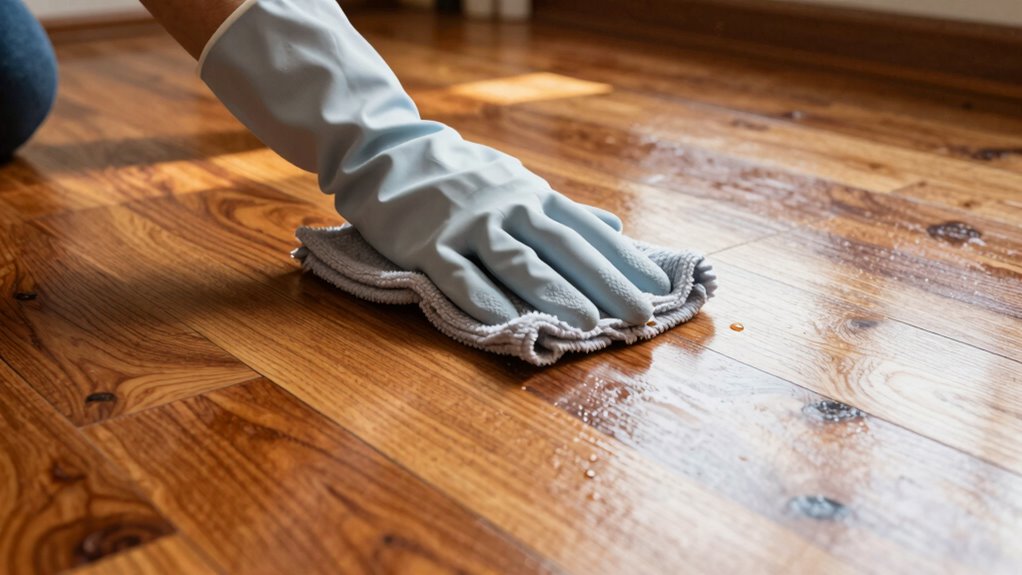
To keep your hardwood floors safe from water damage, you should act quickly by blotting spills immediately and avoiding excessive wetness or aggressive scrubbing. Never use high heat or a wet vacuum directly on the wood, and don’t let standing water sit. Use damp, not soaking, mops and guarantee good airflow to speed drying. Proper protective measures and maintenance can prevent costly damage—continue exploring for more tips to preserve your floors effectively.
Open a free Amazon Business account
Business pricing, bulk buying and tax-exempt orders.
As an affiliate, we earn on qualifying purchases.
Key Takeaways
- Always clean spills immediately with a dry cloth to prevent water absorption and damage.
- Never use excessive water or soaking wet mops when cleaning hardwood floors.
- Avoid using high heat, hairdryers, or aggressive drying tools on the floor.
- Use entry mats and place trays under potted plants to minimize water exposure.
- Keep indoor humidity between 35-55% to prevent wood expansion, contraction, and warping.

Mindful & Modern Velvet Meditation Cushion | Luxe Zafu Yoga Floor Pillow Seat | Posture Support | Buckwheat Hull Filled | Large Round Cushion with Removable Washable Cover + Carry Handle | Color Green
- Ergonomic Posture Support: Supports spine for healthy sitting
- Luxurious Meditation Comfort: Provides stable, comfortable seating
- Adjustable Buckwheat Filling: Customize height and firmness
As an affiliate, we earn on qualifying purchases.
Understanding Water Damage Risks to Hardwood Floors
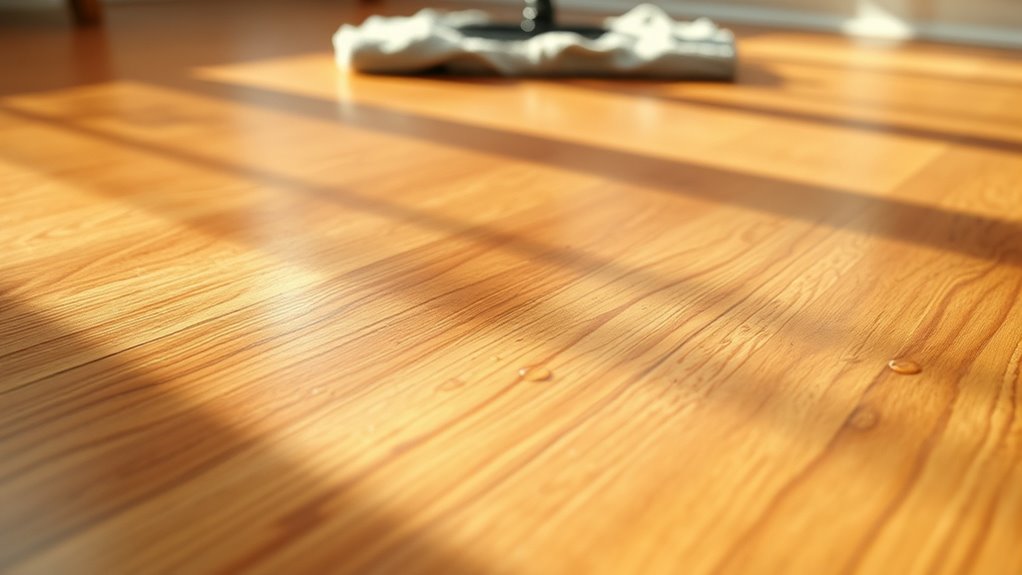
Water damage poses a significant threat to hardwood floors because excess moisture can cause the wood to swell, warp, or even rot over time. When water seeps into the grain, it weakens the wood’s structure, leading to buckling or cupping. Spills, leaks, or high humidity levels can all contribute to this damage, often going unnoticed until it’s severe. Porous wood absorbs water quickly, making it crucial to address spills immediately. Over time, repeated exposure accelerates deterioration, compromising the floor’s appearance and stability. Understanding these risks helps you recognize early signs of water intrusion and take prompt action. Preventing water damage starts with awareness, so you can maintain your hardwood floors and avoid costly repairs or replacements later on. Hydraulics and water flow principles also play a role in understanding how moisture can penetrate beneath the surface, emphasizing the importance of proper sealing and moisture barriers. Proper sealing techniques are essential for creating a moisture-resistant barrier that prevents water infiltration and protects your flooring investment. Being mindful of indoor humidity levels further reduces the risk of unseen water damage developing over time. Additionally, understanding moisture migration dynamics can help you implement more effective preventative measures to safeguard your flooring and minimize long-term damage.
Proper Techniques for Cleaning With Water
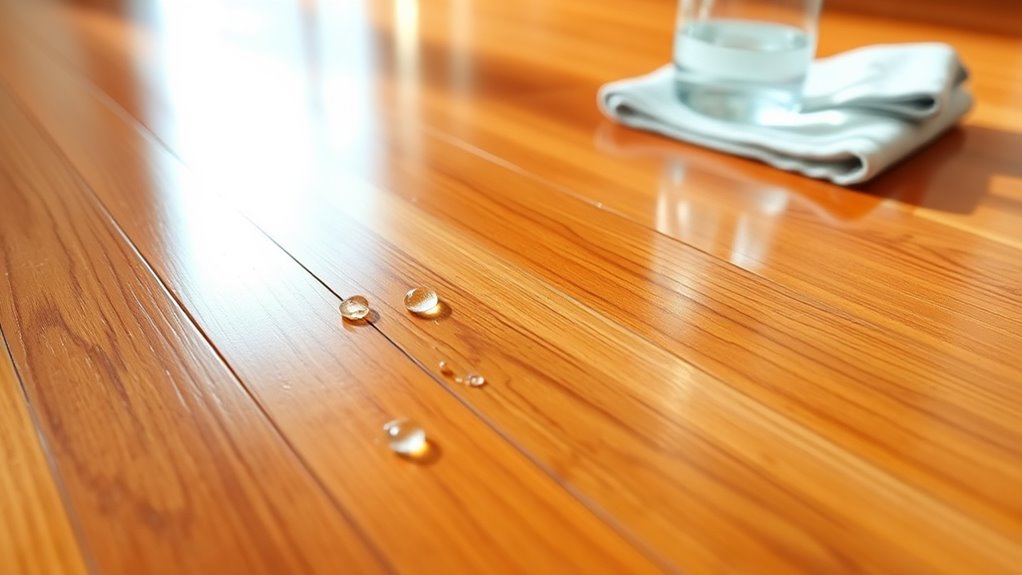
When cleaning your hardwood floors with water, use damp mops instead of soaking wet ones to prevent damage. Always wring out excess water before applying the mop to avoid leaving puddles on the surface. Remember, too much water can cause warping or staining, so be cautious with your cleaning technique.
Use Damp Mops Carefully
To clean your hardwood floors effectively, you need to use damp mops carefully. Make sure the mop is only slightly moist, not soaked. Excess water can seep into the wood and cause damage over time. Before mopping, wring out the mop thoroughly so it’s just damp enough to pick up dirt without leaving puddles behind. Use gentle, overlapping strokes to cover the surface evenly. Avoid applying too much pressure, which can push water into seams or cracks. Regularly rinse and wring the mop during cleaning to prevent spreading dirt or grime. Remember, the goal is to lift dirt without introducing excessive moisture. Properly dampening your mop ensures your floors stay clean and protected from water-related damage. Additionally, consider using appropriate cleaning products designed for hardwood to enhance your cleaning routine and prevent deterioration. Incorporating water management techniques can further help maintain your floors in optimal condition. Using a humidifier in dry environments can also help prevent the wood from absorbing excess moisture during cleaning. Understanding wood permeability can guide you in choosing the best cleaning methods to avoid damage. Being aware of water damage prevention strategies can help extend the life of your hardwood floors.
Avoid Excess Water
Using too much water when cleaning hardwood floors can lead to long-term damage. Excess moisture can cause the wood to swell, warp, or even develop mold. To prevent this, follow these tips:
- Always use a damp, not soaking, mop or cloth.
- Wring out your cleaning tools thoroughly before use.
- Clean in small sections to control water application.
- Immediately dry the floor with a clean towel after mopping.

Brocoliano Meditation Cushion – Ergonomic Zafu Pillow for Yoga and Mindfulness – Washable Cover, Natural Buckwheat Fill, Premium Fabric (Cotton Blend/Polyester Variant) (Steel Gray, Medium)
- Ergonomic Wedge Design: Relieves back pain during meditation
- Adjustable Buckwheat Fill: Customize height for comfort
- Two Washable Cover Options: Charcoal polyester or steel cotton-linen
As an affiliate, we earn on qualifying purchases.
Immediate Steps to Take When Water Spills or Accidents Occur
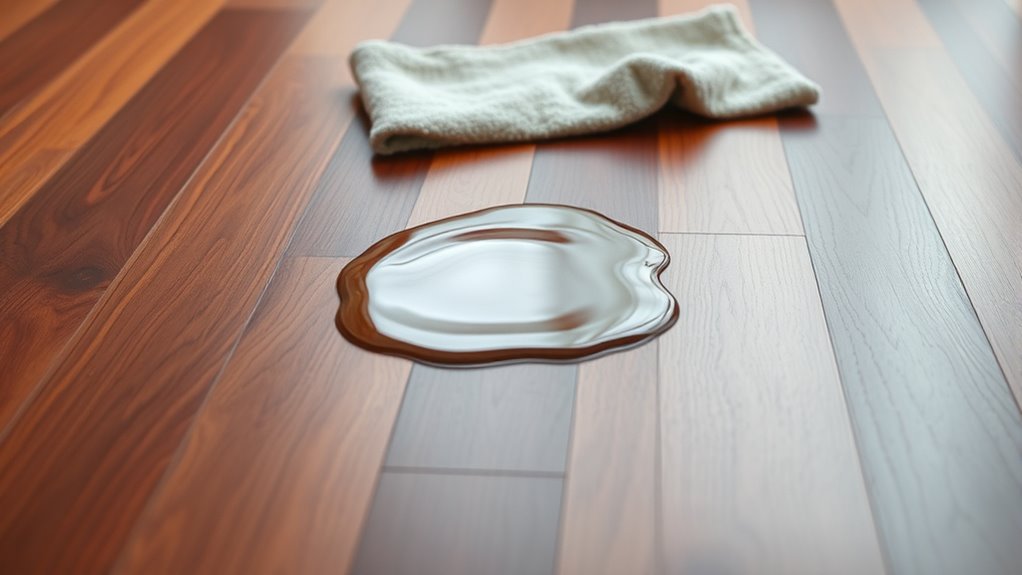
Accidents happen, and water spills on your hardwood floors require quick action to prevent damage. First, grab a clean, dry cloth or paper towels and blot the spill immediately. Avoid rubbing, which can push water deeper into the wood. Use a mop or a dry towel to soak up as much moisture as possible. If the spill is large, consider placing fans nearby to promote airflow and speed up drying. Elevate any furniture or objects resting on the floor to prevent further absorption. Never use a hairdryer or direct heat, as this can cause the wood to warp or crack. The key is acting fast and absorbing the water thoroughly to minimize the risk of warping, staining, or cupping. Additionally, understanding water absorption and how it affects hardwood can help you take more informed steps to protect your floors. Recognizing the importance of proper moisture levels can further assist in preventing long-term damage. Being aware of drying techniques can also help in maintaining your hardwood’s condition over time. Using proper maintenance routines can also help keep your hardwood floors in optimal condition over time.

Levoit Top Fill Humidifiers for Bedroom, 2.5L Tank for Large Room, 28dB
- Long-lasting humidification: Up to 25 hours on low setting
- Easy top-fill design: No spills, simple one-step filling
- Hassle-free cleaning: Large opening and detachable parts
As an affiliate, we earn on qualifying purchases.
Common Mistakes to Avoid When Handling Water on Hardwood
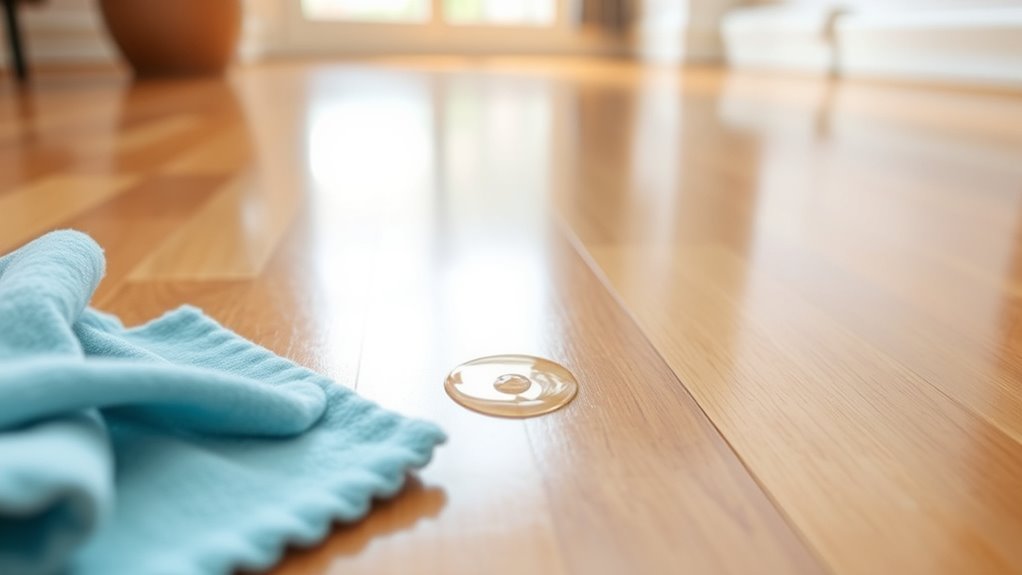
Avoid using too much water or heavy drying tools, as excess water can cause warping or swelling of your hardwood. Improper drying techniques, like air drying with a fan that’s too close or scrubbing vigorously, can also damage the finish. Being cautious with water and drying methods helps protect your floors from lasting damage. Additionally, utilizing smart cleaning devices that monitor moisture levels can help prevent over-wetting during cleaning. Using proper drying techniques ensures your hardwood remains undamaged and maintains its appearance over time. Furthermore, understanding water damage prevention strategies is essential for long-term hardwood floor care, such as addressing spills promptly and avoiding excess moisture buildup.
Excess Water Damage
When water spills or leaks onto hardwood floors, rushing to dry it quickly is essential, but mishandling the situation can cause more harm than good. Excess water can lead to warping, cupping, or mold growth if not managed properly. To avoid making things worse:
- Don’t use excessive water or a soaked mop, which can spread moisture.
- Avoid aggressive scrubbing that damages the finish.
- Don’t ignore lingering dampness, as it promotes warping.
- Never use high heat or a blow dryer directly on the floor, which can cause cracks.
- Be aware that water damage prevention features can include sensors that alert you to leaks or water intrusion, helping prevent extensive damage.
- Proper ventilation is crucial to facilitate drying and prevent mold growth. Additionally, utilizing smart water sensors can help detect leaks early before significant water exposure occurs, and understanding water intrusion detection systems can further safeguard your flooring. Properly managing moisture levels is vital to maintaining the integrity of hardwood floors over time.
Improper Drying Techniques
Handling water on hardwood floors requires careful drying techniques, as improper methods can cause lasting damage. Using high heat or a blow dryer set to maximum can cause the wood to crack or warp. Avoid aggressive rubbing with towels, which can scratch the surface or push water deeper into seams. Don’t leave standing water to evaporate naturally without proper ventilation—this can lead to mold or rot. Instead, gently blot excess water with a soft cloth and increase airflow using fans or open windows, but keep the heat low. Never use a wet/dry vacuum directly on the wood, as it might pull moisture into seams or joints. Proper, gentle drying helps prevent warping, cupping, or swelling, protecting your hardwood floors long-term. Proper drying techniques are essential for maintaining the integrity of your flooring over time, especially when considering water damage prevention.
Protective Measures to Prevent Water-Related Damage

Water-related damage is one of the biggest threats to hardwood floors, but you can take simple protective measures to minimize the risk. First, use mats and rugs at entry points to catch moisture and dirt. Second, wipe up spills immediately to prevent water from seeping into the wood. Third, avoid placing potted plants directly on the floor; use trays or stands to prevent leaks. Fourth, maintain a consistent indoor humidity level of around 35-55% to reduce wood expansion and contraction. These steps help create a barrier against water exposure and reduce the chances of warping or staining. Additionally, being aware of electric dirt bike horsepower can help you understand how powerful equipment might generate sudden water exposure risks during maintenance or transport. Staying proactive and vigilant ensures your hardwood floors stay beautiful and durable for years to come.
Long-Term Care and Maintenance to Safeguard Your Floors
To keep your hardwood floors looking their best over the years, regular maintenance is essential. Consistently dust or sweep to remove debris that can scratch the surface. Use protective pads on furniture legs to prevent dents. Avoid excessive moisture, which can cause warping, and clean spills immediately. Schedule professional refinishing when the finish begins to wear.
| Maintenance Task | Frequency |
|---|---|
| Dusting or sweeping | Daily or as needed |
| Deep cleaning with damp mop | Every few months |
| Furniture pad inspection | Monthly |
| Refinishing or resealing | Every 7-10 years |
Frequently Asked Questions
Can Certain Types of Water Damage Be Fully Repaired?
Yes, certain types of water damage can be fully repaired, especially if addressed quickly. You might need to sand and refinish your hardwood floors or replace damaged planks. However, severe damage like deep rot or warping might require more extensive repairs or replacement. Act promptly to prevent further harm. Regular maintenance and avoiding excessive water exposure can help keep your floors looking great for years.
How Often Should I Inspect My Hardwood Floors for Water Damage?
You should inspect your hardwood floors at least once a month for water damage. Regular checks help you catch issues early, such as warping, discoloration, or swelling. Pay special attention after spills, heavy cleaning, or high humidity periods. Use a flashlight to examine seams and edges closely. Early detection allows you to address problems promptly, preventing costly repairs and preserving your floors’ beauty and integrity over time.
Are There Specific Cleaning Products Safe for Water-Exposed Hardwood?
You’ll want to choose cleaning products explicitly labeled for hardwood floors and safe for water exposure. As you sweep or mop, use a damp cloth—not soaked—to avoid excess moisture. Avoid harsh chemicals or vinegar, which can damage the finish. Instead, opt for a pH-neutral cleaner designed for hardwood. This way, you protect your floors from water damage while keeping them clean and shiny.
What Signs Indicate Water Damage Before Visible Warping Appears?
You should watch for subtle signs like lingering dampness, a musty smell, or discoloration in your hardwood floors. If you notice the surface feels slightly soft or if the finish looks dull or stained, these are early indicators of water damage. Keep an eye out for swelling or buckling, but remember, damage can start before warping becomes visible. Acting quickly can prevent further harm.
Is Professional Restoration Necessary After Significant Water Exposure?
Yes, you should consider professional restoration after significant water exposure. If water has soaked your hardwood floors deeply or caused ongoing issues like swelling, buckling, or mold, professionals can assess the damage properly. They use specialized equipment to dry and restore your floors effectively, preventing further deterioration. Ignoring severe water damage can lead to long-term problems, so getting expert help guarantees your floors are properly repaired and protected.
Conclusion
By staying vigilant and following proper water care tips, you might just find that your hardwood floors stay beautiful and durable for years. It’s funny how a quick wipe or avoiding excess water can make all the difference, almost like a small coincidence protecting your investment. With mindful cleaning and prompt action, you’ll enjoy the warmth and elegance of your floors, turning everyday accidents into tiny moments of luck that keep your space looking flawless.
Back to school Picks
back to school
As an affiliate, we earn on qualifying purchases.