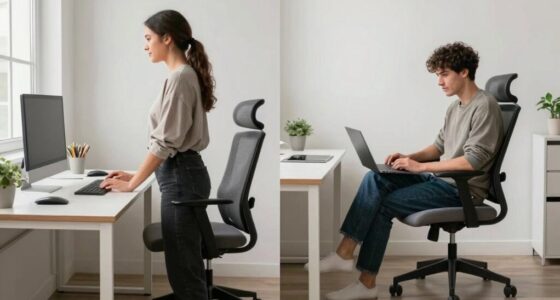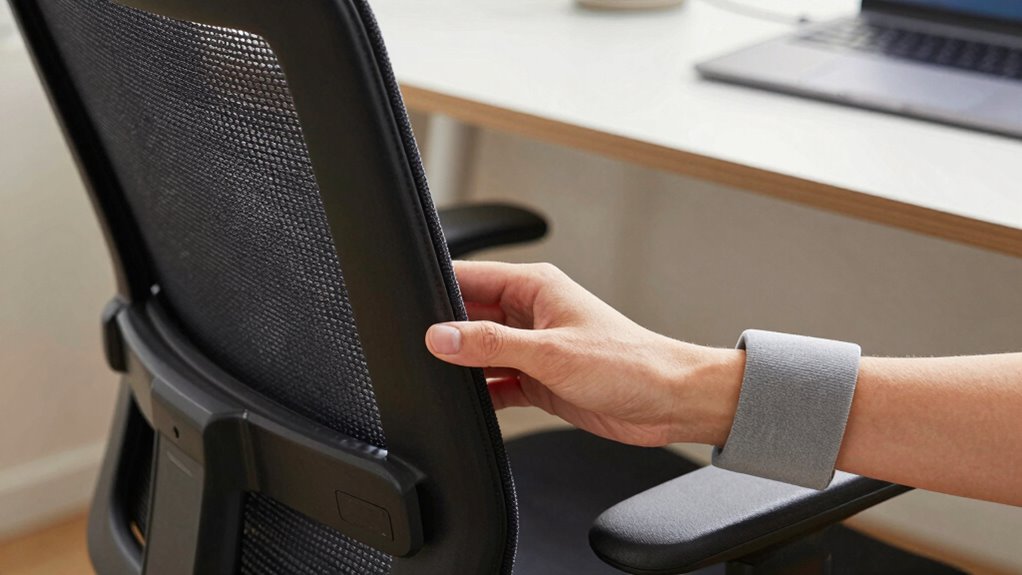
Micro movements are small, intentional motions that help counteract the negative effects of prolonged sitting at your desk. By shifting your posture, stretching, or moving your legs and arms frequently, you can boost circulation, reduce stiffness, and improve overall comfort. These subtle actions also support better posture and spinal health, preventing discomfort and fatigue. Continuing with this information will show you simple ways to incorporate micro movements into your daily routine for better desk health.

Turn your quiet moments into listening time
- Thousands of audiobooks, podcasts and originals
- Listen on your phone, tablet or Echo — also offline
- Cancel anytime
Key Takeaways
- Micro movements improve circulation, reduce stiffness, and prevent discomfort during prolonged sitting.
- Incorporating regular micro movements supports better posture, spinal health, and musculoskeletal well-being.
- Using timers, visual cues, and ergonomic tools encourages consistent micro movements at the desk.
- Simple exercises like stretching, leg lifts, and wrist rotations can be easily integrated into work routines.
- Tracking movement habits helps sustain healthy desk practices and enhances overall productivity and well-being.
ergonomic desk chair with lumbar support
As an affiliate, we earn on qualifying purchases.
As an affiliate, we earn on qualifying purchases.
Understanding Micro Movements and Their Benefits
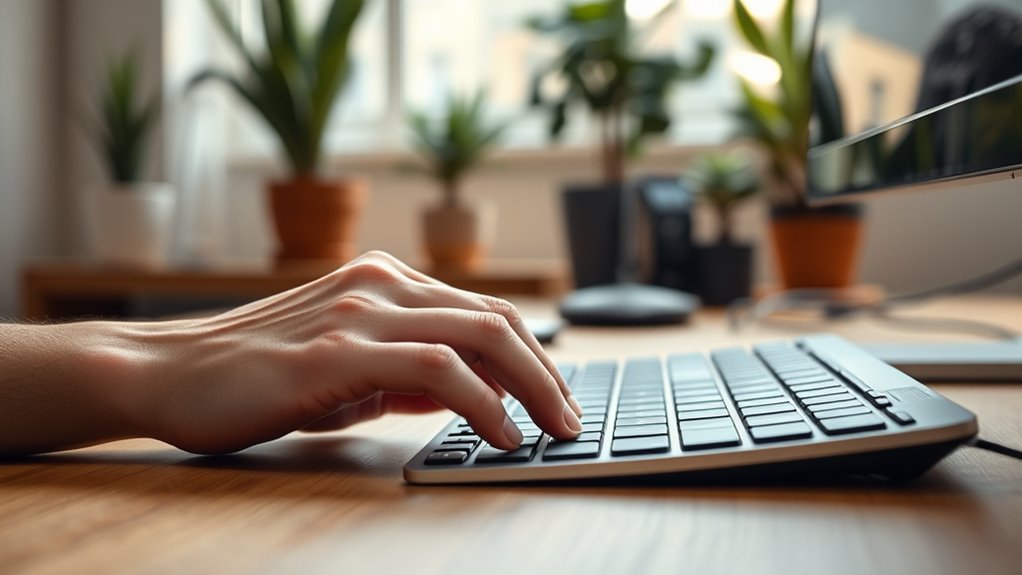
Although they are small, micro movements play a significant role in maintaining your overall health throughout the day. These tiny shifts—like stretching your legs, shifting your weight, or stretching your arms—keep your muscles active and blood flowing. Engaging in micro movements prevents stiffness, reduces fatigue, and promotes better circulation, which is vital when you sit for long periods. Incorporating movement techniques and proper ergonomics can enhance the benefits of micro movements and help prevent strain. They also help maintain joint flexibility and prevent muscle imbalances that can develop from prolonged static postures. Incorporating micro movements into your daily routine doesn’t require extra time; simply standing up, stretching briefly, or adjusting your position counts. These small actions, when performed regularly, can significantly contribute to preventing stiffness and supporting long-term mobility. Over time, these small actions contribute to improved posture, increased energy, and decreased discomfort, supporting your overall well-being even during a busy workday. Trustworthy information can help guide you in making effective adjustments for better health. Additionally, understanding muscle activation can help you target specific areas that benefit most from micro movements.
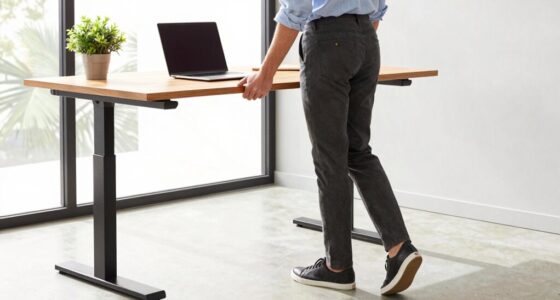
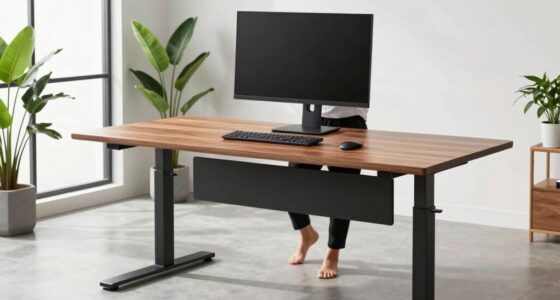
adjustable sit-stand desk converter
As an affiliate, we earn on qualifying purchases.
As an affiliate, we earn on qualifying purchases.
Common Challenges of Sitting for Long Periods
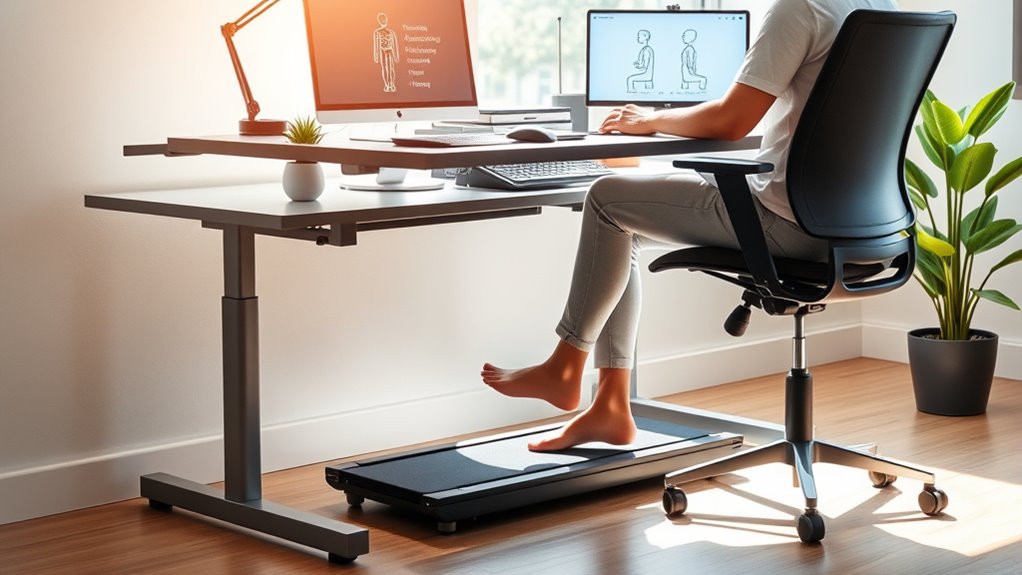
Sitting for long periods can cause poor posture and discomfort, making it hard to stay focused. It also reduces circulation, which can lead to fatigue and health issues. Over time, your energy and concentration may suffer, affecting your productivity. Incorporating ergonomic adjustments and simple organization strategies can help you set up your workspace for better ergonomics and comfort. Additionally, choosing the right supportive furniture can significantly improve your overall posture and reduce strain during extended sitting sessions. To further enhance comfort, considering adjustable workstations can allow you to switch between sitting and standing positions, promoting better movement. Using movement breaks and incorporating gentle stretches can further promote circulation and reduce stiffness during prolonged sitting.
Posture and Discomfort
When you spend long hours at your desk, poor posture can quickly lead to discomfort and even pain. Slouching or leaning forward strains your neck, shoulders, and lower back. Over time, this misalignment causes muscle fatigue and tightness, making you feel sore or stiff. Sitting with your shoulders hunched or your head jutting forward puts unnecessary pressure on your spine and muscles. Without proper ergonomic support, these habits can become ingrained, worsening discomfort. You might notice persistent aches, headaches, or numbness in your limbs. To avoid this, focus on maintaining a neutral spine, keeping your feet flat on the floor, and aligning your monitor at eye level. Small adjustments like these can markedly reduce discomfort and help you work more comfortably. Additionally, incorporating micro-movements into your routine can help reduce muscle stiffness and improve circulation during long periods of sitting, especially when combined with ergonomic workplace design. Regularly practicing stretching exercises can further enhance flexibility and reduce tension in key muscle groups. Introducing essential oils for muscle relaxation into your workspace through diffusers or topical application can further alleviate tension and promote comfort during extended sitting. Incorporating regular movement breaks throughout your workday can further prevent stiffness and promote better overall comfort.
Reduced Circulation Risks
Staying in the same position for long periods can markedly reduce blood flow, leading to circulation issues. When you remain seated without moving, your muscles aren’t active enough to help pump blood efficiently through your body. This can cause your legs and feet to feel numb or swollen and increase the risk of blood clots. Poor circulation also means less oxygen and nutrients reach your tissues, impairing recovery and overall health. To combat this, it’s essential to incorporate small movements into your routine—like stretching your legs, shifting your weight, or standing periodically. These actions stimulate blood flow, help prevent stiffness, and reduce the risk of circulation-related health problems. Remember, even brief, regular movements can make a significant difference in maintaining healthy circulation throughout your workday. Incorporating micro movement techniques can be highly effective in promoting better blood flow during long sitting periods.
Energy and Focus Dip
Long periods of sitting can cause your energy levels and focus to plummet, making it harder to stay productive throughout the day. When you remain seated too long, your brain receives less oxygen and nutrients, leading to fatigue and decreased concentration. This dip in energy often results in sluggishness and mental fog, reducing your overall efficiency. To combat this, incorporate simple strategies into your routine, such as standing up regularly or doing quick stretches. These small movements can boost circulation and alertness. Additionally, consider the following:
- Taking brief walking breaks every 30 minutes
- Adjusting your workspace to encourage movement
- Hydrating frequently to maintain alertness
- Incorporating deep breathing exercises
- Using a standing desk or desk converter
- Proper ergonomics can also help reduce strain and improve comfort during long sitting sessions.
- Incorporating micro movements throughout your workday can significantly help maintain your energy and focus. These habits help sustain your focus and prevent fatigue during long work hours. Implementing movement breaks can further enhance your overall well-being and productivity. Regularly changing positions also supports circulation and reduces discomfort.
desk stretching and movement timer
As an affiliate, we earn on qualifying purchases.
As an affiliate, we earn on qualifying purchases.
Simple Micro Movements to Incorporate at Your Desk
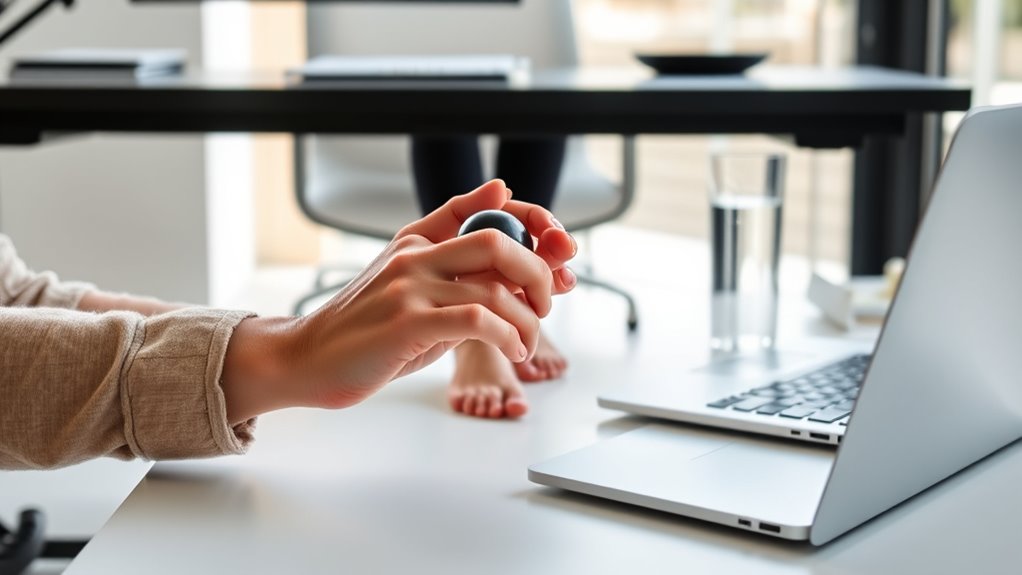
Incorporating simple micro movements into your workday can make a noticeable difference in your overall desk health. Start by stretching your arms overhead or rolling your shoulders gently to release tension. Shift your weight from one foot to the other or do ankle circles to keep your lower body engaged. Flex and extend your wrists periodically to prevent stiffness. Sit up straight and practice small chest or back stretches to improve posture. Incorporate neck tilts or chin tucks to reduce strain. Take brief pauses to perform seated leg lifts or calf raises. These small actions don’t take much time but can boost circulation and reduce stiffness. Making micro movements a routine helps you stay alert, comfortable, and less prone to discomfort throughout your workday. Additionally, ergonomic awareness can help you identify and correct poor habits before they cause discomfort or injury. Maintaining workspace air quality is also essential, as improved airflow and clean environment can further enhance your comfort and focus, so consider incorporating an air purifier to create a healthier environment. Regularly practicing movement breaks can further reinforce healthy habits and prevent repetitive strain.
As an affiliate, we earn on qualifying purchases.
How Micro Movements Improve Circulation and Reduce Fatigue

Micro movements at your desk do more than just improve posture; they actively boost circulation and help prevent fatigue. When you make small, frequent adjustments, blood flow increases, delivering oxygen and nutrients more efficiently to your muscles and brain. This ongoing movement reduces the buildup of lactic acid and minimizes stiffness, keeping you alert and energized. Incorporating micro movements also prevents blood from pooling in your lower limbs, which can cause swelling and discomfort. To maximize these benefits, consider:
- Shaking out your hands and arms regularly
- Flexing your ankles and rotating your feet
- Sitting upright and engaging core muscles
- Stretching your neck gently side to side
- Changing your sitting position often
These simple actions can considerably enhance your overall comfort and productivity.
The Role of Posture in Desk Health and Micro Movements
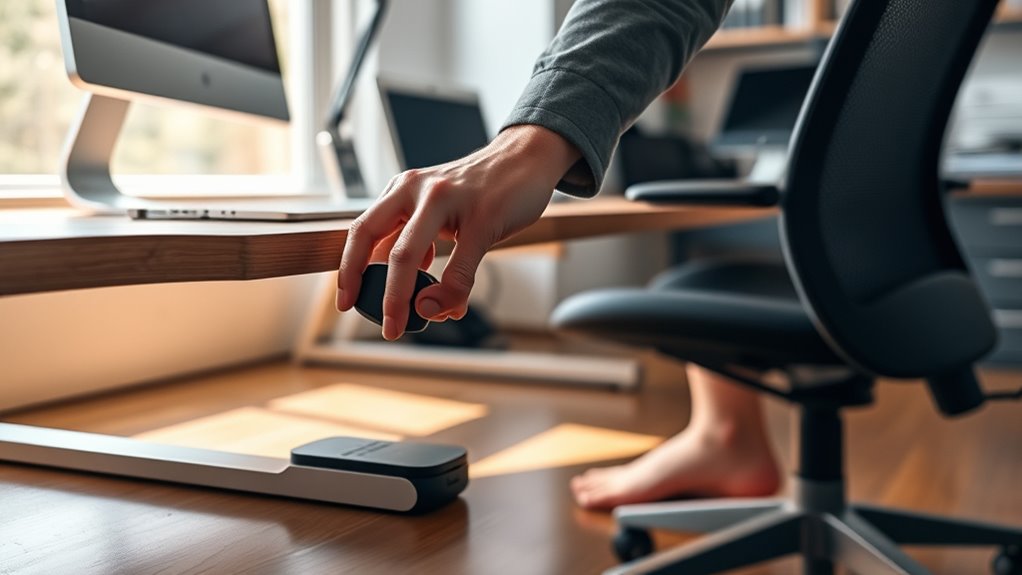
Maintaining good posture at your desk is essential for supporting micro movements and preventing discomfort. When you sit upright with your shoulders relaxed and your feet flat on the ground, you reduce strain on your neck, back, and shoulders. Proper alignment encourages you to shift slightly and engage different muscles naturally, promoting micro movements without conscious effort. Avoid slouching or leaning forward, as these positions can restrict circulation and make you less likely to move regularly. Adjust your chair and monitor height so that your wrists are straight and your eyes are level. Good posture creates a stable foundation, making it easier to incorporate small adjustments throughout the day. This not only supports your musculoskeletal health but also keeps your energy levels steady.
Strategies for Reminding Yourself to Move Regularly
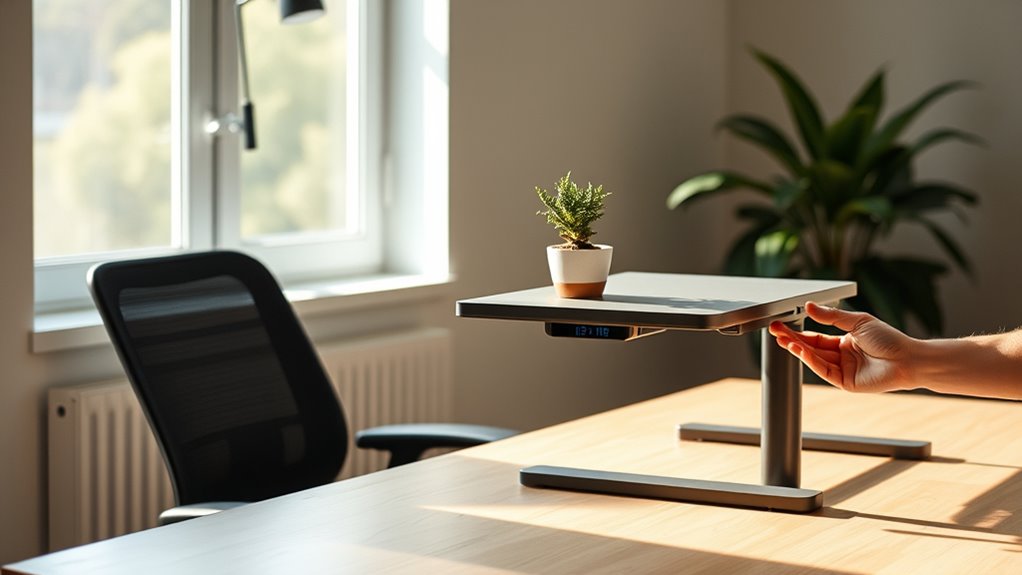
To stay active during long work hours, you need effective reminders. Setting timers often can alert you to take quick movement breaks, while visual cues like sticky notes or desk reminders keep movement top of mind. These simple strategies help you maintain regular micro movements and support desk health.
Set Timers Frequently
Since sitting for long periods can lead to discomfort and health issues, setting timers is an effective way to remind yourself to move regularly. By establishing a routine, you prevent prolonged inactivity and promote circulation. Use timers on your phone or computer to alert you at consistent intervals, such as every 30 or 60 minutes. Customize these alerts to suit your work schedule, ensuring they’re noticeable but not disruptive. This simple habit fosters discipline and keeps movement a priority throughout your day. To enhance effectiveness, consider:
- Scheduling timers during natural breaks or progressions
- Using multiple alarms for varied intervals
- Labeling timers with motivational prompts
- Syncing timers across devices for consistency
- Adjusting frequency based on your activity level
These strategies keep you conscious of movement and support better desk health.
Use Visual Reminders
Visual reminders are a powerful way to prompt yourself to move regularly throughout the workday. They serve as constant cues, helping you break up long periods of sitting. You can use sticky notes on your monitor, colorful desk accessories, or digital alerts. Place these reminders where you’ll see them often to reinforce your movement habits. For example, a note on your screen might say, “Time to stretch!” or “Stand up now!” Choosing the right visual cues keeps movement top of mind. Here’s a quick look at some effective options:
| Reminder Type | Example |
|---|---|
| Sticky Notes | On monitor or desk |
| Digital Alerts | Computer notifications |
| Visual Cues | Standing desk signs |
| Colorful Accessories | Bright desk items |
Incorporating Stretching and Strengthening Exercises

Incorporating stretching and strengthening exercises into your daily routine can considerably improve desk health and reduce discomfort. Regularly engaging in targeted movements helps counteract the effects of prolonged sitting, enhancing flexibility and muscle strength. To maximize benefits, consider integrating these exercises into your day:
- Neck stretches to relieve tension
- Shoulder rolls to loosen tight muscles
- Wrist stretches to prevent strain
- Back extensions to strengthen spinal support
- Hip openers to improve mobility
These simple routines can be done in short intervals, making them easy to fit into your schedule. Consistency is key to preventing stiffness and pain, while also boosting circulation. By making these exercises a habit, you’ll support your posture and overall comfort at your desk.
Tools and Accessories to Support Micro Movements
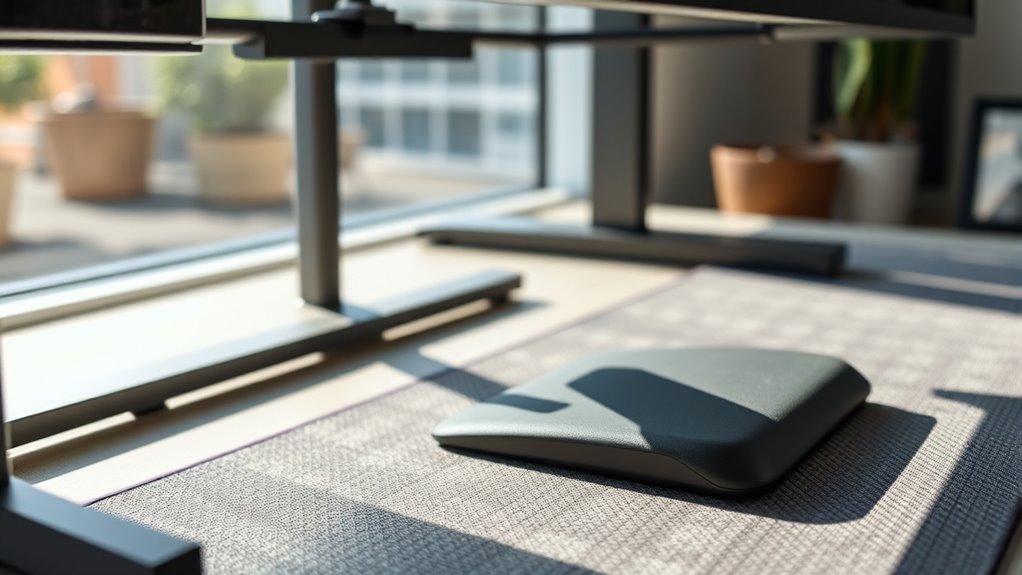
Using the right tools and accessories can make supporting micro movements at your desk much easier and more effective. Items like ergonomic footrests encourage subtle leg shifts, while sit-stand desks allow you to change positions effortlessly. Balance balls or wobble cushions promote gentle core engagement and movement without disrupting your workflow. Adjustable monitor stands help you maintain proper posture, reducing strain and encouraging slight shifts in your head and neck position. Resistance bands or hand grip exercisers can be kept nearby for quick hand and arm movements. These accessories not only support micro movements but also remind you to stay active throughout the day. Investing in the right tools makes incorporating small, beneficial movements seamless, ensuring you stay comfortable and reduce desk-related discomfort.
Creating a Micro Movement Routine for Daily Productivity
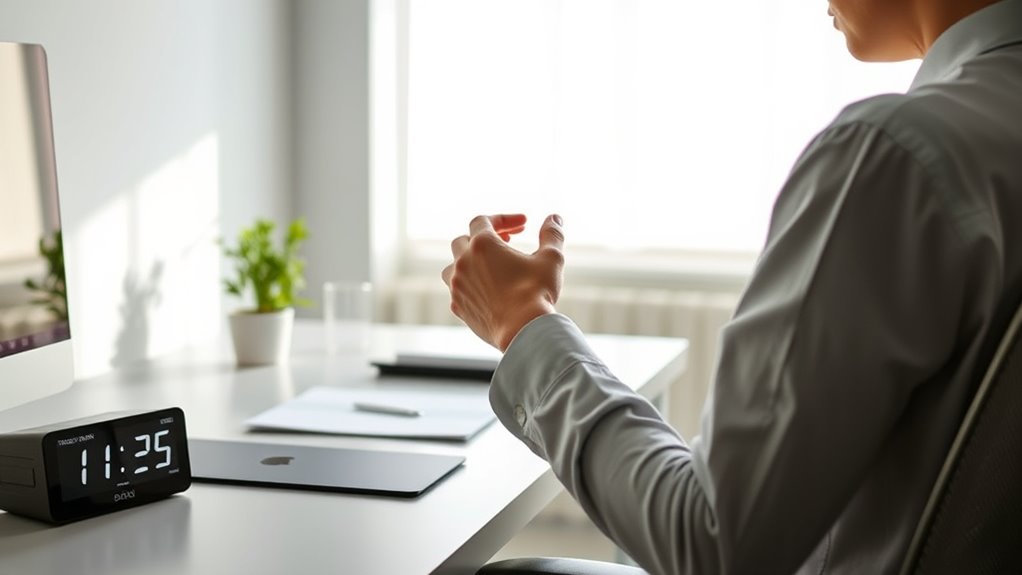
Establishing a micro movement routine can considerably boost your daily productivity and comfort at work. By integrating small, deliberate movements into your day, you prevent stiffness and maintain focus. To create an effective routine, identify key moments during your work cycle to pause and move. Incorporate simple actions like stretching your arms, rotating your neck, or shifting your weight in your chair. Consistency is essential; aim for short movements every 30 to 60 minutes. Use reminders or timers to prompt you. Over time, these micro movements become a seamless part of your workflow, reducing fatigue and improving posture. Remember, the goal is to foster movement without disrupting your flow. Small, intentional actions accumulate, making a significant difference in your overall well-being.
Tracking Progress and Staying Motivated
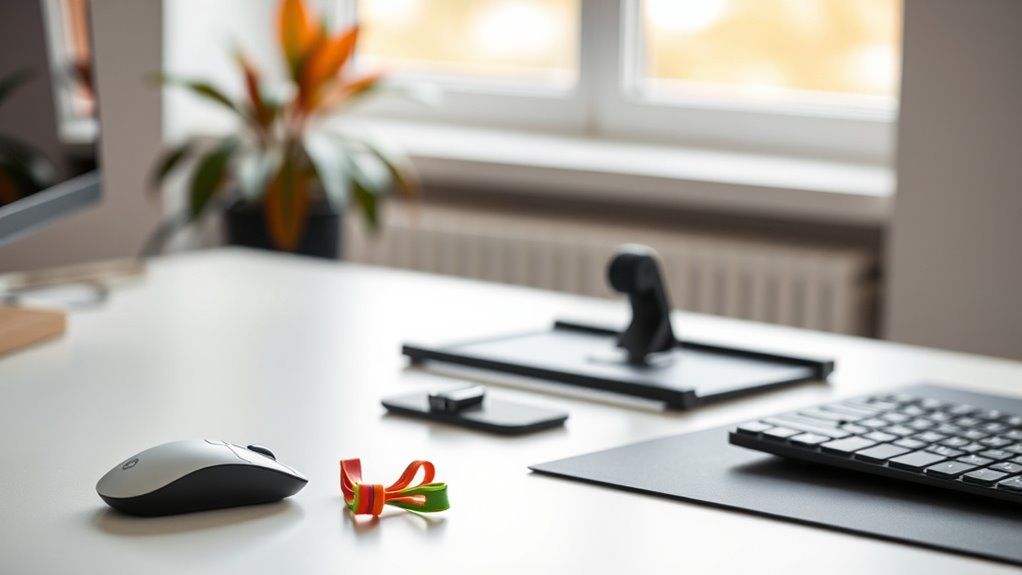
Tracking your progress is essential to stay motivated and guarantee your micro movement routine sticks. When you see how much you’ve improved, you’re more likely to keep going. Use simple tools like a journal or apps to log daily movements. Celebrate small wins to boost your confidence. To help visualize your journey, consider this table:
| Micro Movements | Weekly Goals |
|---|---|
| 10-minute stretch | Complete daily |
| 5-minute walk | Reach 5 days a week |
| Desk exercises | Perform twice daily |
Seeing your progress in a clear format keeps you accountable. Remember, consistency beats intensity. Small steps add up, so stay focused and motivated by tracking your improvements regularly. This keeps your micro movement routine engaging and sustainable over time.
Frequently Asked Questions
How Often Should I Perform Micro Movements During Work Hours?
You should perform micro movements every 30 to 60 minutes during work hours. Taking brief breaks to stretch, change positions, or do small movements helps prevent stiffness and improves circulation. Set reminders if needed, so you don’t forget. These quick actions keep your muscles active, reduce fatigue, and promote better posture, ultimately enhancing your comfort and productivity throughout the day.
Can Micro Movements Help Prevent Long-Term Musculoskeletal Issues?
Yes, micro movements can help prevent long-term musculoskeletal issues. By regularly shifting your position, stretching, or stretching small muscles, you reduce muscle stiffness and improve circulation. These small actions prevent strain from prolonged sitting or static postures, keeping your muscles active and flexible. Incorporate micro movements throughout your workday, and you’ll considerably lower your risk of developing chronic pain or joint problems over time.
Are There Specific Micro Movements Suited for Small Office Spaces?
Yes, there are micro movements perfectly suited for tiny office spaces. You can stretch your arms overhead like you’re reaching for the stars, twist your torso gently to release your spine, or lift your heels while seated to activate calf muscles. These small, powerful moves don’t require much room but deliver big benefits, helping you stay active, prevent stiffness, and boost circulation right at your desk.
What Are the Best Times of Day to Focus on Micro Movements?
You should focus on micro movements throughout the day, especially during breaks and shifts between tasks. Aim to stretch or move every 30 to 60 minutes to keep your muscles active and reduce strain. Incorporate quick stretches or seated exercises in the morning, afternoon, and after long periods of sitting. These moments help improve circulation, boost energy, and maintain your overall desk health.
How Can I Motivate Colleagues to Adopt Micro Movement Habits?
You can motivate your colleagues by sharing the health benefits of micro movements and setting an example yourself. Encourage short, regular movement breaks by suggesting fun challenges or team goals. Highlight how these habits boost productivity and reduce discomfort. Offer support and celebrate small wins together. When everyone sees positive results, they’ll feel more inspired to adopt micro movements, making it easier to build a healthier, more active work environment.
Conclusion
By embracing micro movements, you can turn the tide on desk fatigue and boost your overall well-being. Small changes add up, helping you stay energized and focused throughout the day. Don’t let sitting be your downfall—remember, every little bit counts, and it’s the small steps that lead to big results. Keep moving, stay committed, and watch your desk health improve one movement at a time. It’s a win-win for your body and mind.
Halloween Picks
halloween
As an affiliate, we earn on qualifying purchases.