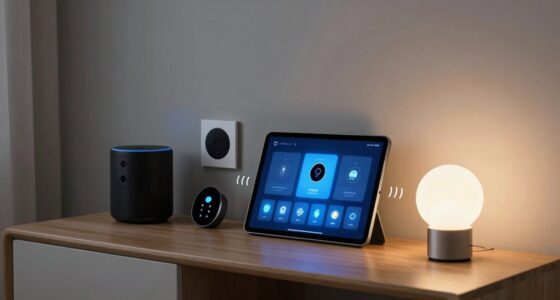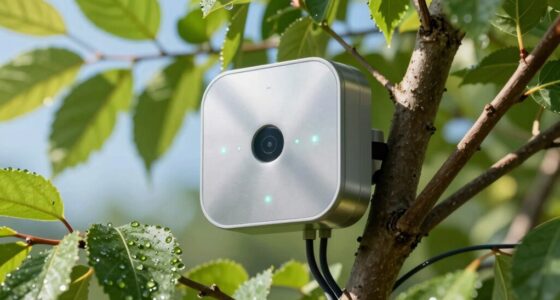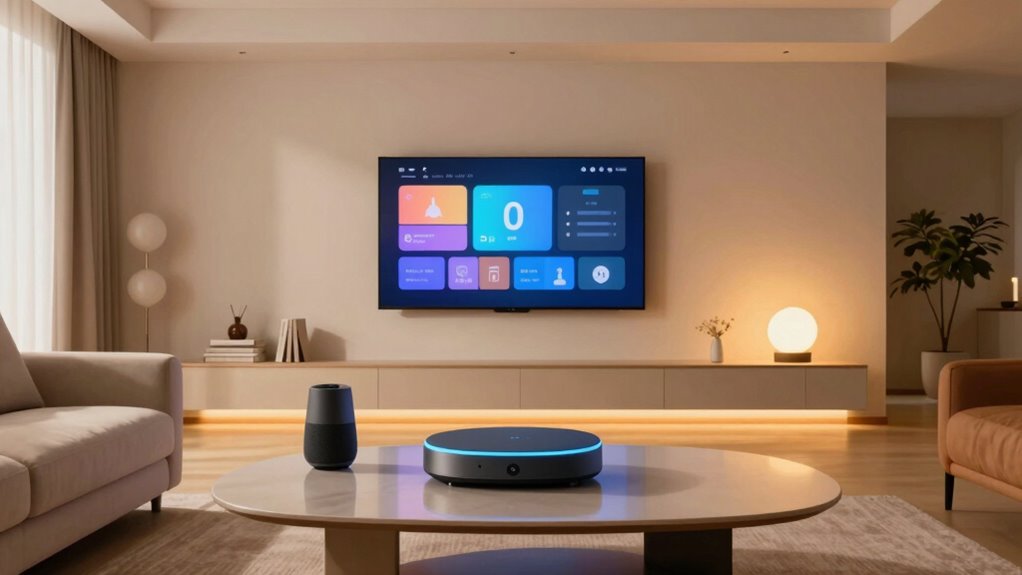

A smart home ecosystem connects devices like lights, thermostats, and security cameras to work together seamlessly, making your home more convenient and secure. This setup relies on central hubs, sensors, and communication protocols such as Wi-Fi, Zigbee, or Z-Wave to guarantee smooth operation. The system also prioritizes security and easy device pairing. Understanding how these components interact can help you create a more efficient smart home—keep going to learn more.
Key Takeaways
- Smart home ecosystems connect devices like lights, thermostats, and cameras for seamless automation and control.
- Central hubs and IoT sensors coordinate device communication and monitor home environments efficiently.
- Communication protocols such as Wi-Fi, Zigbee, and Z-Wave ensure secure, reliable device interoperability.
- Benefits include energy savings, increased security, and simplified management through automation routines.
- Future trends focus on AI, voice control, and smarter energy optimization, aiding in ecosystem selection and system growth.

LEVOIT Air Purifier for Home Large Room Up to 1073Ft² with Air Quality Monitor, AHAM VERIFIDE, Smart WiFi, Washable Pre-Filter, HEPA Sleep Mode for Pets, Allergies, Dust, Pollen, Vital 100S-P, White
𝐖𝐇𝐘 𝐂𝐇𝐎𝐎𝐒𝐄 𝐀𝐇𝐀𝐌 𝐕𝐄𝐑𝐈𝐅𝐈𝐃𝐄 𝐀𝐈𝐑 𝐏𝐔𝐑𝐈𝐅𝐈𝐄𝐑𝐒: AHAM (Association of Home Appliance Manufacturers) is an ANSI-accredited organization that sets...
As an affiliate, we earn on qualifying purchases.
What Are Smart Home Ecosystems?
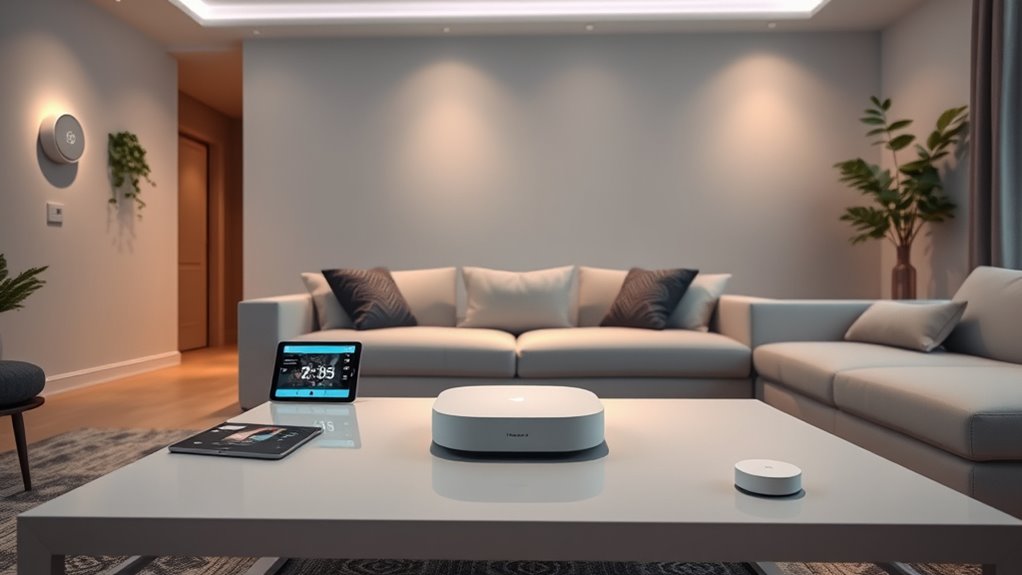
Have you ever wondered how your smart devices work together seamlessly? That’s the magic of a smart home ecosystem. It’s a connected network where devices like lights, thermostats, and security cameras communicate through voice assistants and automation routines. These routines allow your devices to respond automatically to your commands or triggers, creating a cohesive experience. For example, you might ask your voice assistant to set the mood, and your smart lights, blinds, and music adjust accordingly without manual effort. This integration simplifies daily routines, enhances convenience, and makes your home smarter and more responsive. Think of it as a synchronized system where each device plays a part, working together to improve your comfort and efficiency effortlessly. Discover trusted businesses and services near you to help set up and optimize your smart home ecosystem. Understanding device interoperability can help you maximize the potential of your connected devices. Additionally, understanding system compatibility can prevent issues and ensure that all your devices work harmoniously. Gaining a deeper knowledge of smart device communication protocols can further improve your home automation experience.

KNKA Air Purifier for Home Bedroom Large Room Up to 1,695 Ft² in 1 Hr, HEPA Air Cleaner with Washable Pre-Filter, AQI Display, ECO Mode, Sleep Mode, Pet Mode for Pets, Dust, Pollen, APH4000
𝐇𝐢𝐠𝐡 𝐂𝐀𝐃𝐑 𝐕𝐚𝐥𝐮𝐞: This air purifier provides reliable performance with a Smoke/Dust/PM2.5 CADR of 226 CFM (384 m³/h)...
As an affiliate, we earn on qualifying purchases.
Key Components of a Connected Home

Your connected home relies on central hub devices that coordinate your smart gadgets seamlessly. IoT sensors create a network that monitors and automates everything from lighting to security. Together, these components form the backbone of an efficient and responsive smart home ecosystem. A secure network is essential to protect your devices and personal information from potential vulnerabilities. Understanding the importance of reliable connectivity ensures that all devices work together smoothly and effectively. Maintaining a stable internet connection is crucial for preventing disruptions and ensuring consistent performance across your smart devices. Additionally, a robust network infrastructure supports the growing number of connected devices, keeping your smart home running smoothly and ensuring high color accuracy for integrated multimedia experiences.
Central Hub Devices
A central hub device acts as the brain of your smart home, coordinating communication between various connected devices. It manages how your smart lights, thermostats, and security systems interact seamlessly. Many central hubs incorporate voice assistants, allowing you to control your home with simple voice commands. These voice assistants are often built into smart speakers, making it easy to ask questions, set reminders, or adjust devices without lifting a finger. By connecting multiple devices through a single hub, you simplify automation and improve reliability. This setup reduces the need for multiple apps and ensures your system responds quickly. Whether you choose a dedicated hub or a smart speaker with hub capabilities, it’s the core that keeps your smart home functioning smoothly and intuitively. Connects devices effectively with expert recommendations to streamline your connected home setup. Additionally, choosing a hub with interoperability standards ensures compatibility across diverse brands and devices, enhancing your system’s flexibility and future-proofing your smart home. To further optimize your smart home, consider hubs that support home automation protocols like Zigbee or Z-Wave, which enhance device compatibility and expand your automation possibilities.
IoT Sensors Network
An IoT sensors network forms the foundation of a truly connected home by continuously gathering data from various devices and environments. Proper sensor placement is essential; placing sensors in ideal locations ensures you receive accurate, relevant information. For example, motion sensors should be positioned where movement occurs naturally, and temperature sensors need to be in areas representative of the whole room. Good sensor placement directly impacts data accuracy, enabling your smart home system to respond effectively. If sensors are poorly placed, you might experience false alarms or inefficient climate control. Regularly check and adjust sensor locations to maintain reliable data flow. Additionally, understanding sensor calibration techniques can help optimize sensor accuracy over time. Proper sensor calibration ensures sensors deliver precise readings, which is crucial for effective automation and energy management. A well-maintained sensor network can adapt to changing conditions, further improving your home’s responsiveness. Incorporating sensor maintenance practices can extend the lifespan of your devices and ensure consistent performance. Implementing sensor integration with other smart home components can enhance overall system efficiency. Ultimately, a well-designed sensors network enhances your home’s automation, energy efficiency, and security, making your smart home more intuitive and responsive.

LEVOIT Air Purifiers for Home Large Room Up to 1875 Ft² with Washable Pre-Filter, AHAM VERIFIDE, Air Quality Monitor, HEPA Sleep Mode for Allergies, Pet Hair in Bedroom, Vital 200S-P, White
𝐖𝐇𝐘 𝐂𝐇𝐎𝐎𝐒𝐄 𝐀𝐇𝐀𝐌 𝐕𝐄𝐑𝐈𝐅𝐈𝐃𝐄 𝐏𝐑𝐎𝐃𝐔𝐂𝐓𝐒: AHAM (Association of Home Appliance Manufacturers) is an ANSI-accredited organization that sets strict...
As an affiliate, we earn on qualifying purchases.
How Devices Communicate Within a System
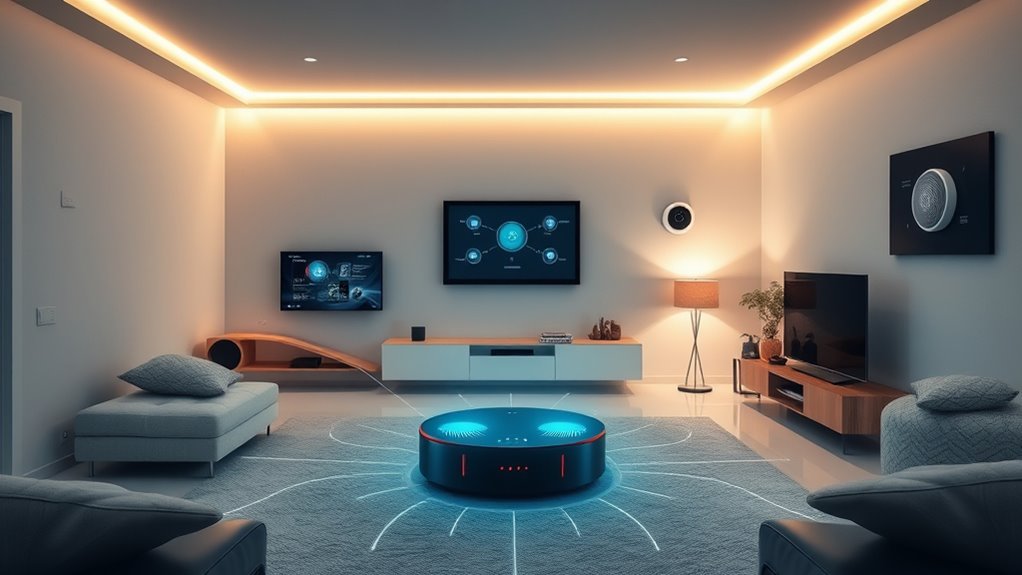
You’ll want to understand how devices connect smoothly and securely in your smart home. Wireless protocols like Wi-Fi, Zigbee, and Z-Wave enable these devices to communicate efficiently. Ensuring secure data sharing and simple pairing methods keeps your system reliable and protected. Additionally, staying informed about latest hardware updates can help optimize your smart home’s performance and security. Understanding interoperability standards can further enhance device compatibility and ease of integration across different brands and systems. Being aware of potential security vulnerabilities, such as unencrypted data transmission, can also help you safeguard your system against unauthorized access. Regularly updating your firmware and security practices is crucial for maintaining system integrity and protecting sensitive information.
Wireless Protocols Used
Wireless protocols serve as the backbone of communication within smart home ecosystems, enabling devices to exchange data seamlessly and reliably. These protocols guarantee device interoperability, allowing different brands and types to work together smoothly. Common wireless protocols include Wi-Fi, Zigbee, Z-Wave, and Bluetooth, each suited for specific tasks and ranges. Wi-Fi offers high data rates for streaming and control, while Zigbee and Z-Wave excel in low-power, low-bandwidth applications like sensors. Bluetooth connects personal devices easily. Here’s a quick comparison:
| Protocol | Range | Power Consumption | Best For | Compatibility |
|---|---|---|---|---|
| Wi-Fi | Up to 100 meters | High | Video streaming, remote access | Most devices |
| Zigbee | 10-100 meters | Low | Sensors, automation | Many smart brands |
| Z-Wave | 30-100 meters | Low | Security, lighting | Widely compatible |
| Bluetooth | 10 meters | Low | Personal devices, wearables | Broad device support |
Device Pairing Methods
Device pairing methods determine how smart home devices establish secure and reliable connections within a system. Bluetooth pairing is common, allowing devices to connect quickly by entering a PIN or confirming a code. It’s ideal for devices like speakers or sensors that need to communicate frequently. NFC connection offers a faster, tap-to-pair option, where you simply bring two devices close together to establish a link instantly. This method is perfect for smart locks or lights, making setup straightforward. Both methods prioritize security, ensuring your devices don’t connect to unintended sources. Understanding these pairing options helps you set up your smart home efficiently, ensuring seamless communication between devices while maintaining privacy and security.
Data Sharing Security
Ensuring secure communication within a smart home system is essential to protect your devices and personal data. When devices share information, data encryption keeps that data safe from eavesdroppers. Access controls limit who can communicate with or control your devices, preventing unauthorized access. Strong encryption methods ensure that even if data is intercepted, it remains unreadable. Implementing layered security measures like authentication and permission settings further safeguards your system. Here’s a quick overview:
| Security Feature | Purpose |
|---|---|
| Data Encryption | Protects data during transmission from interception |
| Access Controls | Restricts device communication to authorized users |

LEVOIT Air Purifier for Home Allergens Pet Hair in Bedroom, Covers Up to 1073 ft² by 56W High Torque Motor, AHAM VERIFIDE, 3-in-1 Filter with HEPA Sleep Mode, Remove Dust Smoke Odor, Core300-P, White
WHY CHOOSE AHAM VERIFIDE AIR PURIFIERS: AHAM (Association of Home Appliance Manufacturers) is an ANSI-accredited organization that sets...
As an affiliate, we earn on qualifying purchases.
Popular Technologies and Protocols
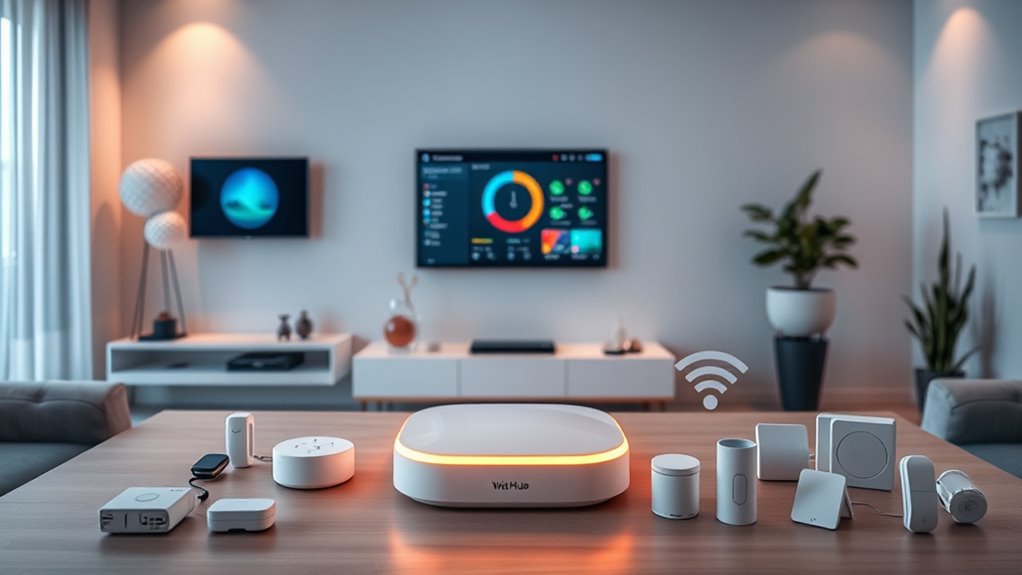
To create seamless communication within a smart home, various technologies and protocols have been developed to connect devices reliably and securely. You’ll find that voice control systems like Amazon Alexa, Google Assistant, and Apple Siri enable hands-free operation, making daily tasks easier. Protocols such as Zigbee, Z-Wave, and Thread facilitate device interoperability, guaranteeing your smart gadgets communicate smoothly. Wi-Fi remains common for high-bandwidth devices, while Bluetooth suits close-range interactions. These technologies also support energy management by automating lighting, heating, and cooling, helping you reduce waste and lower bills. A well-chosen combination of protocols ensures your smart home functions efficiently, securely, and conveniently, keeping everything connected without hassle. This foundation is essential for creating a truly integrated and responsive living environment.
Benefits of a Well-Integrated Smart Home
A well-integrated smart home offers numerous benefits that make everyday living more convenient, efficient, and secure. By syncing devices, you enhance energy efficiency and simplify routines. For example, a unified system allows you to:
- Automate lighting and climate control, reducing energy waste
- Receive real-time alerts for security breaches or system malfunctions
- Control multiple devices effortlessly through a single app or voice command
- Save time by scheduling tasks, like watering plants or adjusting thermostats
These features optimize energy use, lowering bills, and increase user convenience by eliminating the need for manual adjustments. Overall, a cohesive smart home system creates a seamless environment that adapts to your lifestyle while enhancing security and saving energy.
Setting Up Your Smart Home Ecosystem
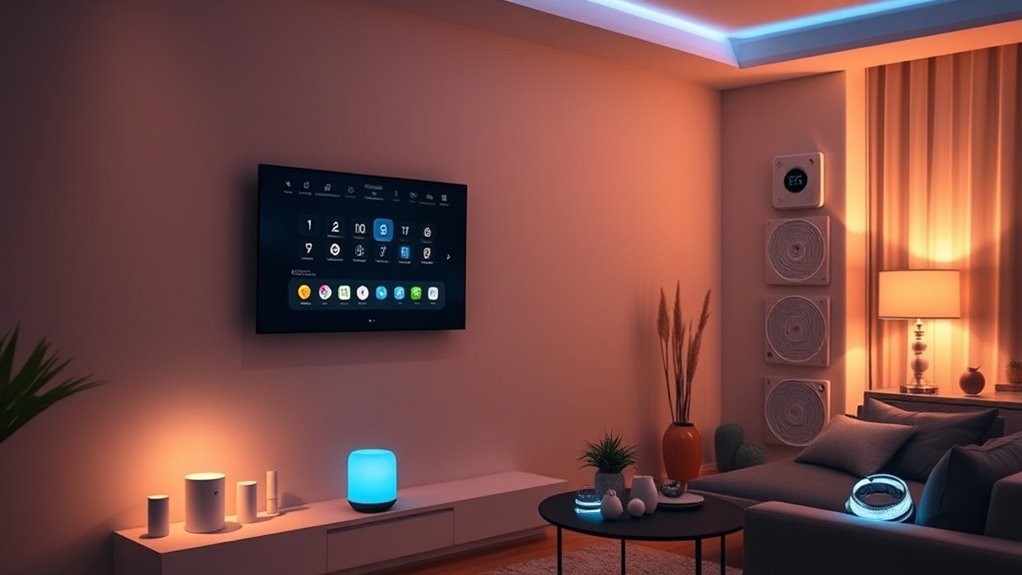
Setting up your smart home ecosystem begins with planning how your devices will work together to meet your needs. Start by identifying the devices you want, such as smart lights, thermostats, and security cameras. Confirm they are compatible with your chosen hub or voice control system, like Amazon Alexa or Google Assistant. Connecting devices through a central app makes managing them easier. Prioritize energy efficiency by selecting smart devices that adapt to your routines and optimize power use. Set up routines or automation to turn off unused devices automatically or adjust settings based on occupancy. Voice control is essential for hands-free operation, so configure voice commands early. Proper planning and integration ensure your smart home functions seamlessly, saving energy and enhancing convenience.
Common Challenges and How to Overcome Them
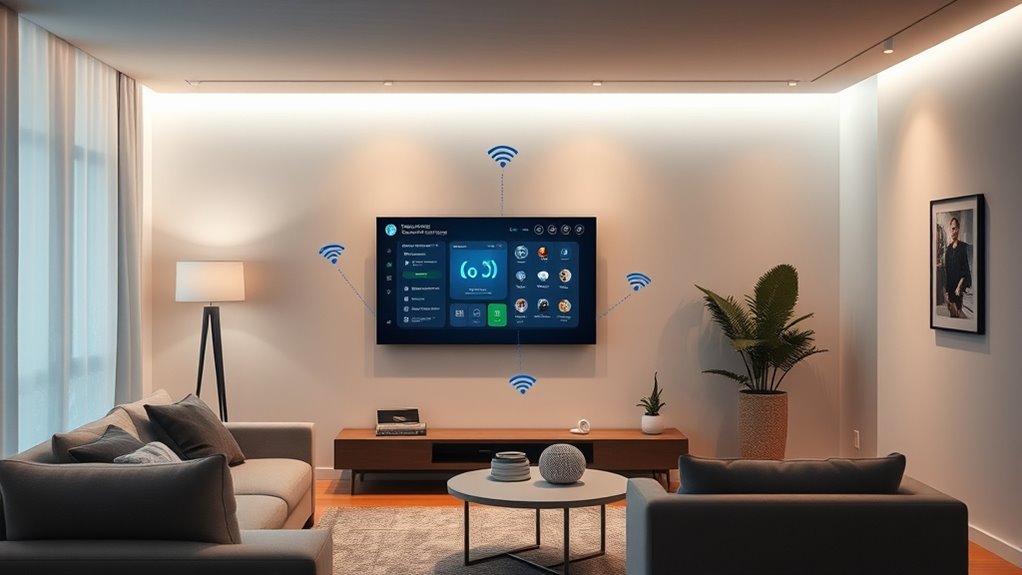
While building a smart home ecosystem offers many benefits, it often comes with challenges that can hinder smooth operation. Privacy concerns are a major issue, as devices collect personal data that needs protection. To address this, you should:
- Regularly update firmware and security settings.
- Use strong, unique passwords for each device.
- Limit data sharing with third parties.
- Review privacy policies before installing new devices.
Device compatibility also poses a challenge, as not all gadgets work seamlessly together. To overcome this, you should:
- Choose devices compatible with your hub or platform.
- Stick to one ecosystem when possible.
- Verify compatibility before purchasing new devices.
- Consider universal standards like Zigbee or Z-Wave for better integration.
Future Trends in Smart Home Technology
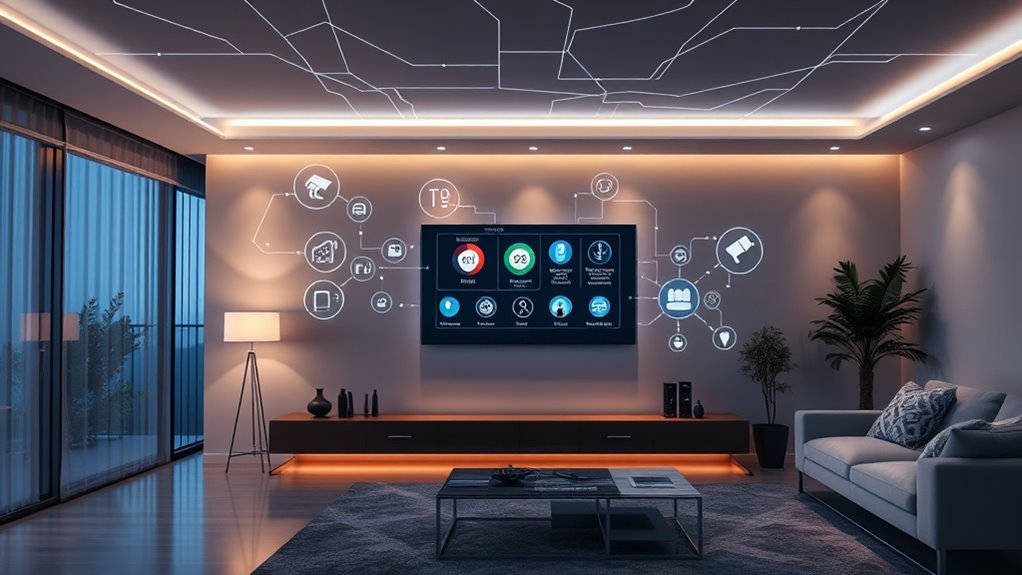
Advancements in artificial intelligence and machine learning are shaping the future of smart home technology, making devices more intuitive and responsive to your needs. Voice control will become even more seamless, allowing you to manage your home effortlessly. Energy efficiency will also improve as smart systems optimize power consumption based on usage patterns. Expect appliances to adapt intelligently, reducing waste and lowering costs. Below is a glimpse of upcoming trends:
| Trend | Description | Impact |
|---|---|---|
| Voice control | Enhanced natural language understanding | Easier interaction |
| AI-driven automation | Smarter routines based on habits | Increased convenience |
| Energy management | Real-time energy monitoring and adjustments | Cost savings, sustainability |
| IoT integration | Devices communicate more effectively | Streamlined control |
| Predictive analytics | Anticipates needs before you ask | Proactive home management |
Tips for Choosing the Right Ecosystem for You

Choosing the right smart home ecosystem depends on your specific needs, existing devices, and preferred platforms. To make a smart choice, consider these tips:
- Prioritize voice control compatibility to easily manage devices through commands.
- Check if the ecosystem promotes energy efficiency to save on utility costs.
- Ensure your existing gadgets are compatible with the ecosystem to avoid costly replacements.
- Evaluate whether the platform integrates well with other smart tech you plan to add.
Focus on ecosystems that offer seamless voice control, making daily tasks effortless. Look for features that optimize energy efficiency to reduce your environmental impact and bills. Ultimately, select an ecosystem that aligns with your lifestyle and offers reliable, user-friendly automation. This approach helps you build a cohesive, functional smart home tailored to your preferences.
Frequently Asked Questions
How Secure Are Smart Home Ecosystems From Hacking Threats?
Smart home ecosystems are reasonably secure, but they aren’t foolproof. You should use strong encryption protocols to protect your data and verify all devices support up-to-date security standards. Always enable user authentication, like two-factor authentication, to add an extra layer of protection. Regularly update your firmware and change default passwords. By taking these steps, you make it much harder for hackers to breach your smart home, keeping your devices and personal information safer.
Can I Integrate Third-Party Devices Into My Existing Smart Home System?
Yes, you can integrate third-party devices into your existing smart home system. Many platforms now prioritize third-party compatibility, allowing seamless device integration. To do this, verify the new device supports your system’s standards, like Zigbee or Z-Wave. Use the app or hub to add the device, following manufacturer instructions. This expands your smart home capabilities and customizes your setup, making it more flexible and tailored to your needs.
What Is the Average Cost to Set up a Comprehensive Smart Home?
Imagine turning your house into a smart haven without breaking the bank. On average, setting up a all-inclusive smart home costs between $3,000 and $10,000, depending on your choices. You’ll want to focus on budget planning, ensuring device compatibility, and selecting essential smart devices first. Keep in mind, the more advanced your system, the higher the investment, but thoughtful planning helps you build a seamless, cost-effective smart home.
How Do I Troubleshoot Connectivity Issues Between Devices?
To troubleshoot connectivity issues, start by checking your device firmware to make sure everything’s updated. Next, look for signal interference from other electronics or thick walls that might weaken your connection. Restart your devices and router to reset the network. If problems persist, move devices closer to the router or consider using a Wi-Fi extender. Regularly updating firmware and minimizing interference can greatly improve device connectivity.
Are Smart Home Ecosystems Suitable for Rental or Temporary Properties?
You might be surprised, but smart home ecosystems can be perfect for temporary rentals. They offer short-term convenience, allowing you to control lighting, thermostats, and security without permanent installations. However, consider potential challenges like compatibility issues or restrictions from property owners. If you plan ahead and choose portable, easily removable devices, you’ll enjoy the benefits without any hassle, making your stay smarter and more comfortable.
Conclusion
Now that you understand how smart home ecosystems work, you can start building a seamless, connected space tailored to your needs. Imagine walking into a home that anticipates your every move—lights adjust, temperature sets itself, and devices work in harmony. Isn’t it time you took control and transformed your living space into a smarter, more convenient environment? Embrace the technology, and let your home do the heavy lifting for you.