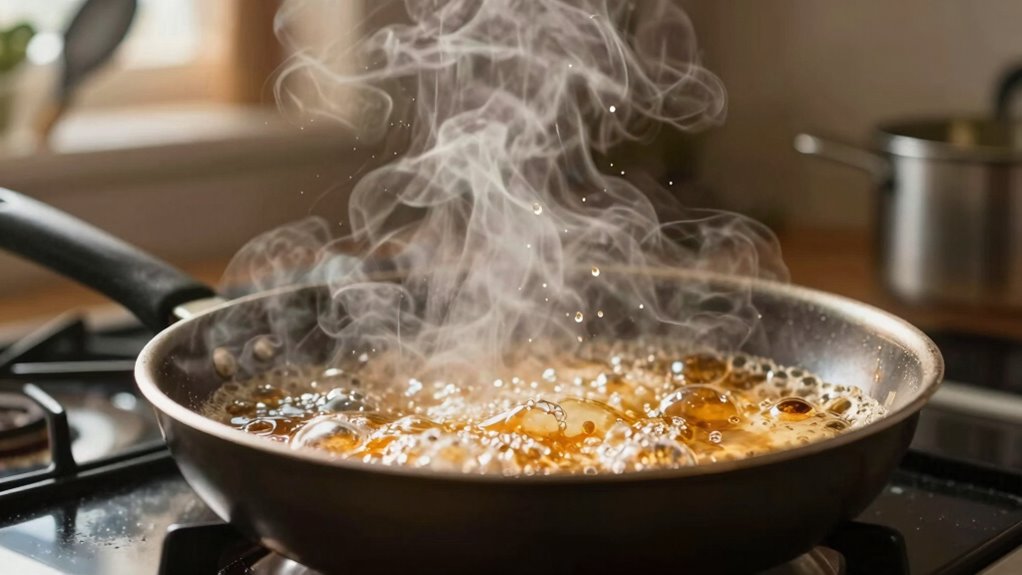

When you fry food, high temperatures release smoke particles and volatile organic compounds that spike indoor air pollution. These tiny particles and fumes can irritate your respiratory system and linger in your space, especially with low smoke point oils or poor ventilation. To help, use exhaust fans, open windows, and choose oils with higher smoke points. If you want to discover more ways to keep your air cleaner while cooking, keep exploring solutions for healthier indoor air.

Get books, candles and calm essentials delivered free — and shop member deals
- Fast, free delivery on millions of items
- Access to Prime Big Deal Days deals on October 6–7
- Prime Video, Amazon Music and more included
Key Takeaways
- Frying releases VOCs and smoke particles that increase indoor air pollution, especially at high temperatures.
- Using oils with higher smoke points and controlling cooking temperature reduce emissions during frying.
- Proper ventilation, such as exhaust fans, range hoods, and opening windows, helps remove airborne particles.
- Air purifiers with HEPA filters can further decrease indoor particulate matter from frying fumes.
- Regular cleaning of cooking equipment and using safer cooking methods minimize ongoing emissions and improve air quality.
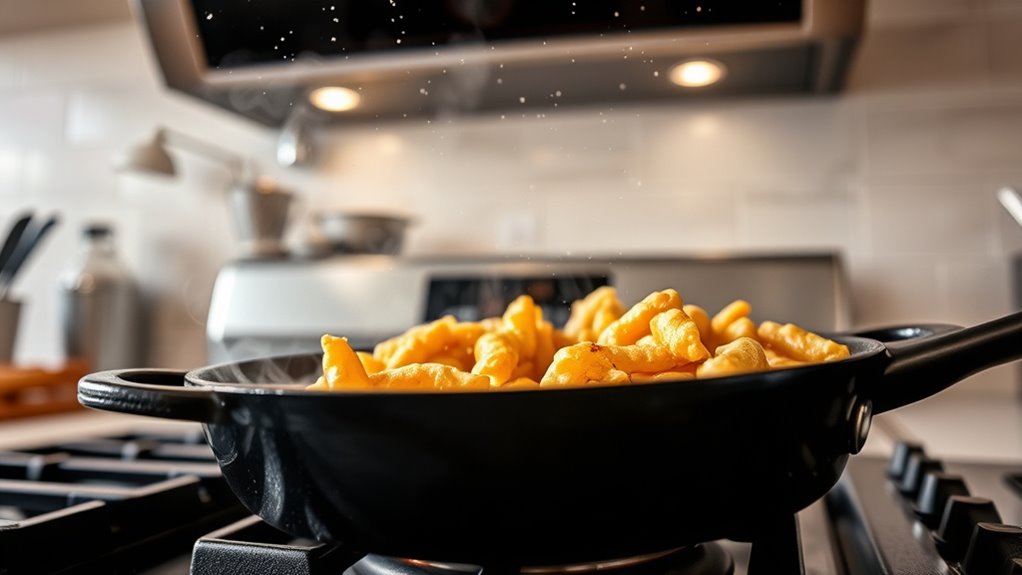
Cooking is a common activity that considerably impacts the air quality inside your home. When you fry foods, your kitchen becomes a source of oil fumes and smoke particles, which can linger and spread throughout your living space. These emissions aren’t just unpleasant; they can also compromise your indoor air quality and even affect your health over time. Understanding why frying spikes these particles and what you can do to reduce their presence is essential for maintaining a healthier environment.
When you heat oil for frying, it releases oil fumes that contain tiny aerosolized droplets. These fumes are made up of volatile organic compounds (VOCs), which can irritate your respiratory system and contribute to indoor pollution. At the same time, the high temperatures involved in frying produce smoke particles—small bits of unburned organic material that become suspended in the air. These smoke particles can penetrate deep into your lungs, causing coughing, wheezing, or other respiratory issues, especially if you’re exposed regularly. The problem intensifies when you use oils with low smoke points or when you cook at very high temperatures, as both factors lead to more fumes and smoke.
Heating oil for frying releases VOC fumes and smoke particles that can harm your respiratory health.
The key to reducing these airborne pollutants is to improve ventilation. Using an exhaust fan or range hood while frying helps draw out oil fumes and smoke particles before they settle into the air. If your kitchen lacks proper ventilation, consider opening windows or placing a portable air purifier nearby. Cleaning up grease splatters and spills immediately also prevents the buildup of residues that can contribute to ongoing emissions. Additionally, choosing oils with higher smoke points, like avocado or refined peanut oil, can minimize the amount of fumes generated during cooking.
Another effective measure is to control the cooking temperature. Frying at moderate temperatures not only prevents the oil from reaching its smoke point but also substantially cuts down on smoke particles and fumes. Covering your pots and pans can also help trap some of the emissions, reducing their dispersal into the room. Regularly replacing or cleaning your range hood filters ensures that the ventilation system remains effective at capturing airborne pollutants. Moreover, incorporating air purifiers with HEPA filters can further help remove fine particles from indoor air, providing an additional layer of protection.
In essence, frying causes a spike in oil fumes and smoke particles because of the high heat and oil breakdown. But by managing your cooking environment—using proper ventilation, selecting suitable oils, and controlling temperature—you can greatly lessen indoor air pollution. Taking these steps helps protect your breathing and keeps your home’s air cleaner, making your cooking healthier and more comfortable.
kitchen range hood with high CFM
As an affiliate, we earn on qualifying purchases.
As an affiliate, we earn on qualifying purchases.
Frequently Asked Questions
How Do Different Oils Affect Indoor Air Quality During Frying?
Different oils impact indoor air quality during frying based on their oil composition and smoke point. Oils with a high smoke point, like avocado or refined sunflower oil, produce fewer airborne particles because they withstand heat better. Conversely, oils with lower smoke points, such as extra virgin olive oil, break down sooner, releasing more particles and potentially worsening indoor air quality. Choosing oils with higher smoke points helps keep your air cleaner during frying.
Can Ventilation Systems Completely Eliminate Airborne Particles From Frying?
Ventilation systems can’t completely eliminate airborne particles from frying, but good airflow efficiency helps reduce their presence. You should make sure your system has proper airflow and regularly maintain filters to maximize performance. Upgrading filters or adding a range hood with a high-quality filter can considerably cut down particles. Keep in mind, though, some particles may still linger, so combining ventilation with other measures like proper oil choices and cooking techniques is best.
What Are the Long-Term Health Effects of Indoor Frying Fumes?
You might find that long-term exposure to indoor frying fumes subtly impacts your health, increasing your cancer risk and causing respiratory issues over time. These invisible influences can accumulate, quietly affecting your lungs and overall well-being. Though occasional frying isn’t usually harmful, persistent inhalation may lead to chronic conditions. To protect yourself, guarantee good ventilation, limit frying sessions, and consider air purifiers, so you can enjoy cooking without risking your health’s deeper harmony.
Are There Any Safe Alternatives to Traditional Frying Methods?
Yes, you can opt for healthy alternatives to traditional frying. Baking substitutes like oven-roasted vegetables or crispy chicken using a wire rack reduce airborne particles and eliminate the need for excessive oil. Air fryers also offer a safer, healthier choice by using minimal oil while delivering similar textures. These options help cut down on indoor air pollution, making your cooking safer and healthier without sacrificing taste.
How Often Should Indoor Air Filters Be Replaced to Maintain Air Quality?
You should replace your air filter regularly to maintain air quality. Typically, air filter maintenance involves changing filters every 1 to 3 months, depending on usage and filter type. Pay attention to replacement frequency guidance from the manufacturer and monitor your indoor air quality. If you notice reduced airflow or increased particles, it’s time for a replacement to guarantee your space stays healthy and well-ventilated.
air purifier with HEPA filter for kitchen
As an affiliate, we earn on qualifying purchases.
As an affiliate, we earn on qualifying purchases.
Conclusion
So, as you turn your stove up and sizzle away, remember that frying isn’t just about flavor—it’s a dance of particles swirling in the air. But with a few simple steps, like ventilation and careful cooking, you can clear a path through the smoky haze. Think of your kitchen as a symphony; keep the air flowing, and let fresh breezes be the conductor, guiding you toward healthier, cleaner cooking every time.
As an affiliate, we earn on qualifying purchases.
indoor ventilation fan for cooking
As an affiliate, we earn on qualifying purchases.
As an affiliate, we earn on qualifying purchases.
Halloween Picks
halloween
As an affiliate, we earn on qualifying purchases.