
Choosing between white noise and pink noise for sleep depends on your preferences. White noise offers a bright, static-like sound that masks all frequencies equally, which can help you fall asleep faster but might feel harsh over time. Pink noise has a softer, deeper sound with more emphasis on lower frequencies, creating a calming environment for longer, restorative sleep. To find what suits you best, explore how each feels in your sleep space. There’s more to discover if you continue exploring.
Key Takeaways
- Pink noise offers a softer, more natural sound that many find more soothing and less harsh than white noise.
- White noise’s bright, high-frequency hissing can become irritating over time, potentially disrupting sleep.
- Pink noise emphasizes lower and mid frequencies, promoting deeper, more restful sleep with less sensory fatigue.
- Personal preference and sensitivity to high frequencies influence which sound feels more comfortable for sleep.
- Both can effectively mask environmental disturbances, but pink noise is often preferred for longer, uninterrupted sleep periods.
Understanding White Noise and Pink Noise
White noise and pink noise are two types of sound signals that are often used for relaxation, focus, or sleep. White noise contains all audible frequencies played at equal intensity, creating a consistent, static-like sound. It masks other noises, making it easier to concentrate or fall asleep. Pink noise, on the other hand, distributes energy more evenly across frequencies, with lower frequencies being more prominent. This results in a softer, less harsh sound that many find more natural and soothing. Both sounds help block out disruptive noises, but they do so in different ways. White noise provides a uniform soundscape, while pink noise offers a more balanced and mellow experience. Understanding these differences helps you choose the right one for your relaxation or sleep needs. For those seeking specific therapeutic benefits, essential oils like lavender or eucalyptus may complement the calming effects of these sounds. Additionally, some individuals may prefer customized soundscapes tailored to their personal preferences for optimal relaxation. Incorporating body-friendly sounds can also enhance the overall effectiveness of sleep aids and create a more comfortable sleep environment. Being aware of the sound frequency spectrum can help you select the most effective noise type for your specific needs. Moreover, exploring the spectral characteristics of these sounds can deepen your understanding of their calming properties.
Sound Characteristics and Spectral Differences

While both white noise and pink noise are used to mask distracting sounds, their spectral characteristics set them apart. White noise contains equal energy across all frequencies, resulting in a bright, hissing sound that emphasizes high frequencies. Its flat spectral profile means that every sound within its range is equally loud, which can sometimes feel harsh. Pink noise, on the other hand, distributes energy more evenly across octaves, with sound intensity decreasing by about 3 dB per octave. This creates a deeper, smoother sound that emphasizes lower and mid frequencies, making it less sharp and more soothing to the ear. These spectral differences influence how each noise type interacts with your environment and how comfortable they feel over time. Understanding spectral distribution can help you choose the most suitable sound for better sleep quality. Additionally, recognizing how sound energy levels vary across frequencies can assist in creating a more relaxing auditory environment for rest. Moreover, the perceived softness of pink noise often makes it preferable for sleep as it provides a calming background without overwhelming high-frequency sounds. Being aware of how auditory perception is affected by these spectral nuances can further enhance your sleep environment.
How Each Noise Type Affects Sleep Quality
The spectral differences between white and pink noise markedly influence how they impact your sleep quality. White noise’s high-frequency sounds create a consistent, masking background that can drown out sudden noises, helping you fall asleep faster. However, its sharp, bright sound might become irritating over time, potentially disrupting sleep cycles. Pink noise, with its lower, more balanced frequencies, offers a softer, smoother sound that many people find more relaxing. It promotes deeper sleep by encouraging the brain to stay in a restful state longer. Pink noise’s gentle nature reduces the likelihood of waking due to environmental disturbances. Additionally, sound frequency balance plays a crucial role in how these noises influence your overall sleep experience. Research suggests that frequency spectrum can significantly affect sleep quality, making pink noise a preferable choice for prolonged sleep. The auditory characteristics of pink noise contribute to its calming effects and are often used in sleep therapy. Moreover, sound consistency can impact how effectively these noises support sleep, with pink noise often providing a more stable auditory environment. Furthermore, the long-term effects of consistent exposure to pink noise may include improved sleep patterns and overall restfulness. Overall, while white noise can be effective for initial sleep onset, pink noise may better support sustained, uninterrupted sleep throughout the night.
Benefits of White Noise for Restful Sleep
If you’re struggling to fall asleep or stay asleep, white noise can be a powerful tool to create a consistent background sound that masks disruptive environmental noises. It helps establish a stable auditory environment, making sudden sounds like traffic or household noises less likely to wake you. White noise also promotes relaxation by reducing the brain’s focus on external distractions, helping your mind settle faster. Many people find that it creates a soothing soundscape that encourages a deeper, more restful sleep. Additionally, white noise can be beneficial for shifting your focus away from stressful thoughts, easing anxiety that might keep you awake. Overall, incorporating white noise into your sleep routine can improve your chances of experiencing uninterrupted, restorative sleep.
Advantages of Pink Noise in Sleep Environments
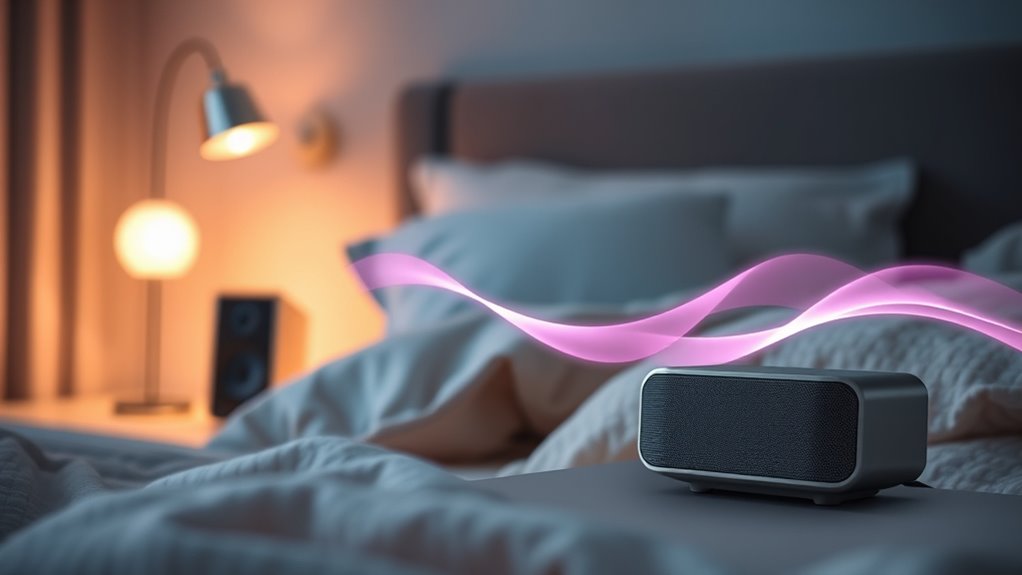
Pink noise offers several advantages for creating an ideal sleep environment because it provides a more balanced and natural sound spectrum. Unlike white noise, pink noise emphasizes lower frequencies, making it sound softer and more soothing. This can help mask disruptive sounds like traffic or voices without being too harsh or intrusive. The gradual decrease in high-frequency energy creates a calming atmosphere, making it easier for you to relax and fall asleep. Pink noise also tends to be less fatiguing over long listening periods, so it remains effective throughout the night. Its gentle, steady sound can promote deeper, more restorative sleep by reducing sudden wake-ups caused by environmental noise. Additionally, sound masking techniques like pink noise can help improve overall sleep quality by creating a consistent auditory backdrop. Because of its balanced sound spectrum, pink noise is often preferred for long-term sleep environments, as it minimizes the risk of desensitization or discomfort over time. Furthermore, studies suggest that the frequency distribution of pink noise closely resembles natural ambient sounds, enhancing its calming effects. Overall, pink noise creates a peaceful background that supports uninterrupted rest.
Choosing the Right Sound for Your Personal Preference
Choosing the right sound for your sleep environment depends largely on your personal preferences and sensitivities. To find what works best, consider these factors:
- Do you prefer a consistent, smooth sound like white noise that masks all disruptions?
- Are you more relaxed with the gentle, deeper tones of pink noise that mimic natural environments?
- Do you find certain frequencies more soothing or distracting?
- Are you sensitive to volume levels or particular sounds that may disturb your sleep?
- Incorporating outdoor soundscapes or ambient noises can sometimes enhance relaxation and improve sleep quality. Additionally, exploring natural sound options such as rain or forest sounds might provide a more immersive experience. Being mindful of sound masking techniques can help optimize your sleep environment further. Understanding how different sounds influence your sleep cycles can guide you toward the most effective choice. Adjusting your environment with personalized sound profiles can also lead to better sleep outcomes.
Experiment with both types, adjusting volume and duration, to see which helps you fall asleep faster and stay asleep longer. Your ideal sound should create a calming atmosphere tailored to your unique needs and preferences.
Tips for Incorporating Noise Into Your Sleep Routine
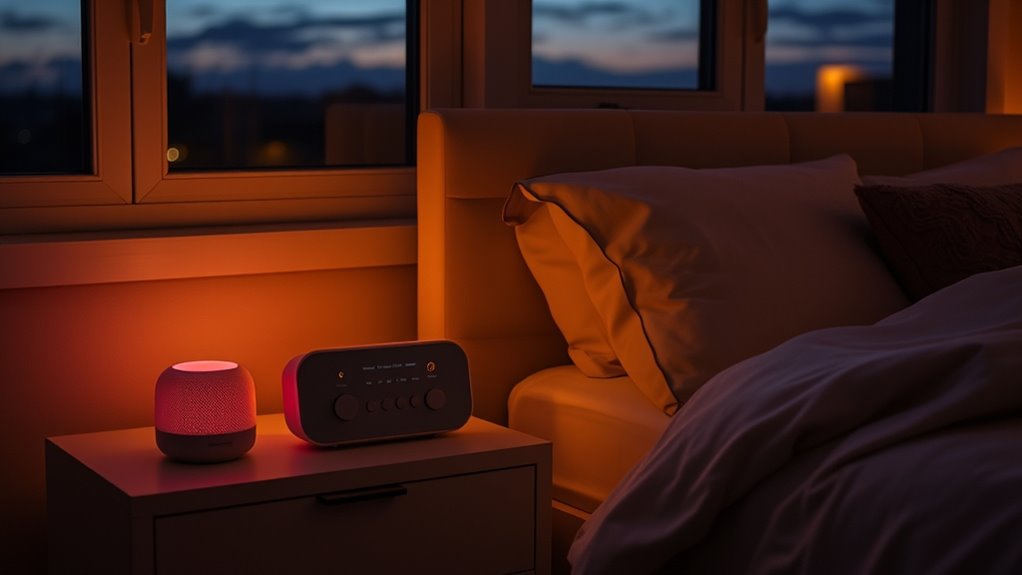
Incorporating noise into your sleep routine can be simple and effective when done intentionally. Start by choosing a consistent sound that promotes relaxation, like white or pink noise. Use a speaker or white noise machine placed near your bed, ensuring the volume is comfortable but not disruptive. Experiment with different durations, such as playing noise throughout the night or just during the initial sleep phase. Keep a regular schedule to train your brain to associate the sound with sleep. Consider the environment and avoid sudden changes. Here’s a quick guide:
| Tip | Benefit |
|---|---|
| Use a dedicated device | Consistent sound quality |
| Set a timer or loop | Avoid abrupt silences |
| Adjust volume carefully | Prevent disturbance |
| Choose familiar sounds | Ease into sleep naturally |
Additionally, understanding how sound therapy can influence sleep quality may help you select the most effective noise type for your needs. Incorporating soundscapes that are specifically designed for relaxation can further enhance your sleep experience. For example, some noise patterns can promote deeper sleep stages by providing a calming background sound that masks disruptive noises.
Frequently Asked Questions
Can White or Pink Noise Help With Tinnitus or Ringing Ears?
Yes, white and pink noise can help with tinnitus or ringing ears. They create a consistent background sound that masks the ringing, making it less noticeable. White noise has a bright, static-like quality, while pink noise is softer and more balanced. Try both to see which one works best for you. Using a steady sound can make your tinnitus less intrusive and improve your focus and sleep quality.
Are There Health Risks Associated With Prolonged Exposure to White or Pink Noise?
Prolonged exposure to white or pink noise generally doesn’t pose significant health risks if kept at safe volume levels. However, listening at high volumes over time can potentially cause hearing damage or tinnitus worsening. To stay safe, keep the volume moderate, take regular breaks, and avoid using noise machines for extended periods during sleep. If you experience discomfort or ringing, consult a healthcare professional for personalized advice.
How Do Individual Hearing Sensitivities Influence Noise Preferences for Sleep?
Your hearing sensitivities greatly influence your noise preferences for sleep. If you’re more sensitive to high frequencies, pink noise may feel calmer and less harsh, helping you relax better. Conversely, if you tolerate or prefer sharper sounds, white noise might suit you more. Experimenting with both can help you discover which type minimizes disturbances and promotes restful sleep, ensuring you choose the sound environment best tailored to your hearing needs.
Is There a Recommended Volume Level for White or Pink Noise During Sleep?
Think of your sleep environment as a gentle stream. Keep the volume of white or pink noise at a calming level, around 50-60 decibels—roughly the sound of a quiet conversation. You want it to mask disruptive sounds without becoming a distraction. Experiment within this range, and find what feels soothing. Remember, just like a stream’s flow, the right volume should be smooth and unobtrusive, helping you drift into restful sleep.
Can Switching Between White and Pink Noise Improve Sleep Over Time?
Switching between white and pink noise can improve your sleep over time by preventing your brain from adapting to a single sound. This variation keeps your mind engaged and maintains a consistent calming effect. You might find that alternating sounds reduces sleep disruptions and enhances relaxation. Experiment with different patterns to discover what helps you fall asleep faster and stay asleep longer, making your sleep environment more dynamic and effective.
Conclusion
Ultimately, whether white noise or pink noise works best for you depends on your personal preference. Both can transform your sleep, turning restless nights into peaceful escapes. Think of it as finding the perfect symphony for your sleep—once you discover it, you’ll wonder how you ever slept without it. Don’t be afraid to experiment until you find your ideal sound; your restful sleep awaits, brighter than a thousand suns!