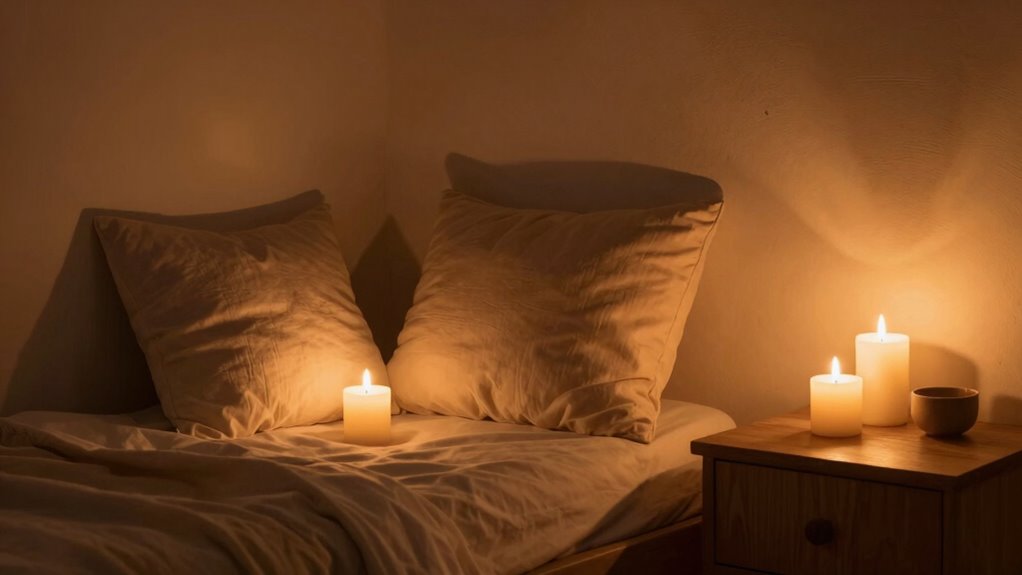

To set up warm, wind-down lighting, choose bulbs with a color temperature of 2200K-2700K that emit soft amber hues, creating a calming atmosphere. Dim the lights gradually using dimmers or smart bulbs as your evening progresses. Incorporate layered lighting with warm lamps and fixtures in relaxation zones. Adjust brightness levels and use automated routines for consistency. Focus on maintaining low, warm lighting in the final hour before sleep to promote relaxation—if you continue, you’ll learn how to perfect this setup.
Key Takeaways
- Use dimmable, warm-toned bulbs (2200K-2700K) to create a calming atmosphere before bedtime.
- Incorporate smart lighting controls to gradually lower brightness and switch to amber hues as part of your routine.
- Dim lights about an hour before sleep to signal winding down and support melatonin production.
- Set up separate lighting zones with softer, warm lighting in relaxation areas to promote calmness.
- Avoid blue or harsh white lights in the evening; opt for warm, low-intensity bulbs to facilitate sleep.
Choosing the Right Warm Lighting Options
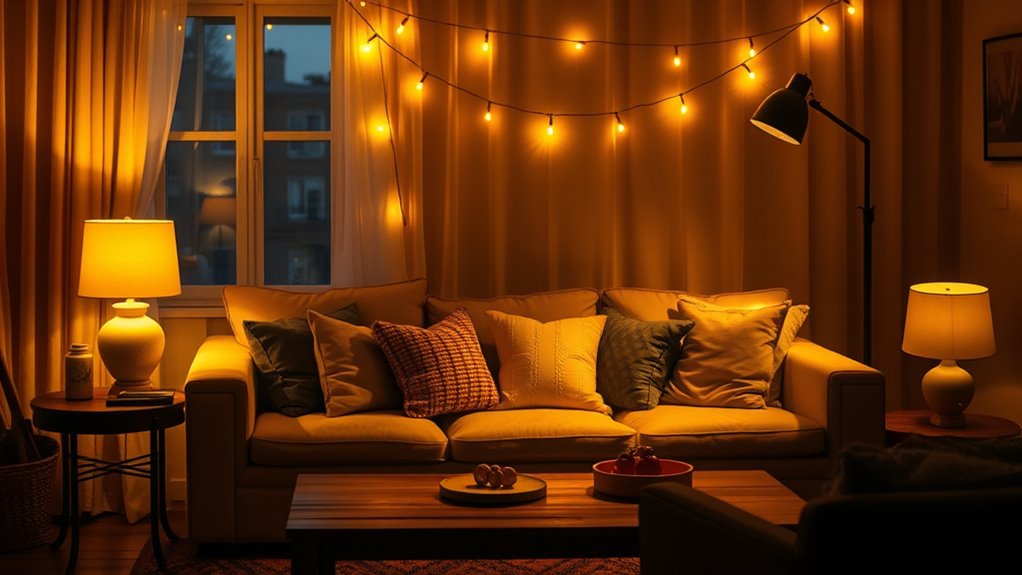
When selecting warm lighting options, it’s important to contemplate both the color temperature and the type of fixture to create a cozy and inviting atmosphere. Choose bulbs with a color temperature around 2200K to 2700K, which emit soft, amber hues perfect for relaxation. Avoid harsh, bright lights that can disrupt your wind-down routine. Opt for fixtures like table lamps, wall sconces, or pendant lights with warm-toned shades that diffuse light gently. Dimmable options give you flexibility to adjust brightness as needed. Consider the placement of your fixtures—placing them near seating areas or beds enhances comfort and creates a calming environment. Prioritize quality over quantity, selecting fixtures that complement your space and contribute to a soothing ambiance at night. Incorporating natural elements like fixtures made from wood or stone can further enhance a tranquil setting, aligning with natural pool aesthetics. Paying attention to lighting design principles can help you achieve a harmonious and relaxing space. Additionally, selecting fixtures that support lighting layers allows for better control over mood and function, enhancing your overall ambiance. Being mindful of light placement can also prevent glare and promote a restful environment.
Adjusting Brightness for Optimal Relaxation
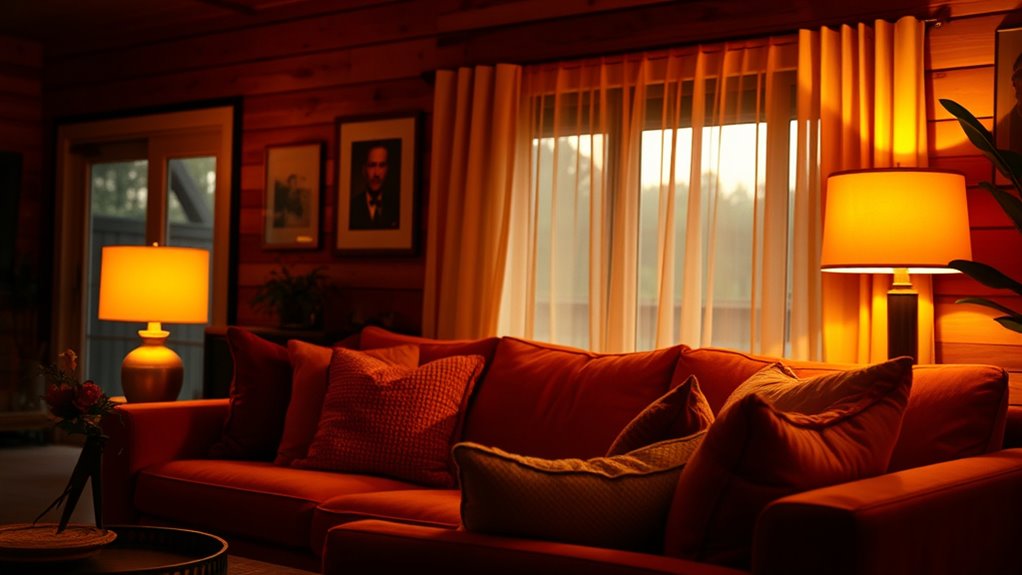
To create the perfect relaxing atmosphere, you should experiment with dimming techniques that make your space comfortable. Adjust your brightness settings based on the time of day to support your natural sleep cycle. Using adjustable light features allows you to fine-tune the lighting easily, ensuring a calming environment whenever you need it. Incorporating dynamic lighting can further enhance your ability to customize your environment for relaxation. Additionally, choosing appropriate lighting levels can help reduce eye strain and create a more peaceful setting for unwinding. Being aware of lighting control options can help you easily modify your setup to match your mood, promoting better relaxation. Understanding how plant properties influence the calming effects of certain lighting can help you select the best ambiance for relaxation. Exploring lighting automation can also streamline your wind-down routine, making it easier to transition into restful states.
Dimming Techniques for Comfort
Adjusting the brightness of your night lighting can considerably enhance your comfort and help you relax more easily. Dimming your lights gradually creates a calming environment, signaling your body that it’s time to wind down. Use dimmer switches or smart bulbs with adjustable settings to control light levels precisely. Start by lowering the brightness to a soft glow, avoiding harsh or bright illumination. If your lights don’t have dimming capabilities, consider using lamps with low-wattage bulbs or adding dimmable fixtures. Keep in mind that consistent, gentle reductions in light help your eyes and mind shift smoothly toward sleep. Incorporating smart lighting technology can further optimize your lighting adjustments for comfort and convenience. Dimming techniques are simple yet effective tools for creating a cozy, restful atmosphere, making it easier to unwind and prepare for a good night’s rest. Additionally, choosing appropriate color temperatures can influence relaxation by reducing blue light exposure, which is known to interfere with melatonin production. Managing light exposure during the evening can further support your natural sleep cycle by minimizing stimulating stimuli.
Brightness Settings by Time
Timing your brightness adjustments throughout the evening can considerably enhance your relaxation. As the night progresses, gradually lowering your lights helps signal your body it’s time to wind down. Start by setting your lights to a gentle, warm glow about an hour before bed. Then, follow these steps:
- Dim your lights to a soft, cozy level 30 minutes before bedtime, creating a calming environment.
- Reduce brightness further as you prepare to sleep, ideally to a very low level, mimicking twilight.
- Keep the lights at this minimal level until you turn them off completely, helping your mind relax and prepare for restful sleep.
These adjustments reinforce your natural sleep cues and promote a smoother transition from wakefulness to sleep.
Using Adjustable Light Features
Using adjustable light features allows you to customize your environment for ideal relaxation. You can easily dim or brighten your lights to match your mood and activities, creating a calming atmosphere. Start by lowering the brightness as you wind down, helping your body prepare for sleep. Many smart lighting systems enable you to adjust brightness levels precisely, giving you control over the ambiance. Avoid harsh, bright lights that can disrupt your circadian rhythm. Instead, opt for soft, warm tones at lower intensities, which promote relaxation. Experiment with different settings to find what feels most soothing. Using adjustable features guarantees your lighting supports your bedtime routine, helping you transition smoothly from active to restful states. Proper control over brightness sets the perfect stage for a peaceful night’s sleep.
Incorporating Natural Light During Evening Hours
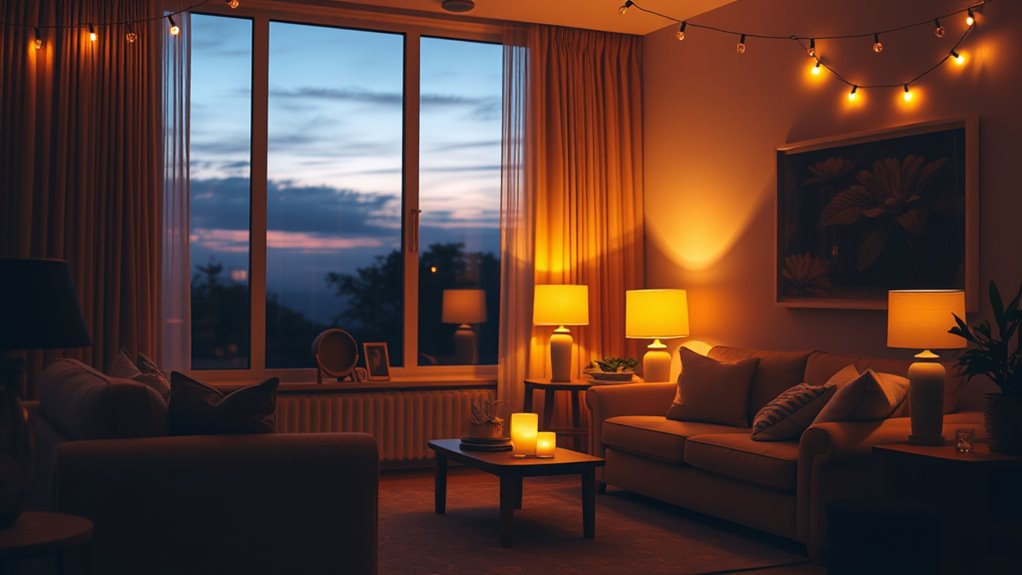
You can make the most of natural light in the evening by opening your windows and curtains to let in the last rays of sunlight. Choosing light-colored walls and furnishings helps reflect this soft glow, creating a cozy atmosphere. Scheduling time outdoors or near windows during evening hours enhances your connection with natural light and supports your relaxation. Additionally, ensuring your space is well-lit with safe and smart lighting can help maintain a comfortable environment without disrupting your circadian rhythm. Incorporating light exposure practices in your evening routine can further reinforce your natural sleep-wake cycle. Being mindful of indoor air quality can also contribute to a healthier, more relaxing environment during these hours. Proper backup lighting systems can ensure safety and convenience if power outages occur during evening hours, especially when using power tools or outdoor equipment.
Maximize Window Use
To make the most of natural light during evening hours, consider opening your window coverings to let in as much sunlight as possible. This simple step can brighten your space naturally and create a warm, inviting atmosphere. Here are three ways to maximize window use:
- Raise or pull back curtains and blinds early in the evening to let in the last rays of sunlight.
- Rearrange furniture near windows to enjoy the light while relaxing or working.
- Use sheer or light-colored curtains that can be easily opened or closed, allowing flexibility to control light without blocking it completely.
- Incorporate simple organizing strategies to keep window areas clear and enhance the flow of natural light throughout your space. Proper window placement can also optimize the amount of natural light entering your home during evening hours, making your space feel brighter and more welcoming. Additionally, adjusting window treatments to reflect or diffuse light can further improve your ambient lighting. Utilizing natural lighting techniques, such as positioning mirrors opposite windows, can also amplify the effect of available light and create a more luminous environment.
Choose Light Colors
Choosing light-colored walls and furnishings can substantially enhance natural light in your space during evening hours. Light hues like soft whites, pale yellows, or gentle beiges reflect more ambient light, making rooms feel brighter and more inviting as daylight fades. These colors help maximize the natural glow from windows, reducing the need for harsh artificial lighting. Additionally, light-colored decor creates a calming atmosphere, perfect for winding down. Avoid dark or bold shades that absorb light and make spaces feel smaller or gloomier. Instead, opt for shades that bounce light around your room, creating a warm, cozy environment. This simple choice can considerably improve your evening ambiance, making your space feel more open, airy, and conducive to relaxation. Incorporating reflective surfaces like mirrors or glossy finishes can further amplify the effect of natural light, enhancing the overall brightness. Using well-placed light-colored furnishings can also contribute to this effect by dispersing light more evenly throughout the room. Choosing natural light during evening hours aligns with science-backed methods of creating a relaxing environment that supports your wind-down routine.
Schedule Natural Lighting
As evening approaches, adjusting your schedule to maximize natural light can considerably improve your home’s ambiance. To do this effectively, plan your activities around sunset. Here are three ways to schedule natural lighting:
- Open curtains or blinds early to let in the last warm rays of sunlight, creating a cozy atmosphere.
- Shift indoor tasks like reading or relaxing to the late afternoon, when natural light is still abundant.
- Dim or turn off artificial lights as sunset nears, allowing the natural glow to fill your space without competing with electric lighting.
Creating Zones With Different Light Intensities
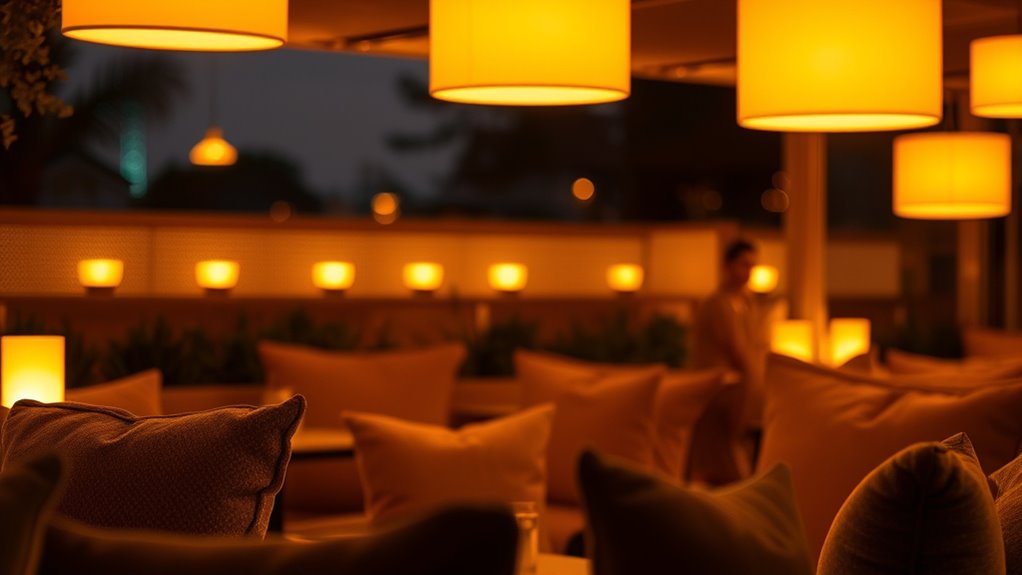
Creating zones with different light intensities allows you to tailor your environment for various activities and times of day. For example, brighter lights in your workspace help you stay alert and focused, while softer, dimmer lighting in your relaxation areas encourages calmness. Use layered lighting: overhead fixtures for general illumination, task lights for specific activities, and accent lights for ambiance. Adjust the brightness levels as needed, either manually or with dimmers, to suit your mood and routines. This setup helps regulate your circadian rhythm by signaling your body when it’s time to wind down or be alert. By creating distinct zones, you control your environment more effectively, promoting better sleep and a more comfortable living space.
Using Smart Lighting to Enhance Your Wind-Down Routine
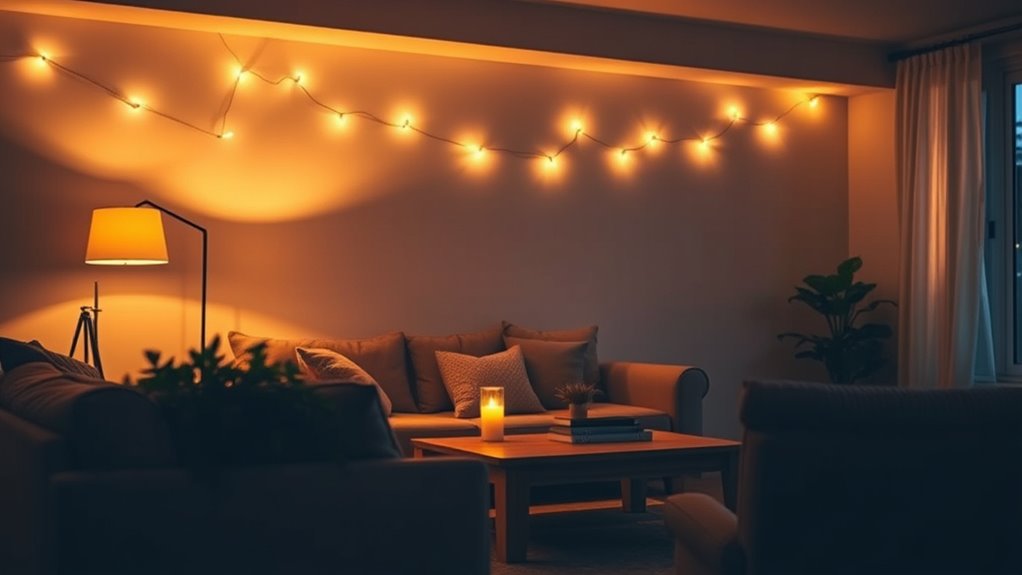
Smart lighting can markedly enhance your wind-down routine by automatically adjusting to support relaxation. With smart bulbs or fixtures, you can create a calming environment tailored to your evening needs. For example, you might:
- Set lights to gradually dim to a warm, amber hue as bedtime approaches, signaling your body to relax.
- Schedule your lights to turn off or switch to very low, warm tones after a certain hour, reducing blue light exposure.
- Use voice commands or apps to quickly adjust lighting without disrupting your routine, ensuring a seamless progression from activity to rest.
These features help reinforce your bedtime habits, making it easier to unwind and prepare your mind and body for sleep. Smart lighting offers convenience and consistency, creating the perfect environment to wind down each night.
Tips for Maintaining a Consistent Nighttime Lighting Environment
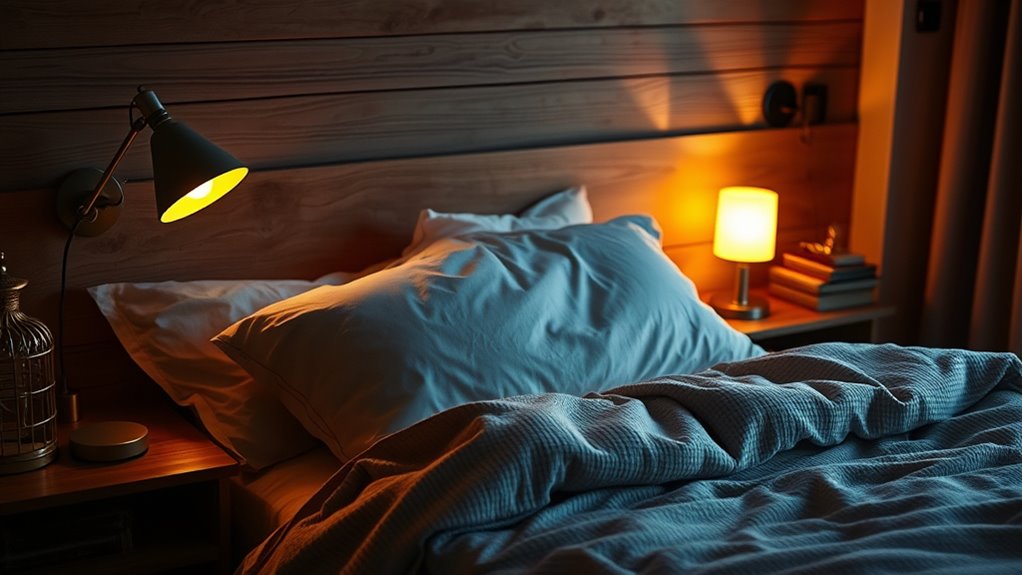
Maintaining a consistent nighttime lighting environment helps reinforce your wind-down routine and signals to your body that it’s time to relax. Start by setting a regular schedule for your lighting, dimming lights at the same time each evening. Use warm, low-intensity bulbs to create a cozy atmosphere that promotes relaxation. Avoid bright or blue-toned lights, especially close to bedtime, as they can interfere with melatonin production. Keep your lighting simple and avoid introducing new or overly stimulating light sources late at night. If you use smart lighting, program it to automatically dim or switch to warm tones at your usual bedtime. Consistency is key; sticking to your lighting routine will help your body associate these cues with sleep, making it easier to wind down each night.
Frequently Asked Questions
How Do Different Warm Light Temperatures Affect Sleep Quality?
Different warm light temperatures can substantially influence your sleep quality. Cooler warm lights around 2700K may help you relax more effectively, easing your shift to sleep. On the other hand, very warm lights near 2200K promote melatonin production, making it easier to fall asleep and stay asleep longer. You should adjust your lighting based on your preference and bedtime routine to optimize relaxation and improve overall sleep.
Can LED Warm Lights Mimic Natural Sunset Colors Effectively?
You can definitely make warm LED lights mimic sunset colors effectively. When you choose lights with adjustable color temperatures around 2000-3000K, they produce soft, amber hues similar to a natural sunset. By dimming the lights gradually in the evening, you create a relaxing atmosphere that signals your body to wind down. This setup helps your mind associate warm, sunset-like lighting with the end of the day, promoting better sleep.
Are There Specific Timers Recommended for Wind-Down Lighting Routines?
Yes, specific timers are recommended for wind-down lighting routines. You should choose timers that are easy to program and can gradually dim your lights over time. Look for models with adjustable settings, such as digital timers or smart plugs, which allow you to set personalized schedules. This helps you unwind naturally, preparing your body for sleep. Make sure the timer’s reliability and ease of use match your routine needs for the best results.
How Does Blue Light Filtering Work With Warm Lighting Setups?
Blue light filtering works wonders by turning your screens into gentle, soothing night-time companions. It reduces the blue light emitted, which can interfere with your melatonin production and disrupt sleep. When combined with warm lighting setups, it creates a calming environment so powerful, it’s like wrapping your mind in a cozy blanket of darkness. This combo helps you relax faster, fall asleep easier, and wake up feeling refreshed, ready to conquer the next day.
What Safety Considerations Are Important When Installing Dimmable Lighting?
When installing dimmable lighting, you need to prioritize safety by turning off power before starting. Make sure your wiring matches the fixture’s specifications, and use proper tools to prevent electrical shorts. Check that dimmer switches are compatible with your bulbs to avoid overheating. Avoid overloading circuits, and if you’re unsure, hire a professional to guarantee everything is installed correctly and safely.
Conclusion
Think of your evening lighting as the gentle tide guiding you to shore. By choosing warm, dim lights and creating cozy zones, you set the perfect course for relaxation. Adjust brightness, incorporate natural light, and use smart tech to fine-tune your environment. Stick to a consistent routine, and your nighttime lighting becomes a calming tide that gently carries you into restful sleep, leaving stress behind like driftwood on the shore.