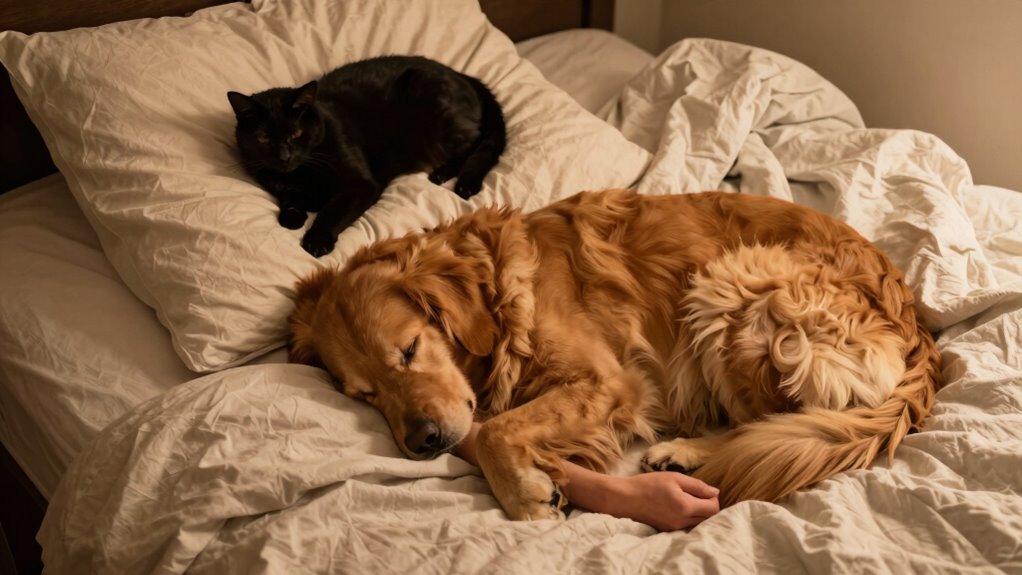

Sleeping with pets can bring comfort and companionship, but it often disrupts your sleep cycle with noise, movement, and unpredictable behavior. Pet dander, saliva, and fur can trigger allergies and skin irritations, making restful sleep harder to achieve. While the emotional bond is valuable, balancing cuddles with strategies like designated cuddling times or keeping pets out of the bedroom can help. Exploring these tradeoffs further can help you find the right balance for better sleep and health.
Key Takeaways
- Pets can cause sleep disruptions through noise, movement, and micro-arousals, fragmenting sleep cycles.
- Pet dander and saliva increase allergy and asthma risks, leading to respiratory issues and skin irritations during sleep.
- The emotional comfort of sleeping with pets can improve well-being but may also result in restless nights.
- Balancing pet companionship with sleep quality involves routines, boundaries, and environmental adjustments.
- Managing allergens and noise through cleaning, filters, and pet training helps mitigate sleep tradeoffs.
How Pets Disrupt Your Sleep Cycles

Pets may seem like the perfect sleep companions, but they can actually disrupt your sleep cycles. When your furry friend moves or makes noise during the night, it can wake you up or cause micro-arousals. These interruptions prevent you from reaching deep sleep stages, which are essential for physical and mental restoration. Even if you don’t fully wake, your body responds to disturbances by shifting into lighter sleep, reducing sleep quality. Additionally, your pet’s movements or breathing patterns can create a fragmented sleep pattern, leaving you tired and less refreshed in the morning. Recognizing these sleep disruptions can help pet owners take steps to improve their sleep environment and overall well-being. For some, these disturbances may also contribute to sleep deprivation, which impacts overall health and daily functioning. Understanding the impact of sleep fragmentation can motivate pet owners to establish better sleep routines or boundaries for their pets.
Allergens and Respiratory Concerns
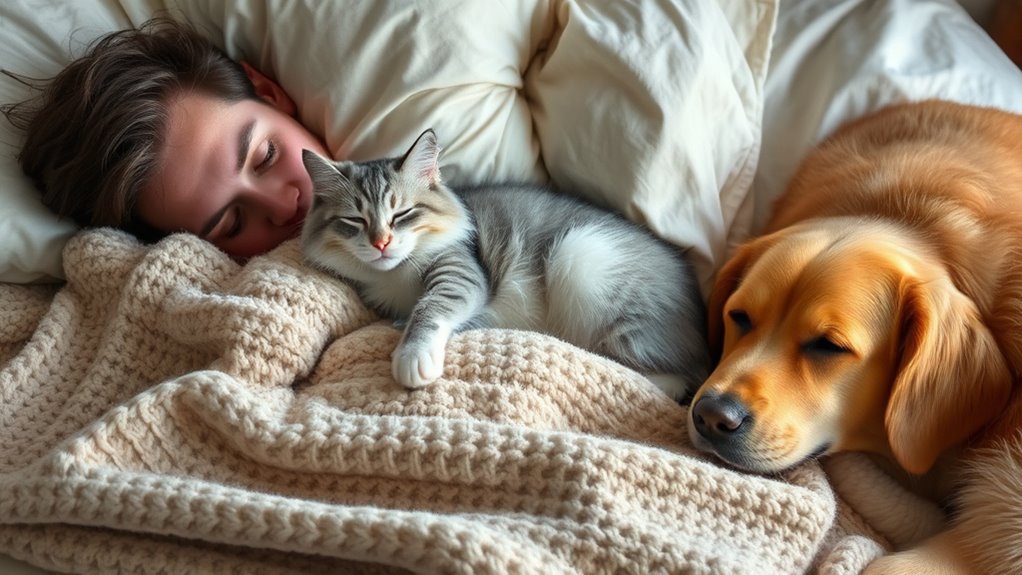
While pet movements and noises can disturb your sleep, they also introduce potential health risks related to allergens and respiratory issues. Pet dander, saliva, and urine contain proteins that can trigger allergies, leading to sneezing, congestion, or itchy eyes. If you’re prone to asthma or respiratory sensitivities, these allergens can worsen symptoms or cause flare-ups. Sleeping with pets means you’re constantly exposed to these particles, which can accumulate on bedding, furniture, and air. Over time, this exposure may affect your breathing quality, especially if your immune system is sensitive. Regular cleaning, air purifiers, and choosing hypoallergenic pets can help mitigate some risks. Air purification systems can significantly reduce airborne allergens, improving overall sleep quality. Understanding furnishings that trap allergens and choosing appropriate materials for bedding can further reduce exposure. Additionally, investing in allergen-resistant bedding covers can provide an extra layer of protection. However, if allergies or respiratory problems are significant, sleeping apart might be necessary for your health. Precious metals can sometimes be used as a metaphor for stability and value in financial planning, but when it comes to health, avoiding allergens is crucial.
The Impact of Pet Movement and Noise
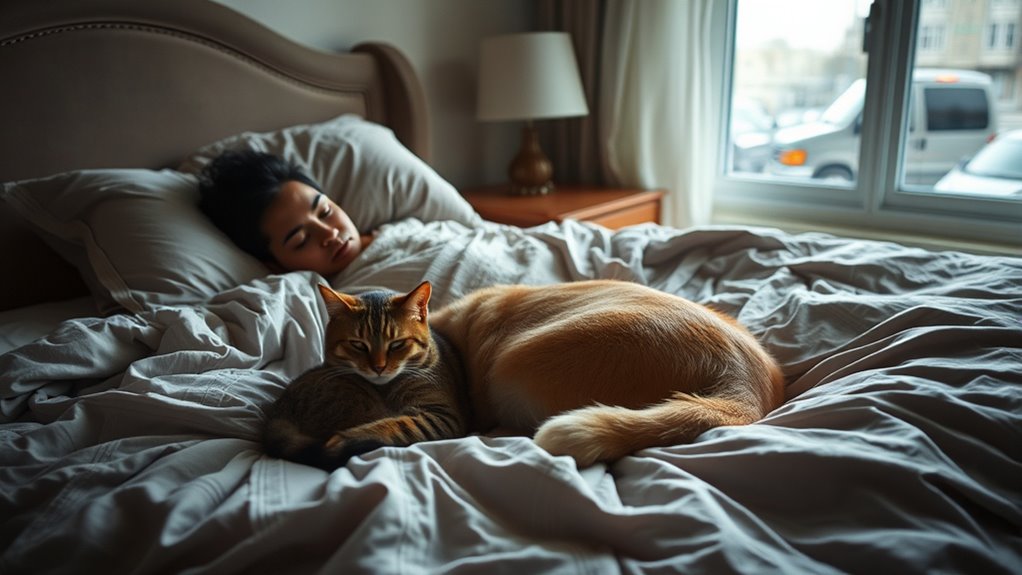
Pet movements and noises can easily disturb your sleep, making it hard to stay restful through the night. When your pet shifts or scratches, it might wake you up unexpectedly. Noisy pets, whether barking or meowing, can also interrupt your sleep cycle and leave you feeling tired the next day. Additionally, clean-home systems like air filtration and noise reduction can help minimize some of these disturbances, promoting a more restful environment. Implementing noise control measures can further reduce sound disruptions caused by pets, helping you sleep more peacefully. Using specialized electric noise reduction devices can be particularly effective in creating a quieter sleeping space.
Pet Movement Disturbances
Even subtle movements and noises from your furry companions can substantially disrupt your sleep. When your pet shifts positions, stretches, or moves around in bed, it can cause you to wake or drift into lighter sleep stages. These movements often go unnoticed during the day but become significant during restful sleep, fragmenting your sleep cycle. If your pet prefers to sleep on your pillow or snuggled close, their constant repositioning can lead to frequent awakenings. Even small movements, like wagging tails or scratching, can jostle you awake or prevent you from reaching deep, restorative sleep. Over time, these disturbances accumulate, leaving you tired and less refreshed, affecting your overall health and daily productivity. Additionally, sleep hygiene can be compromised when pets interfere with your regular sleep patterns, making it harder to maintain restorative rest. Furthermore, sleep fragmentation caused by pet movements can lead to longer-term sleep issues if not addressed. Implementing behavior modification techniques can help reduce disruptive pet behavior and improve sleep quality, leading to better overall well-being. Recognizing and managing these sleep tradeoffs is essential for achieving a healthy balance between pet companionship and restful sleep.
Noisy Pet Noises
Have you ever been jolted awake by the sudden sound of your pet’s bark, growl, or scratching? Noisy pet noises can seriously disrupt your sleep, leaving you tired and irritable. These sounds vary from loud barks to scratching at the door or rustling in their bedding. To understand their impact, consider this table:
| Noise Type | Common Triggers | Effect on Sleep |
|---|---|---|
| Barking | Excitement, alertness | Fragmented, restless sleep |
| Growling | Warning, discomfort | Interrupted rest |
| Scratching | Itching, boredom | Sudden awakenings |
| Rustling | Movement, hunger | Sleep disruptions |
These noises can make it difficult to stay in deep sleep stages, affecting your overall rest quality. Additionally, addressing pet noise issues with appropriate vacuum cleaners can help reduce some disturbances caused by pet movement and shedding. Proper training and environmental adjustments can also minimize noise disturbances, leading to more restful nights for both you and your pet. Incorporating behavior management techniques can further assist in reducing these disruptive sounds. In some cases, understanding animal behavior may help in managing and reducing these disruptive sounds.
Allergic Reactions and Skin Irritations

If you sleep with pets, you might notice allergy symptoms like sneezing or itchy eyes caused by pet dander. Skin contact with your pet can also lead to irritations or rashes. Additionally, pet allergens can make breathing harder during the night, disrupting your sleep.
Pet Dander Allergies
Did you know that pet dander can trigger allergic reactions and skin irritations even when you’re just relaxing with your furry friend? These tiny skin flakes from pets become airborne and settle on surfaces, making you vulnerable. You might experience sneezing, congestion, or itchy eyes without realizing why. Dander can also cause skin irritations if it contacts your skin directly. To manage this, consider:
- Regularly cleaning your bedding and furniture
- Using HEPA air purifiers
- Bathing your pet frequently
- Grooming them outside when possible
- Washing your hands after pet contact
Being aware of these triggers helps you minimize reactions and improves your sleep quality. Managing pet dander is essential, especially if allergies impact your comfort and health while sharing your space with your pet. Understanding the lifecycle and performance metrics of pet dander can further help in developing effective management strategies. Additionally, incorporating aromatherapy techniques such as diffusing lavender or chamomile oils may promote relaxation and reduce allergy symptoms. Regularly monitoring your environment and verifying your pet’s health status can also contribute to reducing allergen levels indoors. Recognizing allergen exposure patterns helps you identify times or situations when dander levels spike, allowing for targeted interventions.
Skin Contact Irritations
Pet dander isn’t the only concern when sharing your bed with pets; direct skin contact can also cause irritation and allergic reactions. When your pet’s fur or saliva touches your skin, it may trigger redness, itching, or rashes, especially if you have sensitive skin or allergies. These reactions vary from mild irritation to more serious skin conditions. To understand this better, here’s a quick comparison:
| Reaction Type | Symptoms |
|---|---|
| Allergic Skin Reaction | Itching, redness, hives |
| Contact Dermatitis | Red, inflamed, itchy skin |
| Fungal Infections | Rash, scaling, discomfort |
| Bacterial Skin Infection | Redness, pus, pain |
| Preventive Measures | Regular bathing, wash bedding |
Being aware helps you take steps like frequent baths and washing bedding to minimize skin issues.
Breathing Difficulties During Sleep
Sharing your bed with pets can lead to breathing difficulties during sleep, especially if you’re allergic to pet dander or irritated skin. Pet dander can trigger asthma symptoms, cause coughing, or make breathing feel labored. Skin irritations from fur or saliva can also worsen allergy symptoms, making restful sleep hard to achieve. To minimize these issues, consider:
- Regularly bathing your pet to reduce dander
- Using HEPA air filters in your bedroom
- Keeping pets out of the bedroom entirely
- Washing bedding frequently
- Monitoring symptoms and seeking medical advice if needed
Even if you’re not severely allergic, these precautions can help you breathe easier and sleep better. Recognizing how pets impact your respiratory health is key to balancing companionship and sleep quality.
The Psychological Comfort vs. Sleep Quality

While sleeping with pets can provide a comforting sense of companionship, it often comes at the cost of disrupted sleep quality. The warmth, presence, and unconditional love from your pet can reduce feelings of loneliness and stress, boosting your overall psychological well-being. This emotional comfort can help you feel safer and more relaxed, promoting a positive sleep association. However, this same closeness can lead to frequent awakenings, movement disturbances, or difficulty reaching deep sleep stages. The paradox is that what offers emotional solace might also interfere with restorative rest. You might find yourself craving that cuddly companionship but sacrificing the deep, uninterrupted sleep your body needs. Balancing the psychological benefits and sleep disruptions becomes a personal tradeoff you must consider.
Tips for Balancing Pet Cuddles and Rest

Finding a balance between enjoying your pet’s cuddles and getting quality sleep can be challenging, but small adjustments can make a big difference. Start by setting boundaries, like designating specific cuddle times before bed. Use a cozy pet bed nearby so your pet feels close without sharing your pillow. Consider training your pet to stay off the bed during certain hours. Keep your sleeping area cool and dark to promote better rest, regardless of pet snuggles. Finally, be consistent with routines to help your pet understand when it’s time to relax and when cuddle sessions are allowed.
Balance pet cuddles and good sleep with boundaries, cozy beds, routines, and a cool, dark environment.
- Establish designated cuddle times
- Provide a comfortable pet bed
- Train your pet to respect boundaries
- Maintain a cool, dark sleeping environment
- Keep routines consistent
Frequently Asked Questions
Can Sleeping With Pets Improve Mental Health Despite Sleep Disruptions?
Sleeping with pets can boost your mental health by reducing stress and providing comfort, even if it disrupts your sleep. The companionship and warmth from your pet can release feel-good hormones like oxytocin, helping you feel calmer and more secure. While you might experience some sleep interruptions, the emotional benefits often outweigh the drawbacks, making cuddling with your pet a valuable part of your overall well-being.
Are There Specific Breeds That Tend to Disturb Sleep More Than Others?
Think of some dog breeds as night-time ninjas, quietly sneaking into your sleep. Small, active breeds like Jack Russell Terriers or Chihuahuas often disturb your rest with restless movements or barking. Breeds with high energy levels tend to be more disruptive, especially if they’re not tired out during the day. If sleep quality matters, choose calmer, larger breeds, and establish a routine to keep both your sleep and your pet’s well-being in check.
How Do Pet Sleep Habits Influence Human Sleep Quality Long-Term?
Your pet’s sleep habits can substantially impact your long-term sleep quality. If your pet frequently moves, makes noise, or stays active during the night, it can cause fragmented sleep and reduce restorative REM cycles. Over time, this may lead to fatigue, decreased alertness, and even health issues like weakened immunity. To protect your sleep, establish boundaries, create a comfortable sleeping environment, and consider training your pet to adopt better sleep habits.
What Are Effective Strategies for Co-Sleeping With Multiple Pets?
Imagine your bed as a busy train station, with each pet as a different train arriving and departing. To manage this, set designated spots for each pet, creating a visual map for everyone. Use calming routines and reinforce boundaries with positive reinforcement. Keep a consistent schedule, and consider using barriers or separate sleeping areas when needed. This approach helps everyone find comfort and reduces chaos, ensuring better sleep for you all.
Are There Age-Related Differences in How Pets Affect Sleep?
Yes, pets’ impact on your sleep varies with age. Younger pets often need more attention and may be more active, disrupting your sleep. Older pets tend to be calmer and sleep more soundly, causing less disturbance. As you age, your sleep patterns may become more sensitive to pet behavior, so adjusting routines and creating quiet, comfortable spaces can help you sleep better regardless of your pet’s age.
Conclusion
Balancing the warmth of your pet’s presence with the delicate dance of sleep is like walking a tightrope between comfort and disruption. While their cuddles offer a cozy haven, the sleep tradeoffs can turn your nights into a symphony of interruptions. By setting gentle boundaries, you become the conductor of your own restful symphony, harmonizing love and rest. Remember, nurturing your well-being guarantees both you and your pet can dream peacefully beneath the same starry sky.