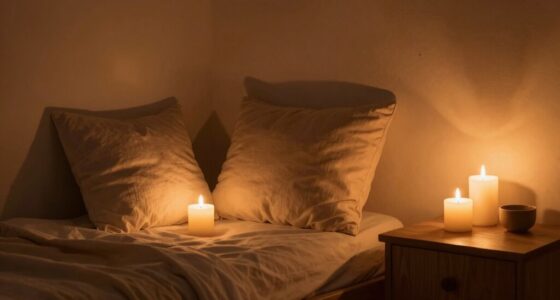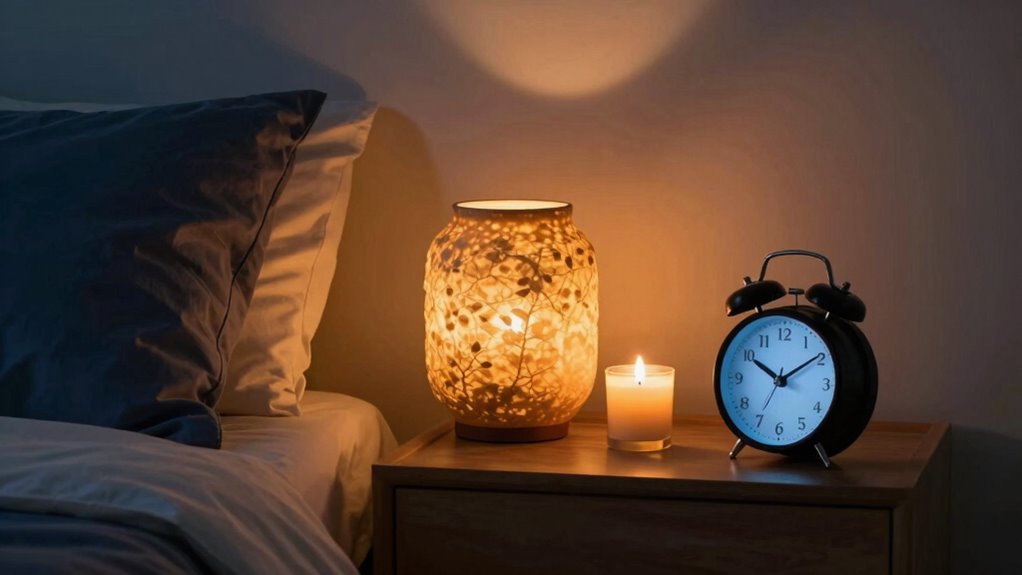

To signal ‘sleep time,’ you should set up layered bedside lighting with ambient, task, and accent lights. Start with a warm, soft ceiling or wall light to create a relaxing atmosphere. Use a dimmable bedside lamp or reading light for focused tasks, and add cozy string lights or a warm bedside lamp for a personal touch. Adjusting these layers helps your mind recognize it’s time to unwind. Keep exploring to discover how to perfect your sleep environment with smart lighting choices.
Key Takeaways
- Use dimmable ambient lighting to create a warm, relaxing atmosphere that signals wind-down time.
- Incorporate task lighting with adjustable reading lamps for focused illumination when needed.
- Add accent or decorative lights, such as warm-colored bedside lamps or string lights, to promote calmness.
- Gradually reduce or turn off overhead lighting to prepare the room for sleep.
- Layer different light types to balance comfort, functionality, and signals for bedtime.
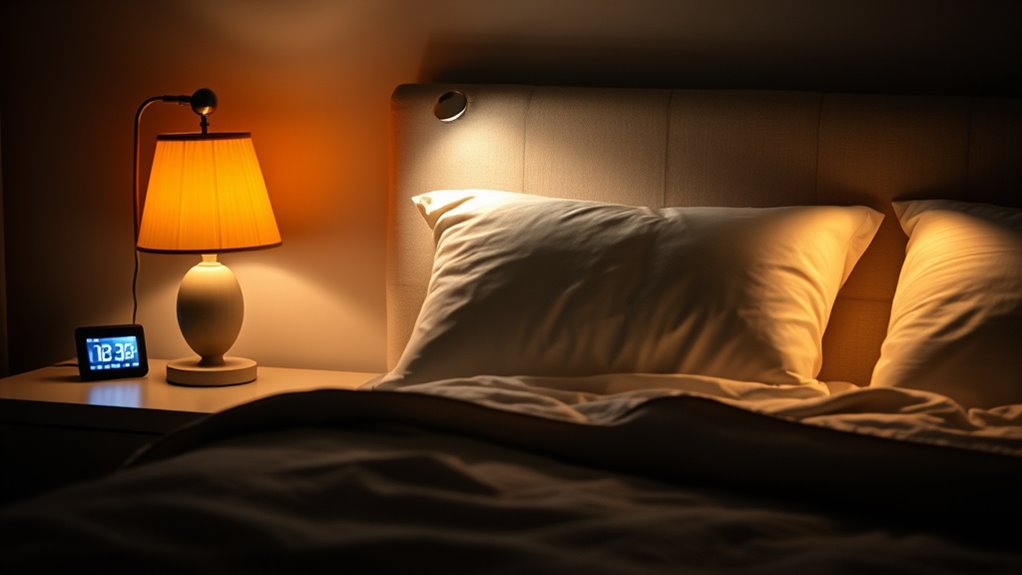
Have you ever wondered how to create a cozy and functional bedroom ambiance? The secret lies in thoughtfully layering your bedside lighting. By combining different types of lights, you can set the perfect mood, signal that it’s time to wind down, and even conserve energy. This approach isn’t just about aesthetics; it’s a practical strategy to enhance your overall sleep environment.
Start by considering ambient lighting, such as a soft ceiling fixture or wall sconces. These lights provide a gentle, overall glow that fills the room without being harsh. When you switch on ambient lighting, you immediately create a warm and inviting atmosphere that promotes relaxation. This layer is essential for mood enhancement because it sets the tone for your entire space. Plus, choosing energy-efficient bulbs for ambient lighting helps conserve power, making it an eco-friendly choice that keeps your utility bills in check.
Ambient lighting such as ceiling fixtures or wall sconces creates a warm, relaxing atmosphere while conserving energy.
Next, add task lighting—think reading lamps or adjustable sconces mounted near your bed. These lights are brighter and more directional, perfect for activities like reading or working on your phone without disturbing your partner. When it’s time to sleep, you can easily switch off or dim these lights, signaling to your brain that it’s time to wind down. By controlling this layer separately from ambient light, you create a clear visual cue that helps your body transition into sleep mode. Additionally, task lighting allows you to use less overall energy since you only turn on what’s necessary, supporting energy conservation.
Finally, incorporate accent or decorative lighting, such as bedside lamps with warm-colored bulbs or string lights. These fixtures add a personal touch and create a cozy, intimate environment. When you turn on your bedside lamp, it signals that it’s time to relax or read, reinforcing a calming bedtime routine. This layer also gives you control over the lighting intensity and color temperature, further enhancing mood and comfort. Using dimmable or warm-toned bulbs in this layer boosts mood enhancement, making your space feel more inviting and restful. Plus, when used thoughtfully, accent lighting helps you avoid unnecessary overhead lighting, which can be more energy-consuming.
Frequently Asked Questions
How Do I Choose the Right Brightness for Bedside Lighting?
To choose the right brightness for bedside lighting, start with dimming controls to easily adjust the light level for your comfort. Aim for a soft, warm color temperature to create a calming atmosphere that signals sleep time. Lower the brightness gradually as bedtime approaches, ensuring it’s not too harsh or bright, which can disrupt your sleep. Adjusting brightness and color temperature helps you relax and prepare for restful sleep.
Can Smart Lighting Be Integrated Into Bedside Layers?
Yes, you can integrate smart lighting into your bedside layers, making it seamless. Imagine softly speaking a command, and your lights dim to the perfect brightness, signaling ‘sleep time’. Voice control offers convenience, allowing you to adjust brightness effortlessly. Plus, smart lighting enhances energy efficiency, turning off or dimming automatically when not needed. This setup creates a calming environment while saving energy, perfect for your nighttime routine.
What Are the Best Bulb Types for Sleep-Friendly Lighting?
You should choose warm white bulbs with a low color temperature, around 2700K, to create a sleep-friendly environment. These bulbs emit soft, calming light that signals your body it’s time to wind down. Opt for LED bulbs for better longevity, ensuring your sleep setup stays functional and energy-efficient over time. This combination helps you relax and prepare for restful sleep while maintaining durability and quality.
How Can I Customize Lighting for Different Sleep Routines?
Oh, sure, just set your lights to ‘party’ mode when you need sleep, right? To customize for different routines, play with color temperature and mood setting—warm tones for winding down, cooler for alertness. Use dimmers or smart bulbs to switch effortlessly. You’ll create the perfect ambiance, signaling your brain it’s time to relax or wake up, all with a simple tap or voice command. Sleep easy, superstar.
Are There Any Safety Tips for Installing Bedside Lighting?
When installing bedside lighting, prioritize safety by carefully choosing nightlight placement to avoid tripping hazards. Keep cords neat and out of walkways, securing them with clips or tape to prevent accidental pulls. Use outlets equipped with safety covers if necessary, and avoid overloading circuits. Always turn off power before installation, and opt for fixtures with secure fittings to reduce the risk of falling. These steps help guarantee safe, effective bedside lighting.
Conclusion
Think of your bedside lighting layers as the gentle tide lapping at your shores, signaling that it’s time to unwind. When you set the right mood with soft, layered lights, you create a calming harbor for sleep. Just as the tide shifts and calms, your lighting can gently evolve you from wakefulness to rest. Embrace these layers, and let your bedroom become a peaceful retreat where sleep flows as naturally as the tide.