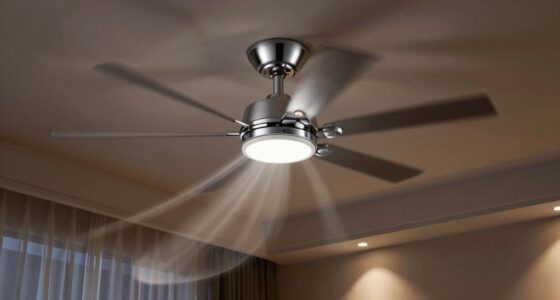
To circulate air without feeling cold, focus on controlled airflow and proper sealing. Use ventilation systems like exhaust fans or heat exchange units to bring in fresh air while removing stale air. Strategically place fans—such as ceiling fans or reversing their direction in winter—to promote even circulation without creating drafts. Seal gaps around windows and doors to prevent chilly breezes. Keep exploring options to optimize comfort and air quality, so you stay cozy year-round.
Key Takeaways
- Use ceiling fans in reverse mode during winter to circulate warm air without creating cold drafts.
- Seal gaps around windows and doors to prevent chilly drafts while maintaining proper airflow.
- Employ controlled ventilation systems that bring in fresh air without causing discomfort from drafts.
- Combine fans with adjustable speed settings to enhance airflow without creating direct cold breezes.
- Strategically position fans and vents to promote air circulation while keeping drafts at bay.
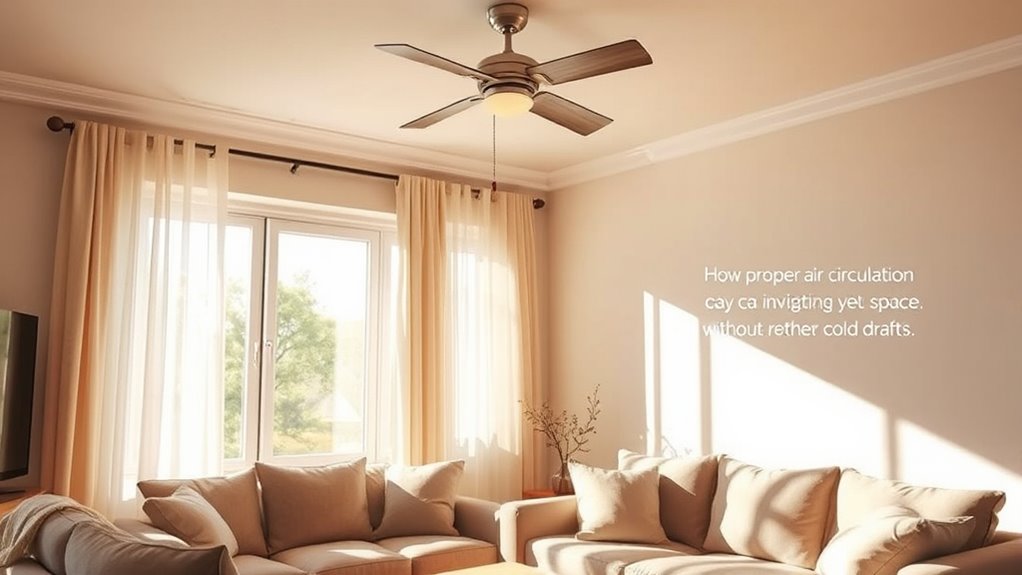
Understanding the difference between airflow and drafts is essential for maintaining a comfortable and energy-efficient home. While both involve the movement of air, they impact your indoor environment in very different ways. Airflow refers to controlled, steady circulation of air that enhances ventilation efficiency, helping to improve indoor air quality. Proper airflow ensures fresh air replaces stale air, reducing humidity, removing pollutants, and preventing mold growth. When you optimize airflow, your home feels fresher, and you breathe cleaner air. Conversely, drafts are unwanted air movements that often result from gaps, cracks, or poorly sealed windows and doors. These drafts cause cold spots, discomfort, and increased energy bills because your heating system works harder to compensate for the unwanted air infiltration.
Airflow improves air quality; drafts cause cold spots and higher energy costs.
To circulate air without feeling cold, you need to focus on managing ventilation efficiency. This means encouraging a steady flow of fresh air that promotes air exchange without creating chilly drafts. You can achieve this by installing controlled ventilation systems such as exhaust fans, energy recovery ventilators, or heat exchange systems. These devices let in fresh air while removing stale indoor air, maintaining a balance that keeps your space comfortable and your indoor air quality high. Proper ventilation not only boosts your comfort but also considerably reduces indoor pollutants, allergens, and humidity levels, which is essential for a healthy living environment. Additionally, ensuring balanced airflow helps prevent pockets of stale or overly moist air that can contribute to mold growth or respiratory issues.
Sealing gaps and leaks around windows, doors, and other openings is critical in preventing drafts. Use weatherstripping, caulking, or draft stoppers to eliminate those chilly breezes that make you uncomfortable and waste energy. When you block drafts effectively, you retain more heat during winter and keep the cool air in during summer, reducing your reliance on heating and cooling systems. This not only increases your home’s energy efficiency but also ensures that the indoor air you breathe remains consistent in temperature and quality. Proper sealing also supports ventilation efficiency, making your home more comfortable and healthier.
In addition to sealing, consider strategic placement of fans and vents. Ceiling fans, for instance, help circulate air evenly throughout a room without creating drafts. Using fans in reverse during winter can push warm air down from the ceiling, maintaining consistent warmth. During warmer months, fans can create a breeze that cools you without the need to lower the thermostat excessively. When paired with a ventilation system, fans help improve airflow efficiency and keep indoor air fresh without the discomfort of cold drafts.
Frequently Asked Questions
How Can I Prevent Airflow From Causing Uneven Room Temperature?
To prevent airflow from causing uneven room temperature, you should focus on airflow control and temperature balancing. Use vents or dampers to direct airflow away from cold spots, and install ceiling fans to circulate air evenly. Keep windows and doors closed when heating or cooling, and consider zone heating or cooling systems for precise temperature control. These steps help maintain a comfortable, balanced environment without feeling chilly from drafts.
Are There Specific Plants That Improve Indoor Air Circulation Naturally?
You can improve indoor air circulation naturally by adding air-purifying plants like snake plants, pothos, and spider plants. These indoor plants help filter pollutants and promote airflow. Combine them with air purifiers to enhance circulation and maintain fresh air. Regularly place plants in strategic spots, like near vents or windows, to maximize their airflow benefits without making your space feel drafty or cold.
What Are the Best Materials for Window Coverings to Control Drafts?
You might find that heavy curtains are your best bet for window insulation, effectively blocking drafts. Thick, layered fabrics trap air and prevent cold air from seeping in, making your space warmer and more comfortable. Don’t underestimate the power of well-chosen window coverings—using heavy curtains can markedly reduce drafts and help you maintain a cozy indoor temperature without sacrificing natural light or style.
How Does Humidity Affect the Perception of Airflow and Drafts?
Humidity affects your perception of airflow and drafts by making the air feel cooler or damp. When humidity is low, even gentle airflow can feel chilly, reducing comfort. Conversely, higher humidity levels can make drafts seem less noticeable, enhancing airflow comfort. To optimize your environment, maintain balanced humidity levels—around 40-50%—to reduce the perception of drafts and create a more pleasant, breezy feeling without feeling cold.
Can Ceiling Fans Help Circulate Air Without Creating Drafts?
Ceiling fans can help circulate air efficiently without creating drafts, especially if you set them to rotate clockwise during winter. Their design improves airflow patterns, promoting even temperature distribution. Choosing a fan with good ceiling fan efficiency guarantees gentle, consistent movement without causing cold spots or uncomfortable drafts. Adjust the speed and direction accordingly, so you enjoy better air circulation while staying cozy and avoiding that chilly feeling.
Conclusion
So, next time you’re freezing and trying to avoid drafts, remember: a little airflow can actually help circulate warm air without making you shiver. Ironically, what feels like an icy blast might just be the secret to staying cozy. Instead of barricading yourself behind curtains, embrace the gentle breeze—your comfort might just depend on it. Who knew that inviting a bit of airflow could be the key to staying warm without feeling like you’re in a wind tunnel?