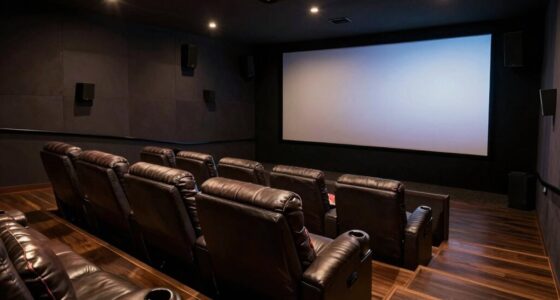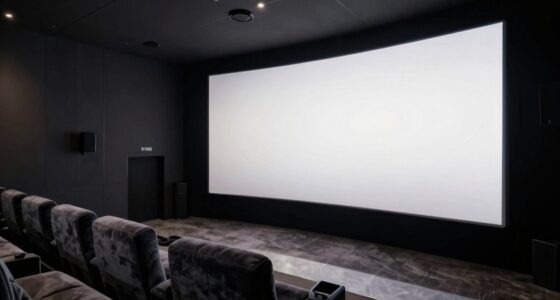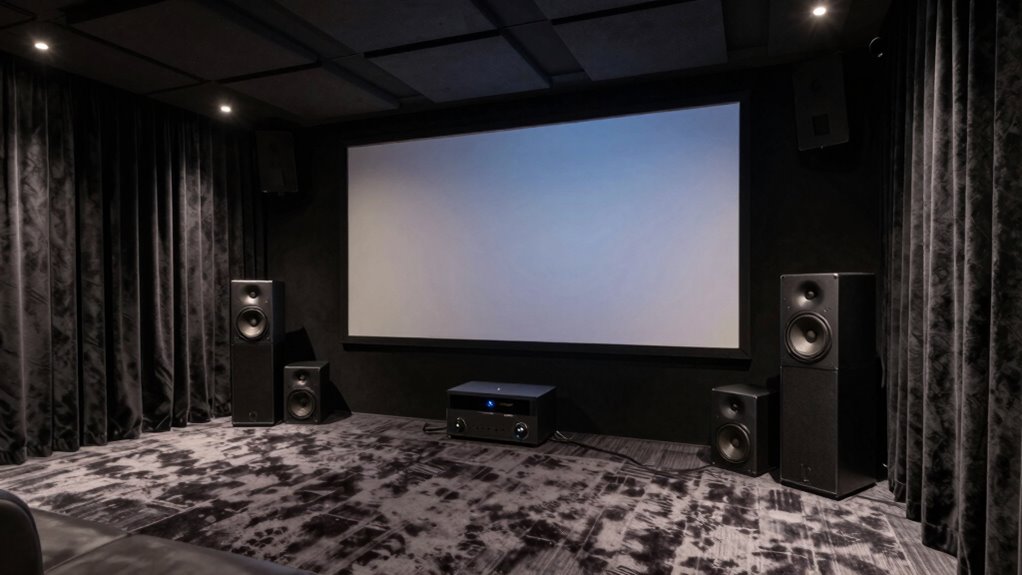

To improve acoustics in your home theater, focus on room size, shape, and surface materials. Soft furnishings and acoustic panels absorb sound, reducing echo and reverberation, while hard surfaces reflect it, causing muddiness. Proper speaker placement and furniture help manage reflections and enhance clarity. Controlling sound waves through strategic design makes your space immersive. If you keep exploring, you’ll discover how to fine-tune every detail for perfect sound quality.
Key Takeaways
- Hard surfaces reflect sound, increasing reverberation, while soft furnishings absorb sound for clearer audio.
- Proper speaker placement and angle improve sound clarity and immersive experience.
- Room size and shape influence sound reflection, echo, and bass response.
- Acoustic panels, curtains, and diffusers help control reflections and reverberation.
- Balancing surface materials and furniture optimizes sound quality and minimizes muddiness.
Understanding Sound Waves and How They Travel
Understanding sound waves begins with recognizing that they are vibrations traveling through a medium, such as air or walls. When you produce sound, your voice or a speaker causes vibrations that move outward in waves. These waves propagate through the air, reaching your ears or a microphone. The waves consist of compressions and rarefactions, where particles are pushed together or pulled apart. The frequency of these vibrations determines the pitch, while the amplitude affects volume. As sound waves encounter objects or surfaces, they can reflect, absorb, or diffract, influencing what you hear in a room. Recognizing how sound travels helps you understand how echoes, reverberations, and acoustic treatments shape your home theater experience. Acoustic properties of a space play a crucial role in sound quality, affecting how sound waves behave within the environment. This knowledge is key to optimizing sound quality for immersive audio.
The Importance of Room Size and Shape
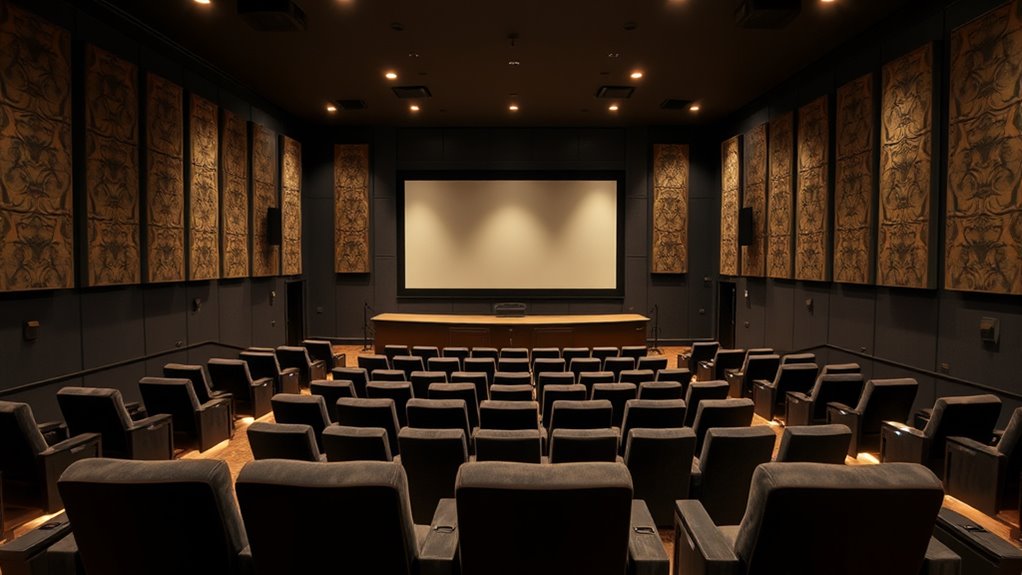
The size and shape of your room play a vital role in how sound behaves. Choosing ideal dimensions helps prevent echoes and dead spots, ensuring clear audio. The shape also affects how sound waves reflect, influencing your overall listening experience. Additionally, understanding acoustic principles can help you optimize your room for better sound quality. Proper room design can further mitigate unwanted sound distortions and improve sound diffusion, creating a more immersive audio environment. Being aware of room acoustics can guide you in selecting the right furnishings and materials to enhance sound quality. Incorporating natural materials can further improve sound absorption and reduce unwanted reflections.
Optimal Room Dimensions
Choosing the right room size and shape is essential for achieving ideal sound quality in your home theater. Larger rooms can enhance bass response and provide a spacious feel, but overly big spaces may cause echo and sound diffusion issues. Smaller rooms offer intimacy but risk sound muddiness if too confined. Aim for dimensions that balance volume and clarity. Generally, a room between 12-20 feet wide, 15-25 feet deep, and 8-10 feet high works well. To visualize:
| Aspect | Ideal Range |
|---|---|
| Width | 12-20 feet |
| Depth | 15-25 feet |
| Height | 8-10 feet |
Choosing suitable dimensions helps create a balanced, immersive sound environment without unwanted echoes or dead spots. Proper room dimensions are a key factor in acoustic optimization and ensuring your home theater performs at its best. Additionally, considering room shape can influence how sound waves distribute and reflect within the space, which is important for sound diffusion and clarity. Paying attention to room dimensions can significantly improve overall acoustic performance and listener experience.
Shape’s Acoustic Impact
Room shape markedly influences how sound waves behave within your home theater. Non-rectangular or irregular shapes help diffuse sound, reducing echoes and dead zones. If your room has parallel walls, sound waves can bounce back and forth, causing standing waves that muddy audio clarity. Incorporating angled surfaces, alcoves, or irregular geometries breaks up these reflections, resulting in clearer, more balanced sound. The size of your room also matters: larger spaces prevent excessive bass build-up, while smaller rooms can enhance intimacy but may introduce problematic resonances. By choosing a shape that minimizes parallel surfaces and promotes even sound distribution, you create an acoustically more pleasing environment. Additionally, understanding room acoustics principles can help you optimize your space for the best possible sound quality. Considering room dimensions carefully during planning can further enhance the overall acoustic performance of your home theater. Recognizing how room shape affects sound behavior is essential for achieving optimal audio clarity and immersion. Moreover, selecting appropriate acoustic treatments can significantly improve sound quality by controlling reflections and reverberations.
Sound Reflection and Absorption

Understanding how sound reflects and absorbs within your home theater is essential for achieving ideal audio quality. When sound waves hit surfaces, some bounce back as reflections, which can create echoes or muddle sound clarity if not controlled. Absorption occurs when materials inside the room, like soft furnishings or acoustic panels, soak up sound energy, reducing reverberation. To optimize sound, you need a balance: reflective surfaces can enhance spaciousness, but too many cause echo, while absorptive materials minimize unwanted reflections. Positioning furniture, curtains, or acoustic treatments strategically helps manage these effects. By controlling reflection and absorption, you create a clearer, more immersive listening environment, ensuring every note and dialogue comes through crisp and natural without unwanted echoes or dead spots. Incorporating connected acoustic technology can help monitor and adjust sound quality in real-time for an optimal experience.
The Role of Room Materials and Surfaces
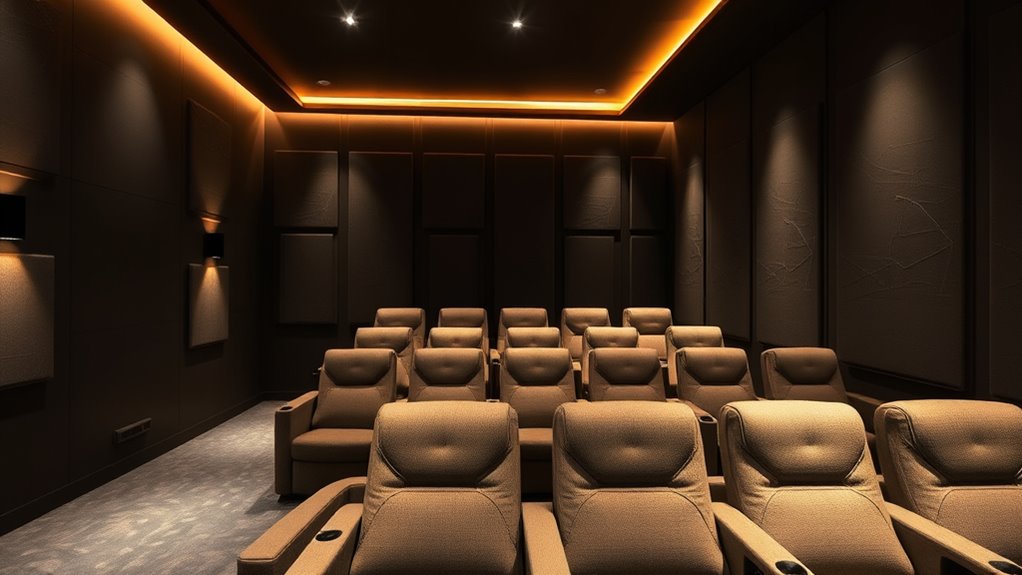
The materials and surfaces in your home theater profoundly shape your sound experience. Choosing surfaces with the right absorption or reflection qualities can reduce echoes and improve clarity. Your material choices directly impact how sound interacts within the room, influencing overall acoustics. Incorporating sound-absorbing elements like rugs and acoustic panels can further enhance your listening environment. Additionally, understanding room acoustics principles can help optimize your setup for the best possible sound quality. Being aware of surface treatment options allows you to tailor your room’s acoustics to suit your preferences and improve overall sound performance. Considering the thermal behavior of materials can also prevent unwanted vibrations and resonance that might color your sound. Properly managing surface reflectivity can significantly improve sound clarity by controlling how sound waves bounce within the space.
Surface Absorption Effects
Surface materials and surfaces play a crucial role in shaping your home theater’s acoustics by absorbing or reflecting sound waves. Absorptive materials reduce echo and control reverberation, creating clearer audio. For example, soft fabrics, acoustic panels, and carpets soak up sound energy, preventing it from bouncing around the room. Meanwhile, hard surfaces like glass, concrete, or polished wood reflect sound, which can cause unwanted echoes. To optimize your space, choose a balance of absorption and reflection based on your room size and purpose. Here’s a quick guide:
| Material Type | Effect on Sound |
|---|---|
| Acoustic panels | Increase absorption, reduce echo |
| Carpets, drapes | Dampen sound, soften reflections |
| Glass, metal | Reflect sound, add brightness |
| Concrete, tile | Reflect sound, cause echoing |
| Sofas, cushions | Absorb sound, improve clarity |
Additionally, understanding how surface absorption impacts sound quality can help you design a more immersive home theater experience. Incorporating a variety of surface materials can enhance sound clarity and overall acoustic balance in your space. Adding appropriate surface treatments further optimizes sound performance and minimizes unwanted noise reflections. Considering room size and shape can also significantly influence the acoustic environment and should be factored into your design choices.
Reflective Surface Impact
Room materials and surfaces actively influence your home theater’s acoustics by reflecting sound waves in different ways. Hard surfaces like drywall, concrete, and glass bounce sound, creating reflections that can enhance spaciousness but also cause echoes or muddiness if uncontrolled. These reflections can interfere with direct sound from your speakers, affecting clarity and imaging. Properly managing reflective surfaces is essential for achieving balanced acoustics; too many reflective surfaces can produce unwanted reverberation, while too few can make the space sound dull. The key is understanding how different materials reflect sound and positioning your equipment accordingly. This knowledge helps you design a room that maintains clarity, enhances sound diffusion, and minimizes disruptive echoes, ensuring an immersive and high-quality listening experience. Additionally, considering room geometry can further influence how sound waves interact within the space, helping you optimize acoustics effectively.
Material Choices Influence
Choosing the right materials for your home theater substantially impacts sound quality because different surfaces absorb, reflect, or diffuse sound waves in unique ways. Hard, smooth surfaces like glass or tile reflect sound sharply, causing echoes and muddiness. Soft, porous materials such as carpets and upholstery absorb sound, reducing reverberation. Diffusive surfaces, like irregular wood panels, scatter sound waves evenly, enhancing clarity. Consider these options:
- Thick carpets that soak up excess sound
- Acoustic panels to diffuse reflections
- Heavy curtains to minimize window reflections
- Wooden diffusers for balanced sound dispersion
Speaker Placement and Orientation Strategies
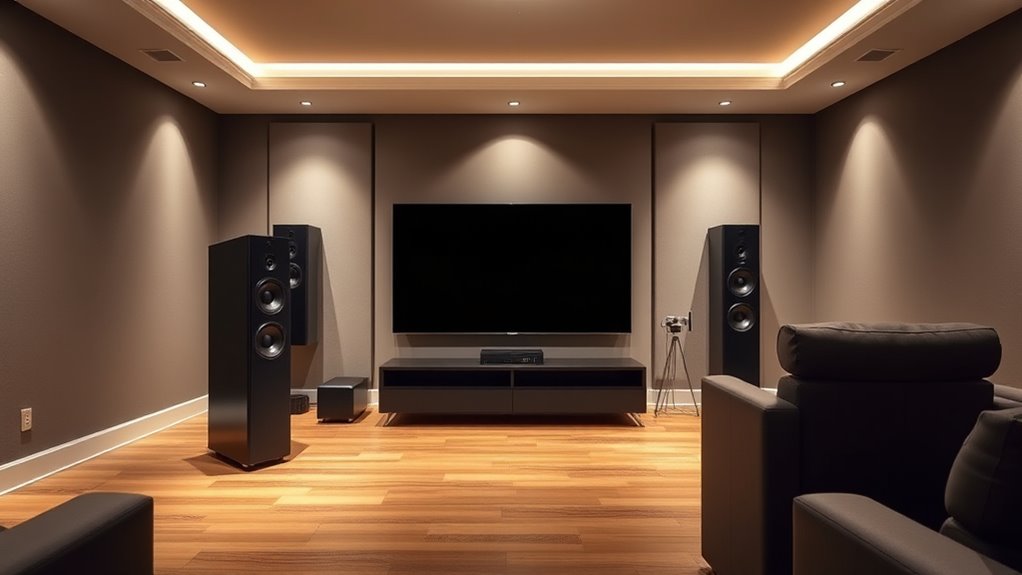
Proper speaker placement and orientation are essential for achieving ideal sound quality in your home theater. Position your front left and right speakers slightly above ear level, angled toward your listening position for clear stereo imaging. Place the center channel directly above or below your TV, aligned with the screen’s center. Surround speakers should be placed to the sides or slightly behind your listening area, about ear level or slightly higher. For immersive sound, consider height or ceiling speakers, angled toward the listening spot. Keep speakers at least a few feet apart to prevent sound crosstalk, and avoid placing them too close to walls, which can cause unwanted reflections. Adjust angles to focus sound toward your listening position, ensuring a balanced, enveloping audio experience.
Managing Echoes and Reverberation
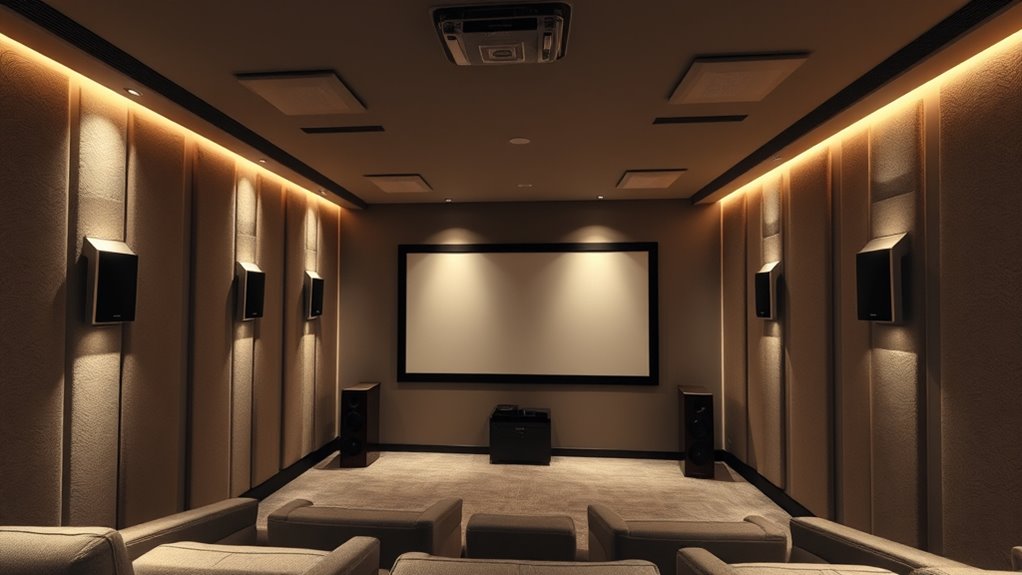
Echoes and reverberation can distort sound clarity, making it harder to enjoy your home theater experience. To manage this, focus on reducing sound reflections that bounce around your room. You can do this by:
Controlling echoes and reverberation enhances your home theater’s sound clarity and enjoyment.
- Using soft furnishings like plush rugs or heavy curtains to absorb excess sound.
- Adding upholstered furniture to dampen echoes.
- Installing bookshelves filled with books to break up sound waves.
- Placing acoustic panels or foam in key reflection points to redirect sound.
These adjustments help absorb or scatter reflected sound waves, preventing them from overlapping with direct sound. Keep in mind, the goal isn’t to eliminate all reflections but to control them enough so your audio remains clear and natural. Proper management of echoes and reverberation greatly enhances your home theater experience.
Acoustic Treatments and Soundproofing Techniques

To improve sound quality and minimize unwanted noise, implementing effective acoustic treatments and soundproofing techniques is essential. Start by adding diffusers and absorbers to your walls to control reflections and reduce echo. Acoustic panels made of foam or mineral wool absorb excess sound waves, making your listening experience clearer. To block outside noise, seal gaps around doors and windows with weatherstripping or door sweeps. Use heavy curtains or specialized soundproof drapes to dampen sound transmission through openings. Consider adding mass-loaded vinyl or drywall layers to walls for extra soundproofing. These methods collectively prevent sound leakage and improve room acoustics, ensuring your home theater sounds professional and immersive without disturbing neighbors or other rooms.
Selecting the Right Equipment for Optimal Sound
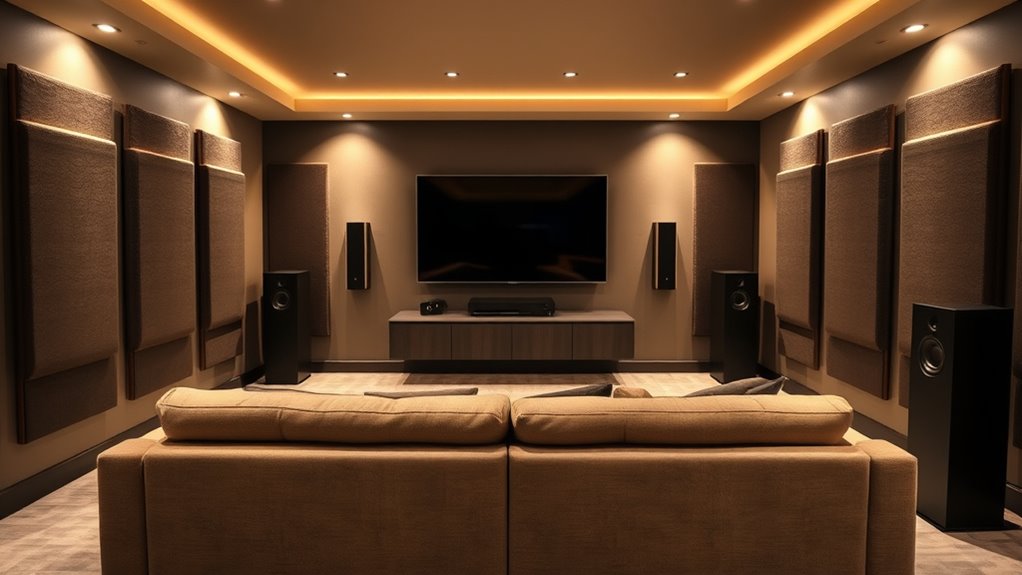
Choosing the right equipment is essential for achieving peak sound in your home theater. Your goal is clear, immersive audio that brings movies and music to life. Focus on quality components that match your room size and budget. When selecting equipment, consider:
Selecting quality audio equipment tailored to your space ensures immersive, crystal-clear home theater sound.
- A powerful receiver that can handle multiple speakers and formats
- Balanced, high-quality speakers that fill the room with clear, detailed sound
- Subwoofers that add depth and rumble to low frequencies
- Properly calibrated microphones and tools for fine-tuning your setup
Imagine crisp dialogue, punchy explosions, and rich bass blending seamlessly. These elements create a dynamic soundscape that pulls you into the action. Choosing the right equipment guarantees your home theater produces the immersive experience you crave.
Tips for Creating an Immersive Listening Environment
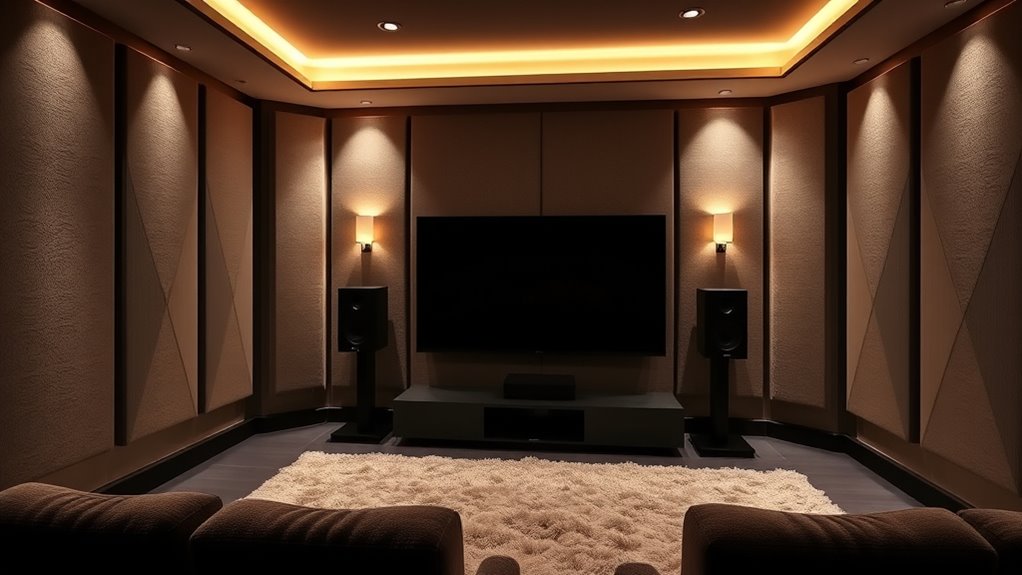
Creating an immersive listening environment requires more than just quality equipment; it involves strategically optimizing your space to enhance sound quality. Start by placing your speakers at ear level and maintaining proper distances to prevent sound reflections. Use acoustic treatments like foam panels or diffusers on walls to absorb or scatter sound waves, reducing echoes. Arrange furniture to avoid blocking speaker paths and create a balanced soundstage. Dim or eliminate ambient light to help you focus on the audio and visuals. Consider adding a rug or curtains to absorb excess sound and prevent reverberation. Finally, calibrate your audio system regularly with a calibration microphone or test tones to ensure balanced sound across all speakers. These steps help you craft an immersive, true-to-life listening experience.
Frequently Asked Questions
How Do I Prevent Sound Leaks Between Rooms?
To prevent sound leaks between rooms, you should seal gaps around doors, windows, and outlets with weatherstripping or acoustic caulk. Adding heavy curtains or soundproof blankets can help, along with installing door sweeps. Consider using acoustic panels or foam on shared walls to absorb sound. Keep doors closed when watching movies, and use rugs or carpets to reduce sound transmission through floors. These steps create a quieter, more private environment.
What’s the Best Way to Acoustically Treat Irregularly Shaped Rooms?
To treat irregularly shaped rooms effectively, you should add absorptive panels to uneven surfaces, install diffusers on irregular walls, and incorporate bass traps in corners. These steps help balance sound reflections, reduce echoes, and improve clarity. You want to target problem areas with tailored solutions, enhance sound quality, and create a more immersive listening experience. By addressing each irregularity systematically, you’ll achieve a more controlled and enjoyable acoustic environment.
How Does Ceiling Height Affect Sound Quality?
Higher ceilings can improve sound quality by creating more space for sound waves to disperse, reducing echo and muddiness. They also help distribute sound more evenly throughout the room, enhancing clarity and immersion. However, very tall ceilings may require additional treatment to prevent unwanted reverberations. Conversely, lower ceilings can make sound feel more confined and lead to increased reflections, which might compromise overall audio quality.
Can Furniture Placement Improve Acoustics?
Yes, furniture placement can improve acoustics in your home theater. You should position soft furnishings like sofas, rugs, and curtains to absorb sound reflections, reducing echo and muddiness. Avoid placing large furniture directly against walls, as this can cause unwanted reverberation. Strategically arranging furniture creates a balanced sound environment, enhancing clarity and immersion. Experiment with placement to find the most effective setup that suits your space and improves overall sound quality.
What Are Cost-Effective Options for Acoustic Panels?
Your home theater deserves a sound so clear, it could cut through a mountain! To save money, try DIY acoustic panels using affordable materials like dense foam, thick blankets, or even egg cartons. Hang thick curtains or rugs on your walls and floor to absorb excess sound. These simple, budget-friendly solutions dramatically improve acoustics without breaking the bank, making your movie nights feel like a real theater experience.
Conclusion
By mastering these acoustics basics, you’ll transform your home theater into a true sanctuary of sound. Pay attention to room size, materials, and speaker placement, and don’t forget to manage echoes like a seasoned maestro. With some clever treatments and a bit of elbow grease, you’ll craft an immersive experience worthy of a grand theater. So, channel your inner Renaissance artist and bring your audio vision to life—your ears will thank you!