The future of connected living means your home and city will seamlessly interact through smart devices and IoT, making daily life more efficient, secure, and personalized. Expect AI to learn your routines, optimize energy use, and automate tasks for comfort and security. Urban infrastructure will adapt with smarter traffic and resource management, all supported by faster networks like 5G. As privacy and sustainability stay priorities, understanding these advances can help you maximize their benefits as this new era unfolds.
Key Takeaways
- Smart homes and devices will become increasingly autonomous, learning routines to enhance comfort, security, and energy efficiency.
- IoT integration in urban infrastructure will optimize traffic, resource management, and environmental sustainability.
- Advanced connectivity technologies like 5G will enable seamless, real-time communication among devices and systems.
- Data privacy and security will be critical as interconnected systems handle sensitive personal and infrastructure information.
- AI-driven automation will personalize experiences and proactively address issues, transforming everyday living environments.
The Evolution of Smart Homes and Personal Devices

The evolution of smart homes and personal devices has transformed the way you live, making everyday tasks more convenient and interconnected. You can now control your lights, thermostats, and security systems with a simple voice command or a tap on your smartphone. Devices learn your routines, adjusting settings automatically to save energy and enhance comfort. Wearables track your health metrics, providing insights that help you make better lifestyle choices. Smart appliances coordinate seamlessly, reducing the time spent on chores. As technology advances, these devices become smarter, more intuitive, and personalized to your needs. Additionally, local automation enables your devices to work together intelligently without relying solely on cloud services. This interconnected ecosystem not only simplifies daily life but also creates a more efficient, responsive environment tailored specifically for you, supporting home automation to optimize your living space. Moreover, understanding device interoperability can help ensure your smart systems function harmoniously and reliably. As these systems evolve, smart device integration plays a crucial role in maintaining a cohesive and dependable smart environment. By incorporating load calculations and safe setup practices, your smart home systems can operate more efficiently and safely, ensuring reliable performance over time.
Integration of IoT in Urban Infrastructure
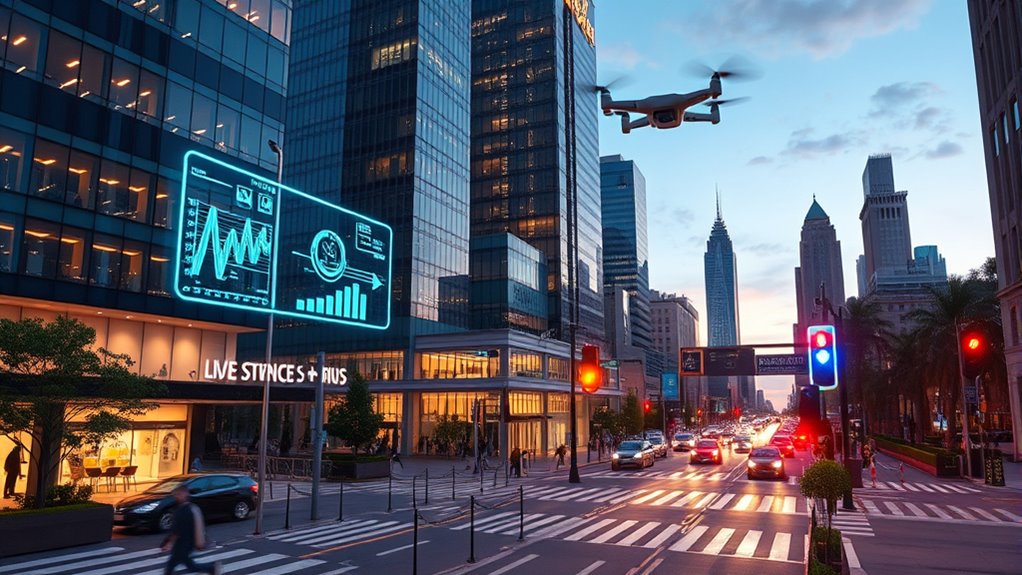
You see how IoT can transform city life through smart traffic management, reducing congestion and emissions. By integrating sensors and data analytics, urban planners can optimize traffic flow in real-time. This interconnected approach also enhances data collection, making cities more efficient and responsive. Implementing advanced home automation technology can further improve residents’ quality of life by enabling seamless control over lighting, climate, and security systems. Additionally, the integration of connected infrastructure supports better emergency response and resource management, contributing to safer and more resilient urban environments. Leveraging navigation and mapping explainers can help in designing smarter city layouts and infrastructure planning. Furthermore, incorporating smart building systems can lead to energy savings and improved environmental sustainability within urban areas. With these innovations, cities can also improve public safety by enabling quicker response times and better resource allocation.
Smart Traffic Management
Smart traffic management leverages the power of IoT devices to create more efficient and responsive urban transportation systems. These systems include sensors embedded in roads, cameras at intersections, and connected traffic signals that communicate in real-time. These devices gather data on vehicle flow, congestion, and environmental conditions, allowing authorities to adjust traffic lights dynamically, reduce bottlenecks, and improve safety. With IoT-enabled systems, you experience less congestion, shorter commute times, and fewer accidents. Additionally, IoT can prioritize public transportation and emergency vehicles, enhancing overall mobility. As these systems become more interconnected, your city’s traffic flow will adapt seamlessly, making daily travel smoother. You’ll benefit from smarter routing, reduced pollution, and a more sustainable urban environment. The integration of these systems also highlights the importance of contingency plans to ensure continued operation during outages or disruptions. Implementing resilient network infrastructure is crucial to maintaining uninterrupted traffic management services. Moreover, ongoing advancements in cybersecurity are essential to protect these interconnected systems from potential cyber threats. Developing these systems with redundant communication channels can further enhance their reliability and robustness. Furthermore, incorporating public awareness initiatives can help users understand and adapt to new traffic management features, promoting safer and more efficient travel.
Urban Data Optimization
Integrating IoT devices into urban infrastructure transforms raw data from traffic systems into actionable insights, enhancing city management. You’ll see real-time updates on traffic flow, air quality, and energy use, enabling smarter decisions. Sensors embedded in roads, bridges, and buildings collect continuous data, helping optimize resource allocation and reduce congestion. You can automate maintenance schedules based on sensor alerts, preventing costly failures. Data visualization dashboards provide a clear picture of city health, guiding policy adjustments. This seamless data integration supports sustainable urban growth and improves residents’ quality of life. By harnessing IoT-driven insights, you make cities more responsive, efficient, and resilient. Smart city initiatives are increasingly incorporating data analytics to address complex urban challenges. Urban data optimization becomes a cornerstone of future-proof urban planning, transforming how you manage and develop urban environments. Trusted businesses and services play a crucial role in deploying and maintaining these IoT systems effectively. Additionally, urban data management strategies are essential to ensure data security and privacy as these systems expand. Implementing cybersecurity measures is vital to protect sensitive urban data from potential threats.
Enhanced Connectivity With 5G and Beyond

With 5G and beyond, you’ll experience ultra-low latency networks that make real-time communication seamless. This advancement also means more devices can connect simultaneously without slowing down, expanding your connected environment. As these networks grow, they’ll unleash new possibilities for smarter, more responsive living. Cut Through Tech Clutter Additionally, the increased capacity and reliability can support outdoor safety devices and emergency communication systems, ensuring safer adventures in remote areas. Enhanced network security is also vital to protect your connected devices and personal data as your smart home ecosystem expands. Properly configuring backup systems and understanding power needs can help maintain connectivity during outages, keeping your home or team operational.
Ultra-Low Latency Networks
Have you ever wondered how instantaneous your digital interactions could become? Ultra-low latency networks make that possible by reducing the delay between your device and the data server to just milliseconds. With 5G and beyond, communication becomes almost real-time, enabling seamless experiences like instant video calls, immersive gaming, and autonomous vehicle coordination. These networks eliminate lag, which is vital for applications that require split-second decisions. As latency drops, your connected devices can respond faster, creating smoother interactions and more reliable connections. This technology also supports the growth of smart cities and industrial automation, where rapid data exchange is essential. In short, ultra-low latency networks are the backbone of truly responsive, connected living, transforming how you interact with technology daily.
Expanded Device Integration
As 5G and future wireless technologies continue to evolve, your devices can connect more seamlessly than ever before. This expanded device integration means your smart home gadgets, wearables, and even appliances communicate effortlessly, creating a unified ecosystem. With faster speeds and increased bandwidth, you’ll experience minimal delays and smoother interactions across all devices. This connectivity allows for smarter automation, where devices anticipate your needs and respond instantly. Beyond smartphones, connected cars, health monitors, and security systems become part of your daily life, working together seamlessly. As technology advances, your environment becomes more responsive and personalized, making connected living more intuitive, efficient, and convenient. This evolution paves the way for truly integrated, intelligent environments that adapt to your lifestyle effortlessly.
Data Privacy and Security in a Connected World

How secure is your personal data in today’s interconnected world? With so many devices sharing information constantly, your private details are more vulnerable than ever. Hackers target connected systems to access sensitive data, risking identity theft and privacy breaches. Many smart devices collect and transmit data without clear user consent, often leaving gaps in security. You need to stay vigilant by using strong, unique passwords and enabling multi-factor authentication. Regularly updating your device software is essential to patch vulnerabilities. Be cautious about the information you share online and review privacy settings frequently. While technology advances make life more convenient, they also demand that you actively protect your personal data from potential threats. Staying informed and proactive is your best defense.
Sustainability and Energy Efficiency Through Technology

The growing interconnectedness of devices offers more than convenience; it also presents opportunities to promote sustainability and reduce energy consumption. By integrating smart systems into your home, you can optimize energy use, turning devices on or off based on your habits and needs. For example, smart thermostats learn your schedule and adjust heating or cooling for maximum efficiency. Energy monitoring tools help you identify waste and make informed choices. Connected appliances can operate during off-peak hours, easing the strain on power grids. These technologies enable you to lower utility bills while reducing your carbon footprint. As you adopt smarter solutions, you’ll contribute to a more sustainable future, where technology actively supports conservation and responsible energy use in everyday living.
The Role of Artificial Intelligence in Shaping Connected Living

Artificial Intelligence (AI) is revolutionizing connected living by making your smart devices smarter and more responsive. It learns your routines, predicts your needs, and automates tasks to simplify your daily life. AI-powered systems analyze data from sensors and devices, optimizing energy use, enhancing security, and improving comfort. With AI, your home adjusts lighting, temperature, and appliances automatically, saving you time and energy. It also detects anomalies, alerting you to potential issues before they escalate. Here’s a quick look at AI’s impact:
| AI Application | Benefit | Example |
|---|---|---|
| Automation | Convenience | Auto-adjusting thermostat |
| Security | Safety | Facial recognition access |
| Energy Management | Cost savings | Intelligent energy usage |
| Maintenance | Reliability | Predictive system repairs |
| Personalization | Comfort | Customized lighting scenes |
AI turns your connected home into a smarter, more intuitive space.
Frequently Asked Questions
How Will Connected Living Impact Mental Health and Social Interactions?
Connected living can enhance your mental health by providing constant support and reducing feelings of loneliness. It makes staying in touch with loved ones easier, fostering stronger social bonds. However, it can also lead to increased anxiety or stress if you’re overwhelmed by notifications or social comparisons. To benefit, set boundaries, prioritize meaningful interactions, and use technology mindfully to maintain a healthy balance between online and offline connections.
What Are the Economic Implications of Widespread Iot Adoption?
Think of IoT as the backbone of a thriving economy, where widespread adoption sparks innovation and efficiency. You’ll see increased productivity, cost savings, and new business opportunities, fueling job growth and market expansion. However, you must also consider challenges like cybersecurity risks and infrastructure costs. Embracing IoT means balancing these opportunities and threats carefully, shaping a resilient economy that adapts to rapid technological change.
Will Connectivity Disparities Widen Existing Social Inequalities?
Yes, connectivity disparities can widen existing social inequalities. When access to high-speed internet and smart devices remains limited for marginalized communities, they miss out on educational, economic, and social opportunities. You might find yourself at a disadvantage if you lack reliable connectivity, as it can deepen gaps in employment, healthcare, and education. Bridging these gaps requires targeted efforts to guarantee equitable access, so everyone can benefit from connected living.
How Can Consumers Ensure Long-Term Device Compatibility and Upgrades?
You can guarantee long-term device compatibility and upgrades by choosing products from reputable brands known for regular updates. Stay informed about software releases and security patches, and consider devices with open standards. Keep your devices updated, and avoid overly proprietary systems. Also, join online communities for tips and support. By making thoughtful choices now, you’ll help future-proof your devices and enjoy seamless connectivity over time.
What Legal Frameworks Are Needed to Regulate Connected Living Technologies?
Imagine a locked door that only opens with the right key — that’s what solid legal frameworks do for connected living. You need clear laws on privacy, data ownership, and security to prevent chaos. Governments should establish standards for device interoperability and enforce accountability. Without these, your smart home risks becoming a security nightmare. Proper regulation guarantees your connected devices stay safe, compatible, and trustworthy, like a well-guarded, accessible home.
Conclusion
As you embrace the future of connected living, remember it’s like sailing on a vast digital ocean—exciting yet requiring careful navigation. With smarter homes, seamless city infrastructure, and faster networks, your daily life will become more convenient and sustainable. By staying mindful of privacy and security, you can enjoy this connected world confidently. The more you adapt and innovate, the more your environment transforms into a personalized, intelligent space—guiding you toward a brighter, more efficient tomorrow.