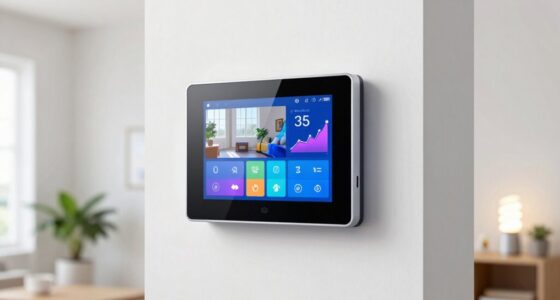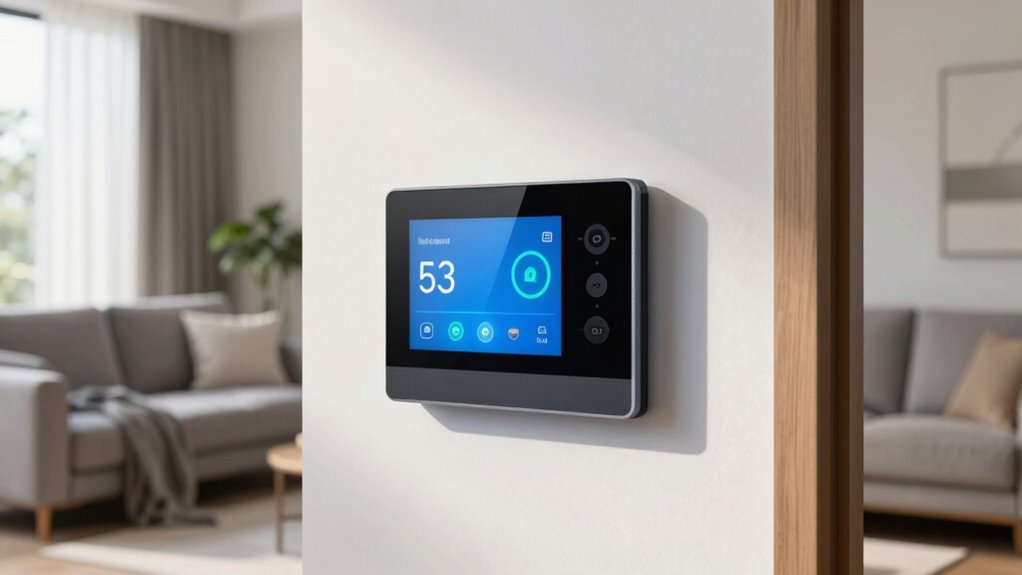

Smart thermostats learn your daily routines and adjust your home’s temperature automatically to keep you comfortable while saving energy. They let you control settings remotely through apps or voice commands and easily integrate with your smart home devices. By personalizing zones and schedules, you prevent wasteful heating or cooling, helping your bills. If you want to discover how these features work together to boost comfort and efficiency, continue exploring the possibilities.
Key Takeaways
- Smart thermostats automatically learn and adapt to user routines, ensuring consistent comfort without manual adjustments.
- They allow personalized temperature settings for different rooms and times, optimizing comfort and efficiency.
- Remote access via mobile apps enables convenient control and monitoring from anywhere.
- Integration with smart home ecosystems supports seamless automation, lighting, security, and voice commands.
- Energy monitoring features help reduce utility bills by optimizing heating and cooling based on usage patterns.
How Smart Thermostats Learn Your Routine
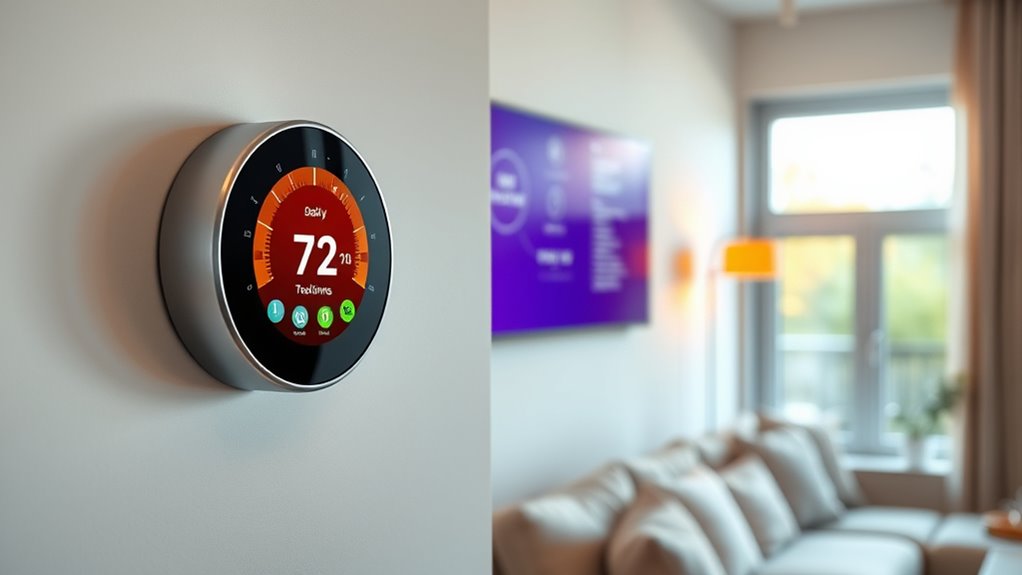
Smart thermostats learn your routine by tracking your daily habits and adjusting the temperature accordingly. As you go about your day, they monitor when you wake up, leave home, return, and sleep. Using this data, they create a schedule tailored to your lifestyle. You don’t need to manually set the temperature constantly; instead, the thermostat predicts your needs based on your habits. For example, if you usually come home at 6 p.m., it’ll start warming or cooling your house beforehand. Over time, it refines its understanding of your schedule, ensuring ideal comfort without wasting energy. This intelligent learning process helps you save money on energy bills while keeping your home comfortable throughout the day. Adaptive learning enables these devices to continually improve their accuracy and efficiency, much like how ventilation considerations contribute to maintaining a comfortable and healthy environment in your home. Incorporating smart sensors further enhances their ability to respond to changing conditions, such as external weather changes, ensuring consistent comfort and energy savings. Additionally, energy-efficient design plays a crucial role in reducing overall power consumption and supporting sustainability goals.
Personalizing Your Home Climate Settings
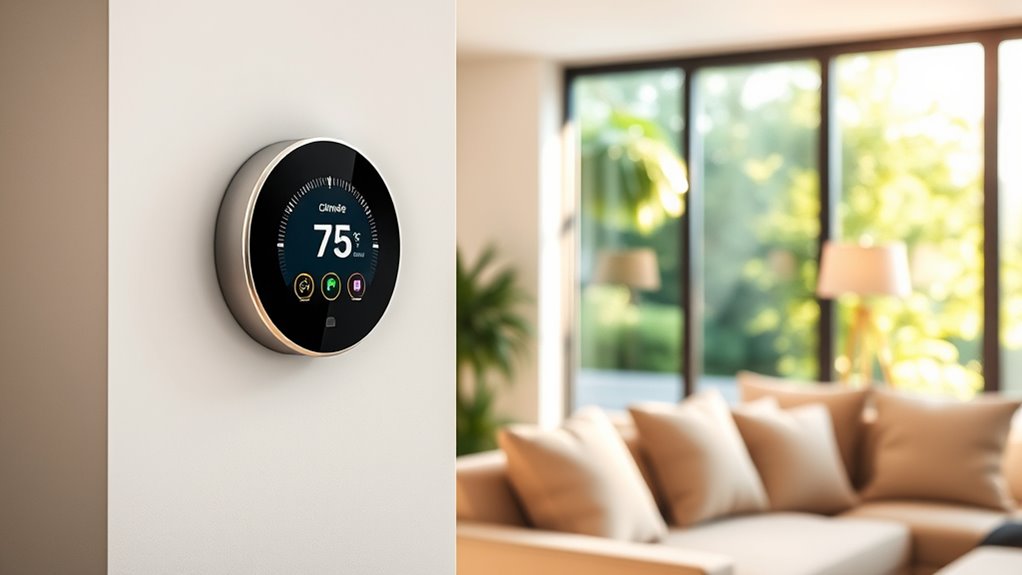
Personalizing your home climate settings allows you to create a comfortable environment tailored to your preferences. With a smart thermostat, you can easily set your ideal temperatures for different times of day or specific rooms. Adjustments are simple and quick, so you don’t have to rely on generic temperature settings. Many smart thermostats let you customize schedules based on your daily routine, ensuring your home feels just right when you wake up, return from work, or settle in for the night. You can also set different temperatures for various zones within your house, optimizing comfort and energy use. This level of personalization helps you enjoy a consistently cozy home while maintaining control over your energy consumption. Understanding your system can help you make the most of your smart thermostat’s features and improve your home climate management, especially when considering energy-efficient settings to reduce utility costs. Additionally, integrating your thermostat with other smart home devices can further enhance home automation and efficiency.
Remote Control and Mobile App Integration
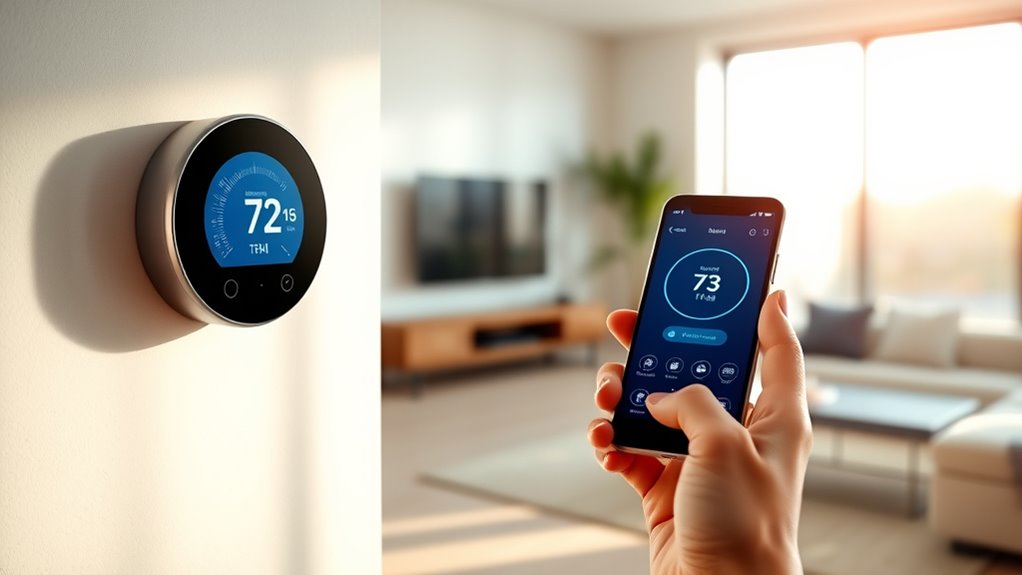
With mobile app integration, managing your home’s temperature becomes effortless, no matter where you are. You can adjust your thermostat remotely, ensuring your home is always comfortable when you arrive. The apps are easy to use, letting you set schedules, change temperatures, or activate specific modes with just a few taps. Notifications keep you informed about system status or alerts, so you’re always in the loop. Compatibility with smartphones and tablets means you don’t need to be home to control your climate. Plus, many apps offer user-friendly interfaces, making it simple to customize settings on the go. This seamless smart home integration gives you full control over your home’s comfort, providing convenience and peace of mind at your fingertips. Navigation and mapping features in smart thermostats can enhance their efficiency by learning your habits and optimizing performance. Additionally, energy-saving features can help reduce your overall energy consumption by adjusting settings based on your usage patterns. Incorporating remote monitoring capabilities further ensures your HVAC system operates efficiently and alerts you to potential issues early.
Energy Saving Features and Cost Benefits
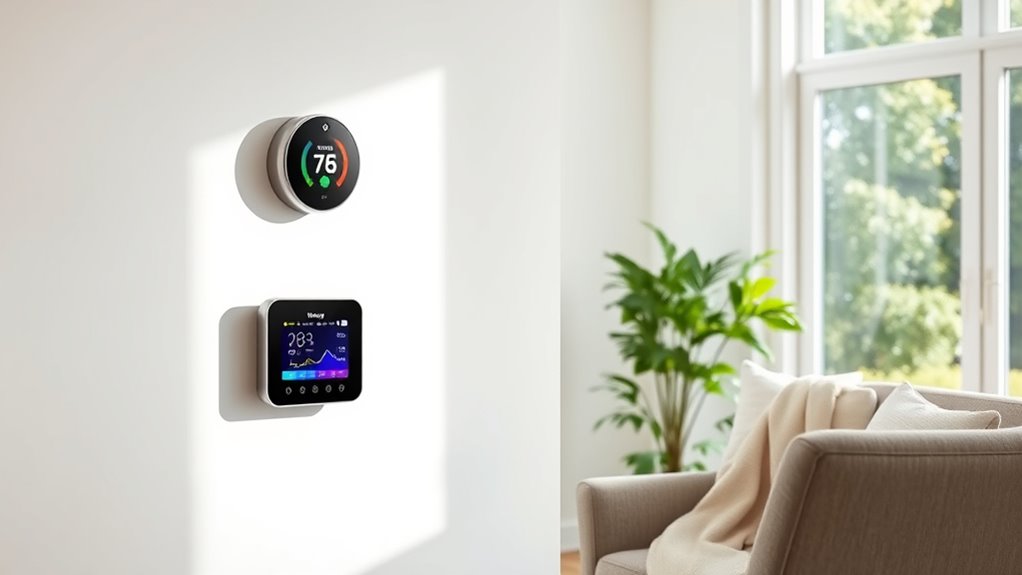
By leveraging remote control and mobile app features, you can optimize your thermostat settings to save energy and reduce costs. Many smart thermostats include scheduling options that automatically adjust temperatures based on your daily routines, preventing unnecessary heating or cooling. Additionally, features like geofencing detect when you’re leaving or returning home, adjusting the temperature accordingly to save energy. Some models also offer adaptive learning, analyzing your habits over time to fine-tune settings for maximum efficiency. These energy-saving features lead to lower utility bills while maintaining comfort. Proper installation and configuration of these devices are essential for maximizing their energy management capabilities and ensuring safety. Incorporating load‑planning tools can further enhance your home’s overall energy efficiency. Integrating smart home integration can also streamline your energy management systems for even better performance. Utilizing advanced sensors can provide more precise control over your heating and cooling, increasing comfort and efficiency. Over time, the cost benefits outweigh the initial investment, especially with available rebates or incentives. Ultimately, smart thermostats empower you to manage your energy consumption proactively, making your home more efficient and saving you money.
Compatibility With Other Smart Home Devices
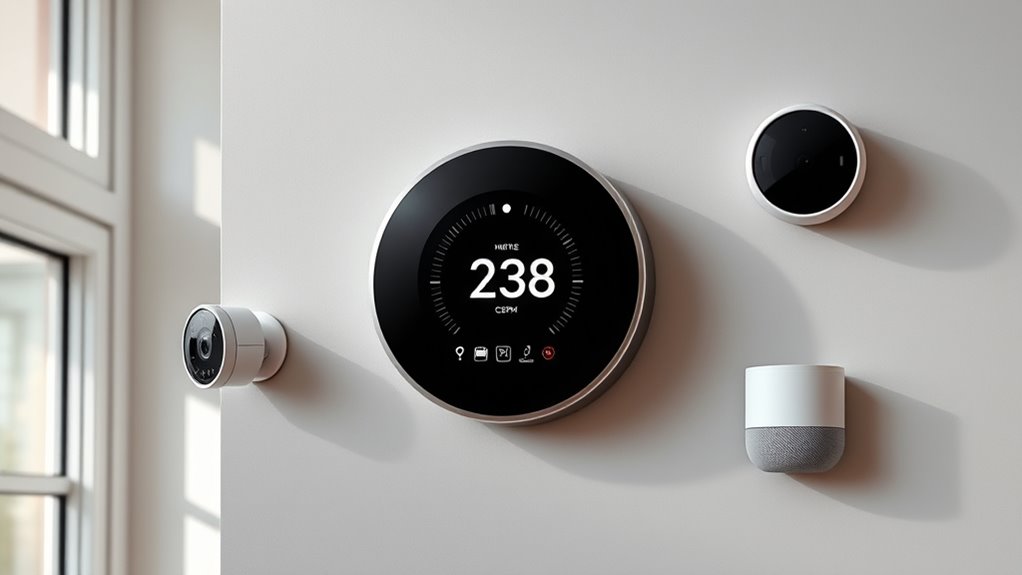
Your smart thermostat works best when it easily integrates with other devices in your home. Compatibility with voice assistants like Alexa or Google Assistant lets you control it hands-free, while seamless device linking creates a unified system. Automated routines can be set up to optimize comfort and efficiency across your entire smart home. Additionally, ensuring that your thermostat supports standardized communication protocols can enhance its ability to connect reliably with various smart devices. Incorporating interoperability standards ensures future-proof connectivity and simplifies system expansion. Verifying support for industry-wide standards helps ensure your system remains compatible as new devices are introduced, and understanding device interoperability can further improve system performance and user experience. Recognizing communication compatibility between devices can also prevent connectivity issues and improve system stability.
Seamless Device Integration
Seamless device integration is essential for maximizing the benefits of a smart thermostat, as it allows your system to work smoothly alongside other smart home devices. When your thermostat connects effortlessly with lighting, security, and energy systems, you create a cohesive environment that responds intuitively to your needs. Compatibility ensures you can automate routines like adjusting the temperature when you arm your security system or dimming the lights as you set a cozy mood. To help you evaluate options, consider this integration chart:
| Device Type | Compatibility Features | Benefits |
|---|---|---|
| Smart Locks | Lock status updates | Automate temperature based on lock status |
| Security Systems | Alarm and sensor integration | Enhance safety and comfort |
| Lighting | Dimming and scene control | Create ambiance with temperature control |
| Voice Assistants | Voice commands | Hands-free adjustments |
| Energy Monitors | Real-time energy consumption data | Optimize energy efficiency |
Additionally, understanding the compatibility features helps ensure your smart home ecosystem functions harmoniously, providing a truly integrated experience. Incorporating standardized protocols can further improve device interoperability and reduce setup complexity.
Voice Assistant Compatibility
Ever wondered how voice assistants can make managing your smart thermostat more effortless? When your thermostat is compatible with voice assistants like Alexa, Google Assistant, or Siri, you can control the temperature hands-free. Just say commands like “Set the temperature to 72 degrees” or “Turn off the heating,” and your voice assistant takes care of it instantly. Compatibility allows you to integrate your thermostat seamlessly into your existing smart home ecosystem, making adjustments quick and intuitive. It also enables you to create multi-device routines, such as lowering the temperature when you leave the house. Ensuring your thermostat works with your preferred voice assistant adds convenience and simplifies daily routines, keeping your home comfortable without reaching for your phone or manual controls.
Automated Routine Linking
When your smart thermostat connects with other devices in your smart home, it opens up a world of automated routines that make everyday tasks effortless. You can set your thermostat to adjust automatically when your smart lights turn on or off, creating a cozy environment as you wake up or settle in for the night. Integrating with security systems allows your thermostat to lower the temperature when you’re away, saving energy. Connecting with smart sensors can optimize heating and cooling based on room occupancy or temperature fluctuations. This seamless compatibility enables you to customize routines that suit your lifestyle, reducing manual adjustments. With automated routine linking, your home becomes smarter, more efficient, and more responsive to your needs, enhancing comfort and convenience effortlessly.
Enhancing Comfort Through Automated Adjustments

Automated adjustments in smart thermostats actively enhance your home’s temperature to improve comfort without requiring manual input. They learn your schedule and preferences, making real-time changes to keep your environment just right. For example, if you usually wake up at 7 a.m., your thermostat gradually warms your home beforehand, so it’s cozy when you get up. During the day, it lowers the temperature when you’re away, then restores comfort before you return. These adjustments happen seamlessly, ensuring you don’t have to think about it. As a result, your home feels consistently comfortable, whether you’re relaxing, working, or sleeping. This automation creates a more enjoyable living space and reduces energy waste, all while maintaining ideal comfort levels effortlessly.
Monitoring and Analyzing Your Energy Usage

Monitoring and analyzing your energy usage allows you to gain insight into how your smart thermostat impacts your home’s efficiency. By reviewing detailed reports and real-time data, you can identify patterns in your heating and cooling habits. This helps you see when energy is being used unnecessarily or during times when adjustments could save you money. Many smart thermostats provide user-friendly dashboards that display your consumption trends over days, weeks, or months. By understanding these patterns, you can make informed decisions to fine-tune your settings, optimize schedules, and reduce waste. Regular analysis also highlights opportunities to improve comfort without increasing energy use. Ultimately, this awareness empowers you to manage your home’s climate more efficiently, saving energy and lowering your utility bills.
Tips for Choosing the Right Smart Thermostat
When selecting a smart thermostat, you need to consider how well it works with your existing heating and cooling systems. Think about the features you want and how much control you prefer over your settings. Ensuring compatibility and user-friendly options will help you choose a device that fits your needs perfectly.
Compatibility and Integration
Choosing the right smart thermostat involves guaranteeing it’s compatible with your existing HVAC system and smart home setup. Start by checking your system’s wiring and voltage requirements—some thermostats work only with specific configurations. Verify if the thermostat supports your heating and cooling equipment, such as heat pumps or multi-stage systems. Compatibility with your smart home ecosystem is also vital; ensure it works with your preferred platforms like Alexa, Google Assistant, or Apple HomeKit. Consider whether the thermostat connects via Wi-Fi or Zigbee/Z-Wave protocols, especially if you plan to integrate with other smart devices. Confirming compatibility beforehand prevents installation issues and guarantees seamless operation. Taking these steps helps you select a smart thermostat that easily integrates into your existing setup, maximizing convenience and functionality.
Features and User Control
Selecting a smart thermostat with the right features empowers you to customize your comfort and simplify control. Look for intuitive interfaces, like touchscreens or mobile apps, that make adjusting settings easy. Consider features such as scheduling options, which let you program temperatures based on your daily routine, saving energy and money. Smart thermostats with geofencing detect your presence and adapt settings automatically, enhancing comfort without effort. Voice control compatibility with assistants like Alexa or Google Assistant adds convenience. Also, check for energy usage reports that help you monitor and optimize your consumption. The right combination of features ensures you stay comfortable while maintaining control at your fingertips, making your home more efficient and your life more convenient.
Frequently Asked Questions
How Secure Is My Data With a Smart Thermostat?
Your data security depends on the manufacturer’s safeguards. Most smart thermostats use encryption and secure connections to protect your information. However, vulnerabilities can exist if you don’t update firmware or use weak passwords. To stay safe, regularly update your device, enable two-factor authentication, and choose strong, unique passwords. Staying vigilant helps guarantee your personal data remains protected while enjoying the convenience of your smart thermostat.
Can a Smart Thermostat Operate During Power Outages?
Did you know that 70% of smart thermostat users worry about power outages? A smart thermostat can often operate during outages if it has a backup power source like a battery or if it’s connected to your home’s power supply with a backup system. However, many rely on your main power, so during a blackout, you might lose control temporarily. Check your model’s specs to see if it has a backup feature.
What Is the Typical Installation Process for a Smart Thermostat?
You typically start by turning off power to your HVAC system and removing your old thermostat. Then, you connect the new smart thermostat’s wires to the corresponding terminals, following the manufacturer’s instructions. Once wired, you mount the thermostat on the wall, turn the power back on, and follow the setup prompts on the device or app. Finally, you customize your preferences and connect it to your Wi-Fi network.
Are Smart Thermostats Suitable for All Types of Heating and Cooling Systems?
Back in the day, you’d need a whole crew to install a smart thermostat, but now you can do it yourself. Yes, smart thermostats are compatible with most heating and cooling systems, including traditional HVAC, heat pumps, and some boilers. However, you should verify your system’s specifics first. If you’re unsure, a quick consultation with a professional can save you headaches and ensure the right fit.
How Long Does It Take to See Energy Savings After Installation?
You’ll usually notice energy savings within a few days to a week after installing your smart thermostat. It depends on your home’s size, current energy use, and the settings you choose. As you optimize your schedule and take advantage of features like learning routines and remote control, you’ll likely see a gradual decrease in your energy bills. Keep an eye on your usage to track your savings and make adjustments as needed.
Conclusion
Smart thermostats seamlessly simplify, synchronize, and soothe your space, making comfort countless and convenient. By learning your routines, leveraging remote controls, and linking with other smart devices, they maximize efficiency and elevate ease. Embrace these intuitive innovations to enjoy economical energy use and exceptional comfort. Remember, the right thermostat transforms your home into a haven of harmony, happiness, and hassle-free heating and cooling. Make the switch today and experience smarter, simpler, and more satisfying climate control.