To keep your fridge fresh without throwing everything away, start by gathering supplies like cleaning cloths, vinegar, and containers. Empty the fridge, sort items by type, and discard spoiled food. Remove shelves, wash with warm soapy water, and wipe interior surfaces with a vinegar solution. Dry everything thoroughly, then organize items with clear containers and label zones. Regular cleaning and maintenance help prevent odors and extend your fridge’s life—discover more tips to keep it spotless and fresh.
Key Takeaways
- Regularly empty and sort items, discarding spoiled food and organizing leftovers in clear containers for easy access.
- Remove shelves and drawers, clean with gentle solutions, and dry thoroughly to prevent mold and odors.
- Sanitize high-touch surfaces like door handles and shelves weekly using vinegar or disinfectant sprays.
- Label storage zones and place fresh items at the front for quick visibility and efficient restocking.
- Establish routine cleaning and expiration checks to maintain freshness, hygiene, and extend the fridge’s lifespan.

SIFANGKE Microfiber Cleaning Cloth, 12 Pack Assorted Color Cleaning Rags for Housekeeping, Colorful Reusable Microfiber Towels for Car, Kitchen, Bathroom and Household Cleaning Supplies, 11.8"X11.8"
Strong Absorbent & Streak-Free: Crafted with premium microfiber, these cleaning rags quickly absorb water and wipe away spills,…
As an affiliate, we earn on qualifying purchases.
As an affiliate, we earn on qualifying purchases.
Gather Your Supplies and Prepare Your Space
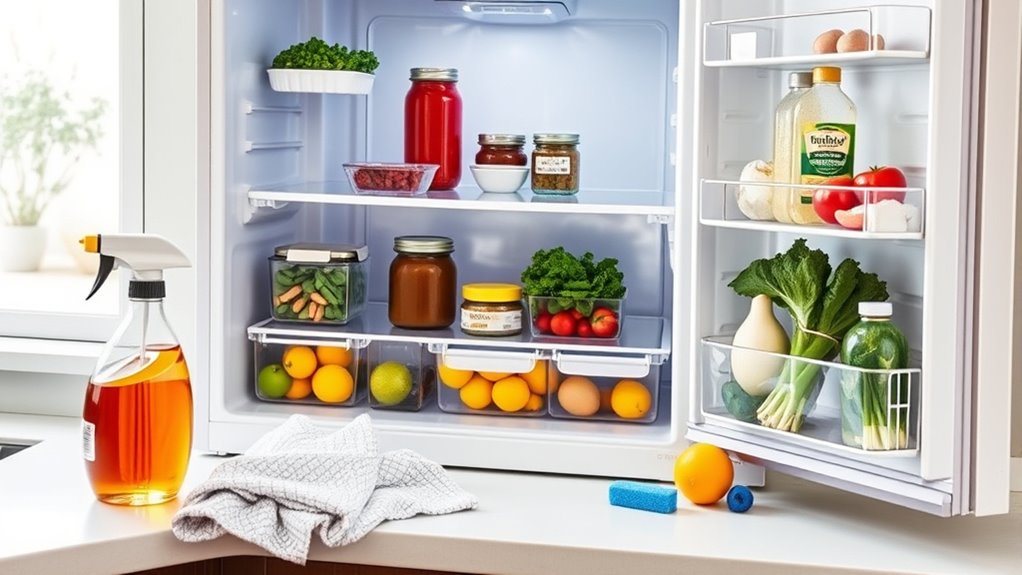
Before you begin cleaning your fridge, it’s important to gather all the supplies you’ll need. Grab a set of cleaning cloths or sponges, a bucket of warm water, mild dish soap, and a spray bottle with vinegar or a gentle all-purpose cleaner. You’ll also want some baking soda to deodorize and a trash bag for any discarded items. Make sure your gloves are nearby if you prefer extra protection. Clear a space around your fridge to work comfortably. Having everything ready saves you from interruptions and keeps the process smooth. Double-check that your cleaning solutions are safe for food-contact surfaces. Preparing your supplies beforehand helps you stay organized and makes the entire cleaning routine more efficient. Consulting cleaning product safety guidelines to ensure all your solutions are suitable for food-contact surfaces. Additionally, familiarizing yourself with airflow and ventilation can help you maintain your appliances safely and prevent odors. Being aware of standby power considerations can also contribute to the longevity and safe operation of your fridge. Incorporating proper airflow during cleaning can prevent mold growth and improve appliance efficiency.

MRS. MEYER'S CLEAN DAY Vinegar Gel Cleaning Spray, Bathroom Use, No-Rinse Formula, Lemon Verbena, 16 Fl Oz, Pack of 1
Mrs. Meyer’s Vinegar Gel Cleaning Spray not only breaks down everyday grime, but also lifts dirt from surfaces…
As an affiliate, we earn on qualifying purchases.
As an affiliate, we earn on qualifying purchases.
Empty and Sort Your Fridge Contents

To effectively clean your fridge, you need to start by removing all the contents. Take out every item so you can see what’s inside and assess its condition. As you do, check expiration dates and toss anything spoiled or expired. Group similar items together—dairy, condiments, leftovers—so you can easily sort and organize later. This is also a good time to wipe off jars, bottles, and containers to prevent cross-contamination when you put everything back. Sorting helps you identify what you need to keep, discard, or donate, reducing clutter and making space for fresher items. Be thorough—don’t leave behind hidden spills or expired food. It’s helpful to understand cleaning appliances and systems so you can choose the right tools for your fridge’s interior surfaces. Using the appropriate disinfectants can ensure your fridge stays hygienic and odor-free. Regularly inspecting your fridge’s airflow can also prevent issues like mold or unpleasant odors from developing. Additionally, maintaining proper ventilation within the fridge can extend its freshness. Once everything is out and sorted, you’re ready for a deep clean and organized re-stocking.

Vtopmart 6 Pack Clear Stackable Storage Bins with Lids, Large Plastic Containers with Handle for Pantry Organizer and Storage,Perfect for Bathroom,Cabinet,Kitchen,Fridge,Closet Organization
✅Functional Storage for Any Space: You can use these pantry bins for various things throughout your home to…
As an affiliate, we earn on qualifying purchases.
As an affiliate, we earn on qualifying purchases.
Clean Shelves and Drawers Thoroughly

With all the contents removed and sorted, it’s time to give your fridge’s shelves and drawers a thorough cleaning. First, take out each shelf and drawer and place them on a stable surface. Next, follow these steps:
- Wipe down with warm, soapy water using a sponge or cloth.
- Use a brush or old toothbrush to scrub corners and crevices.
- Rinse with clean water and dry completely before reinserting.
- Incorporate connected appliances to monitor and maintain hygiene levels, ensuring your fridge stays fresh longer. Integrating smart sensors can help detect spills or spoilage, automating maintenance and optimizing your cleaning routine and food safety. Additionally, proper cleaning can prevent bacterial growth, safeguarding your health and extending the lifespan of your appliances. Regularly inspecting and adjusting the jewelry materials in your appliances can also help prevent corrosion or damage over time.
Imagine lifting out a glass shelf, feeling the cool surface under your hands, then scrubbing away sticky spills and crumbs. Visualize the drawers, once cluttered, now spotless and fresh-smelling. This deep clean guarantees no residue or odors linger, helping your fridge stay hygienic and organized.

Arm & Hammer Baking Soda Fridge-n-Freezer Odor Absorber, Orange 14 oz, Pack of 12
12 pack, 14 oz. boxes of ARM & HAMMER Baking Soda Fridge-n-Freezer Odor Absorber
As an affiliate, we earn on qualifying purchases.
As an affiliate, we earn on qualifying purchases.
Wipe Down the Interior and Handles
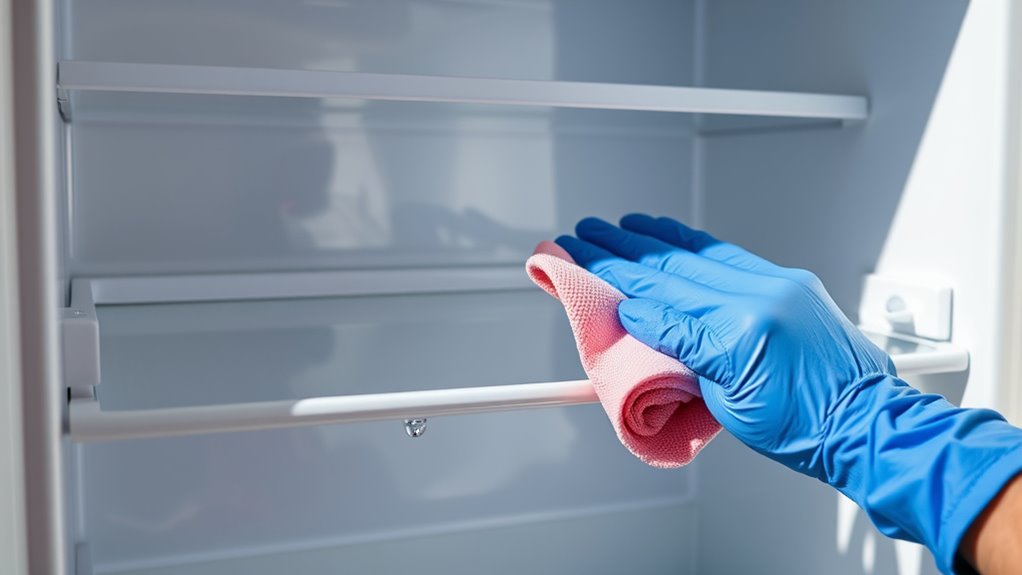
When wiping down the interior and handles, choose gentle cleaners to avoid damage. Pay special attention to high-touch areas like door handles and shelves, which get the most use. Make sure to dry and sanitize everything thoroughly to keep your fridge fresh and bacteria-free. Incorporating proper cleaning techniques can also help maintain optimal appliance performance and extend the lifespan of your fridge. Additionally, using non-abrasive cleaning tools can prevent scratches and preserve the interior surfaces, supporting your fridge’s long-term durability. Regular cleaning with appropriate products can help reduce bacterial growth and airborne contaminants, contributing to a healthier indoor air quality, aligning with your goal of creating a healthy home environment.
Use Gentle Cleaners
Using gentle cleaners is essential for safely wiping down your fridge’s interior and handles without causing damage. You want to avoid harsh chemicals that can degrade surfaces or leave residues. Instead, opt for mild options like a mix of water and a gentle dish soap, white vinegar diluted with water, or a 50/50 solution of water and baking soda. Imagine:
- A soft microfiber cloth gliding smoothly over surfaces, removing smudges.
- A spray bottle misting a gentle solution onto handles and walls.
- Your hand gripping a cloth, carefully wiping every corner and crevice.
This approach keeps your fridge fresh and clean without risking scratches or chemical damage. Gentle cleaners are your best choice for maintaining the longevity and appearance of your appliance.
Focus on High-Touch Areas
Have you ever noticed how frequently your fridge handles come into contact with your hands and other surfaces? That constant touch transfers germs and grime, making it essential to clean these areas regularly. Focus on wiping down the interior walls, shelves, and especially the handles, which are touched most often. Use a microfiber cloth and a gentle cleaner to remove dirt and bacteria effectively. To help you remember, here’s a quick guide:
| Surface | Cleaning Frequency | Recommended Cleaner |
|---|---|---|
| Handles | Weekly | Mild soap solution |
| Interior walls | Bi-weekly | Vinegar and water mix |
| Drawers & bins | Monthly | Disinfectant spray |
| Shelves | Weekly | Gentle all-purpose cleaner |
Keeping high-touch areas clean prevents germs from spreading and keeps your fridge fresh. Regular cleaning routines not only promote hygiene but also extend the lifespan of your appliance. Incorporating hygienic practices into your routine can significantly reduce cross-contamination risks. Being aware of high-touch surfaces helps you prioritize cleaning efforts effectively. Additionally, understanding the importance of germ transmission can motivate you to maintain consistent cleaning habits. Remember, maintaining a cleaning schedule can make these tasks easier to manage and ensure consistent freshness.
Dry and Sanitize Thoroughly
After wiping down the high-touch surfaces, it’s important to thoroughly dry and sanitize the interior and handles to eliminate any remaining germs. Use a clean, dry cloth to absorb moisture, preventing mold and lingering odors. Then, apply a disinfectant spray or a mixture of vinegar and water to the surfaces. Focus on:
- Wiping the shelves and drawers to remove sticky spots and crumbs.
- Scrubbing the handles with a brush or cloth to remove bacteria buildup.
- Rinsing the cloth frequently to avoid spreading germs around.
Make sure every corner and edge gets attention. This step not only keeps your fridge hygienic but also ensures it stays fresh and odor-free. Proper drying and sanitizing make a noticeable difference in food safety.
Organize and Restock With Care

To keep your fridge organized, make sure you categorize food items clearly so everything has its place. Regularly check expiration dates to prevent waste and identify what needs to be used or discarded. When restocking, do so with intention, placing fresh items where you can see them and maintaining a tidy, accessible space.
Categorize Food Items Clearly
Clearly categorizing food items is essential for an organized and efficient fridge. When you sort your items, it’s easier to find what you need quickly and avoid waste. Start by creating designated zones:
- Fruits and Vegetables – Use clear bins to keep produce fresh and separate.
- Dairy and Eggs – Store these in their own section, preferably on the middle shelf for easy access.
- Meat and Leftovers – Place raw meats on the bottom shelf in sealed containers to prevent leaks and cross-contamination.
Label each zone if needed, so everyone in your household knows where to put things. This clarity guarantees your fridge stays tidy, reduces spoiled food, and keeps everything within easy reach. Proper categorization makes maintaining freshness simpler and more effective.
Check Expiration Dates Regularly
How often do you check the expiration dates on your food? Making it a habit keeps your fridge fresh and safe. When you regularly scan labels, you prevent eating spoiled or expired items that could cause illness. Set a reminder to review your fridge weekly or biweekly, ensuring no item gets overlooked. Toss out anything past its expiration, especially dairy, meats, and leftovers. For unopened items, check the date before storing them; for opened jars or bottles, note the date when you first used them. Keeping track of expiration dates also helps you plan meals better and avoid waste. Staying vigilant isn’t just about safety—it also saves money and keeps your fridge organized. Regularly checking dates simplifies restocking and keeps your fridge fresh and inviting.
Restock With Intention
When restocking your fridge, it’s important to do so with purpose and care to maintain organization and freshness. First, gather all items to see what you have, then decide their ideal spots. Use these steps to create a system:
- Place fresh produce at the front or top shelf to encourage quick use.
- Store leftovers and prepared foods in clear containers at eye level for easy access.
- Keep dairy and condiments in designated sections to avoid clutter and cross-contamination.
Establish a Regular Maintenance Schedule
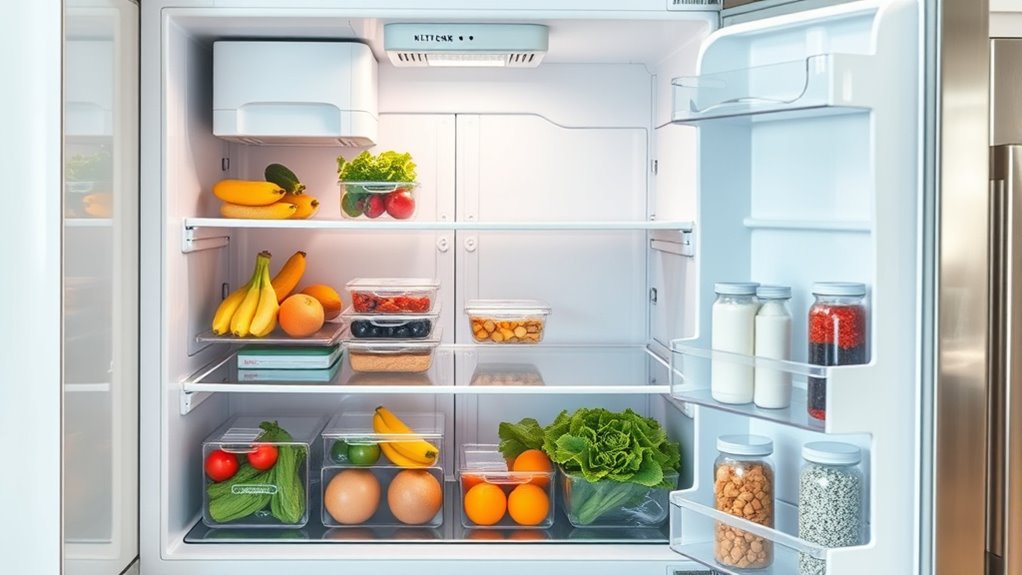
To keep your fridge clean and organized, establishing a regular maintenance schedule is essential. Decide how often you’ll check for expired items, clean shelves, and reorganize. Consistency prevents mess buildup and keeps food fresher longer. Schedule weekly or bi-weekly cleanings to stay on top of spills and expired products. Use a simple table to plan your routine:
| Task | Frequency | Notes |
|---|---|---|
| Check for expired | Weekly | Discard expired items |
| Wipe down shelves | Every 2 weeks | Use mild cleaner |
| Reorganize | Monthly | Group similar items |
Sticking to this schedule minimizes waste and maintains a tidy fridge, making your routine effortless.
Frequently Asked Questions
How Often Should I Deep Clean My Fridge?
You should deep clean your fridge at least once every three to four months. This helps prevent mold, odors, and foodborne bacteria. Start by removing all items, tossing expired products, and wiping shelves with a mixture of warm water and mild soap or vinegar. Regular maintenance keeps your fridge fresh, extends its lifespan, and guarantees your food stays safe and delicious. Make it a routine to stay on top of cleanliness.
What Natural Cleaning Products Are Safe for My Fridge?
Imagine opening your fridge and noticing that faint, unfamiliar smell. To combat this naturally, you can use vinegar, baking soda, or lemon juice—safe, effective, and eco-friendly options. Mix vinegar with water for a quick wipe, sprinkle baking soda on shelves to neutralize odors, or wipe down with lemon juice for a fresh scent. These natural cleaners keep your fridge spotless without harsh chemicals, ensuring freshness with every open door.
How Can I Prevent Mold Growth in My Fridge?
To prevent mold growth in your fridge, you should regularly clean spills and crumbs immediately, keep the interior dry, and make certain proper ventilation. Use a mixture of baking soda and water or white vinegar to wipe down surfaces weekly. Keep the fridge at the right temperature, around 37-40°F (3-4°C), and avoid overcrowding. Check and discard expired or spoiled food promptly to maintain a mold-free environment.
What’s the Best Way to Organize Leftovers?
Think of your leftovers as treasures waiting to be discovered. To organize them best, use clear, labeled containers, stacking similar items together for easy access. Place newer leftovers at the back and older ones in the front to stay on top of what needs eating first. Keep a list on the fridge door to track leftovers’ dates. This system keeps your fridge tidy, prevents waste, and guarantees freshness every time you open it.
How Do I Handle Expired or Spoiled Food Safely?
You should handle expired or spoiled food by wearing gloves, then carefully remove it from the fridge. Seal the items in a plastic bag to contain any odors or leaks, and dispose of them promptly in your outdoor trash bin. Clean the area where the food was stored with warm, soapy water or a disinfectant to prevent bacteria buildup. Always wash your hands thoroughly afterward.
Conclusion
Keeping your fridge clean doesn’t have to be a chore. With a simple routine, you’ll enjoy fresh, organized groceries and less waste. Imagine opening your fridge and finding everything in its place—doesn’t that make mealtime more enjoyable? Just a little effort now and then can save you time, money, and stress later. So why not make cleaning your fridge part of your regular routine and enjoy the benefits of a fresher, happier kitchen?