Many dishwasher owners overlook cleaning the filter, but it’s a vital step to guarantee your machine works efficiently. A dirty filter causes poor cleaning, foul odors, and can even damage internal parts. Regularly removing and rinsing the filter helps prevent clogs and maintains the dishwasher’s performance. If you keep neglecting this simple task, your dishwasher might struggle. Want to discover the easy steps to keep your filter spotless? Keep going to learn more.
Key Takeaways
- The dishwasher filter traps debris to prevent clogs and odors, but many users neglect cleaning it regularly.
- Regular filter cleaning ensures optimal water flow, cleaning performance, and extends the appliance’s lifespan.
- Signs of a dirty filter include unclean dishes, foul odors, and slow drainage, yet this step is often skipped.
- Proper removal and gentle cleaning of the filter prevent damage and maintain dishwasher efficiency.
- Incorporating routine filter maintenance into your schedule prevents costly repairs and keeps your dishwasher running smoothly.
Understanding the Role of the Dishwasher Filter
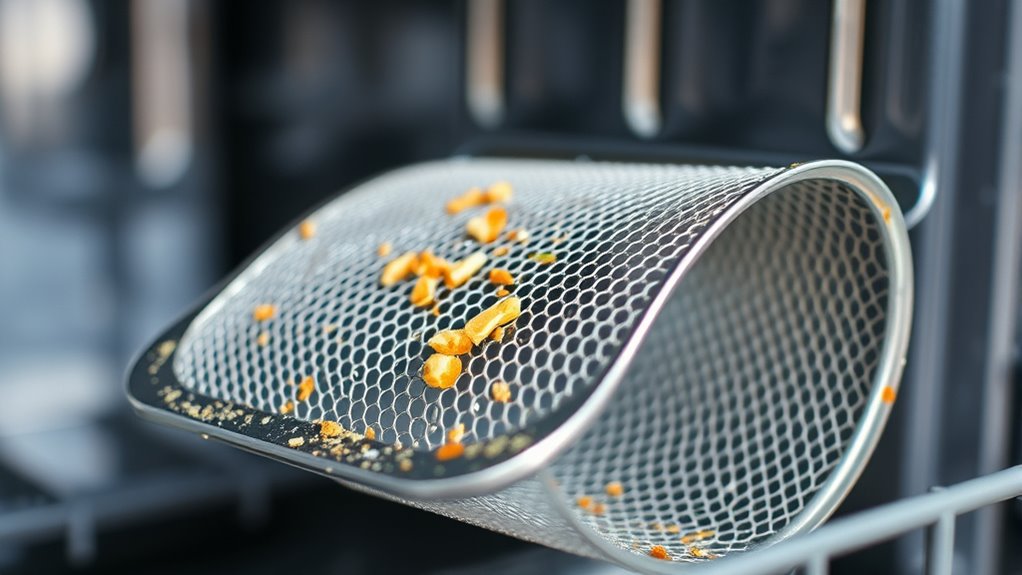
Your dishwasher filter plays a essential role in keeping your appliance running smoothly. It traps food particles, grease, and debris that could clog the spray arms or damage the pump. Without a clean filter, these particles can recirculate, leaving dishes unclean and causing odors. The filter guarantees water flows freely through the system, maintaining ideal cleaning performance. It also protects the pump and other internal components from damage caused by trapped debris. Regularly inspecting and cleaning the filter helps prevent buildup and keeps your dishwasher functioning efficiently. Think of it as a gatekeeper that filters out harmful particles, ensuring only clean water circulates during each cycle. Proper maintenance of filters is crucial for optimal performance and durability of your dishwasher, as it directly impacts the overall appliance longevity. Additionally, understanding the filter design can help you identify the best cleaning methods for your specific model. Maintaining your filter is a simple yet indispensable step for achieving spotless dishes and prolonging your dishwasher’s lifespan, especially since filter performance directly influences cleaning results. Implementing a routine filter cleaning schedule can significantly enhance your dishwasher’s efficiency and prevent costly repairs.
Signs That Indicate Your Filter Needs Cleaning

When a dishwasher’s filter becomes clogged or dirty, certain signs will become apparent during regular use. First, you might notice dishes aren’t coming out as clean as they should, with leftover food or grime. Second, there could be a foul odor emanating from the dishwasher after cycles. Third, water may pool at the bottom of the unit or drain slowly, indicating a blockage. Finally, you might see visible debris or buildup around the filter area. If any of these signs appear, it’s a clear indication that your filter needs cleaning. Ignoring these signs can lead to decreased efficiency and potential damage, so staying attentive helps keep your dishwasher running smoothly. Regularly checking and cleaning the filter prevents these issues before they worsen. For reliable dishwasher operation, understanding the importance of proper maintenance can help extend the lifespan of your appliance. Additionally, incorporating routine inspections can further ensure your dishwasher remains in optimal condition. Performing regular cleaning of the filter is also crucial to prevent buildup of debris that can impair water flow and damage components. Proper filter maintenance not only improves cleaning performance but also reduces the risk of costly repairs. Regular cleaning of the filter also helps maintain water flow, which is essential for thorough cleaning and efficient operation.
Tools Needed to Clean Your Dishwasher Filter

Cleaning your dishwasher filter requires a few simple tools to do the job effectively. First, you’ll need a soft-bristled brush or an old toothbrush to scrub away stubborn debris without scratching the filter. Next, have a pair of tongs or gloves on hand to safely remove and handle the filter, especially if it’s dirty or greasy. A small screwdriver might be useful if your filter is secured with screws, but many models simply lift out. Additionally, keep a bowl or sink nearby filled with warm water and mild dish soap for soaking and rinsing the filter. Proper maintenance routines can extend the life of your dishwasher and ensure optimal performance. Regularly inspecting and cleaning your filter is an important part of dishwasher upkeep, helping prevent clogs and improve cleaning efficiency. Incorporating proper cleaning tools ensures you can effectively remove debris without damaging parts. Using effective cleaning techniques can make the process faster and more thorough, especially when combined with regular filter inspections. With these tools, you’re ready to give your dishwasher filter a thorough clean.
Step-by-Step Guide to Removing the Filter
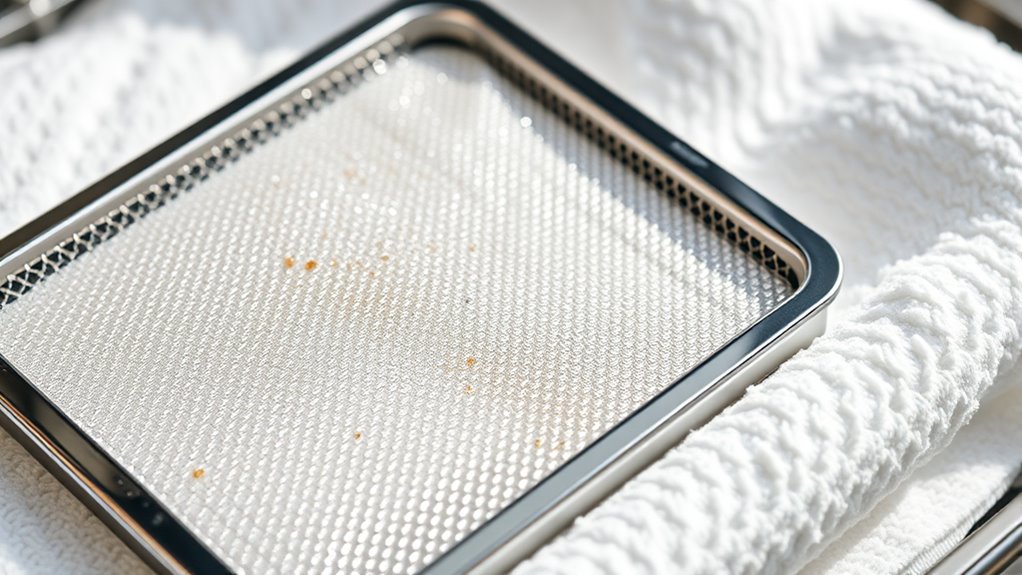
To remove the dishwasher filter, start by locating it inside the bottom of the dishwasher, usually near the center or along the back wall. Once you’ve found it, follow these steps:
- Unscrew or lift the filter cover, depending on your model.
- Gently twist or slide the filter out of its housing.
- Check for debris and remove any buildup around the filter.
- Carefully lift the filter from the compartment, ensuring no parts are left behind.
- Regularly inspecting and cleaning your dishwasher filter can extend its lifespan and improve water flow. Proper maintenance techniques are key to keeping your dishwasher running efficiently. Employing regular cleaning routines can also help prevent clogs and ensure optimal performance. Additionally, understanding the design of the filter system can make removal and cleaning easier for users. Being aware of filter placement can save time during maintenance. Be gentle to avoid damaging clips or seals. Keep track of all components so you can reassemble everything correctly later. Taking your time ensures a clean removal process and preserves your dishwasher’s efficiency.
How to Properly Clean and Maintain the Filter
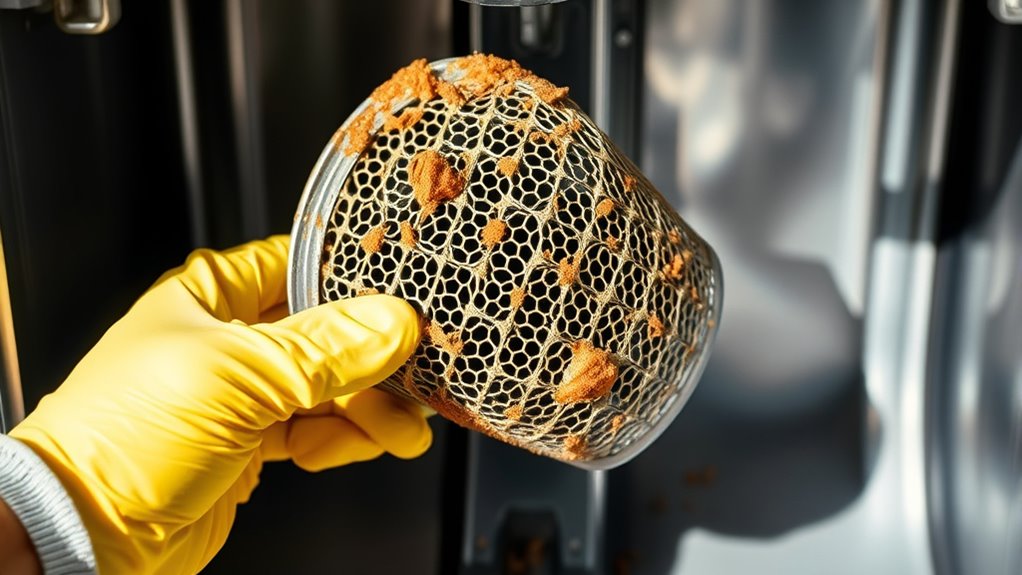
Regularly cleaning your dishwasher filter is essential to keep your appliance running efficiently and prevent odors. To do this properly, remove the filter from your dishwasher following your manufacturer’s instructions. Rinse it under warm water to loosen debris, then gently scrub it with a soft brush or an old toothbrush to remove stubborn buildup. Avoid using harsh chemicals or abrasive tools that could damage the filter. After cleaning, inspect the filter for signs of damage or wear—replace it if necessary. Reinstall the filter securely, ensuring it’s properly seated. Maintaining a clean filter helps trap food particles and prevents clogs, ensuring your dishwasher operates smoothly and odors are kept at bay. Regular upkeep extends the life of your appliance and improves cleaning performance. Proper maintenance practices of your dishwasher’s components are key to safe and efficient operation. Additionally, understanding appliance maintenance can help you identify other issues before they become major problems. Keeping your filter in good condition is also vital for maintaining sound dishwasher performance, which can be compromised by neglected components. Regularly checking the filter integrity ensures all parts are functioning correctly and prolongs the lifespan of your dishwasher.
Frequency of Dishwasher Filter Cleaning

You should clean your dishwasher filter at a frequency that matches your usage and the level of food debris in your household. If you run the dishwasher daily or notice clogs, clean the filter once a month. For lighter use, every three to six months works fine. Keep an eye out for signs like bad odors or poor cleaning performance, which indicate it’s time to clean. Here are some guidelines:
- Heavy use (daily): once a month
- Moderate use (weekly): every 2-3 months
- Light use (few times a month): every 4-6 months
- Noticeable odors or drainage issues: immediately clean the filter
Adjust your cleaning schedule based on these factors for ideal dishwasher performance. Regular filter maintenance helps ensure optimal water flow efficiency and prolongs the life of your appliance.
Common Mistakes to Avoid During Cleaning
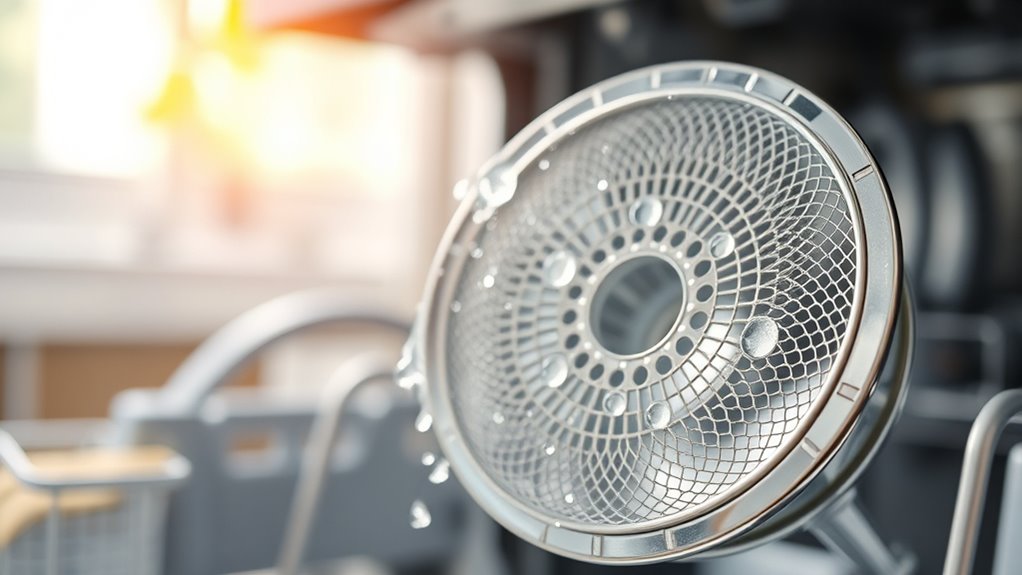
Avoiding common mistakes during dishwasher cleaning is crucial to prevent damage and guarantee effective results. One mistake is using harsh chemicals that can corrode parts or leave residues. Another is neglecting to unplug the dishwasher, risking electrical hazards. Over-cleaning or scrubbing too hard can damage delicate components. Finally, forgetting to rinse away cleaning agents can cause build-up and reduce performance.
Here’s a quick guide to avoid pitfalls:
| Mistake | Consequence | Prevention |
|---|---|---|
| Using strong chemicals | Damage to parts | Use gentle, dishwasher-safe cleaners |
| Not unplugging | Electrical hazards | Always disconnect before cleaning |
| Scrubbing too hard | Damaged surfaces | Use soft brushes and gentle motions |
| Forgetting to rinse | Residue build-up | Rinse thoroughly after cleaning |
The Impact of a Dirty Filter on Dishwasher Performance
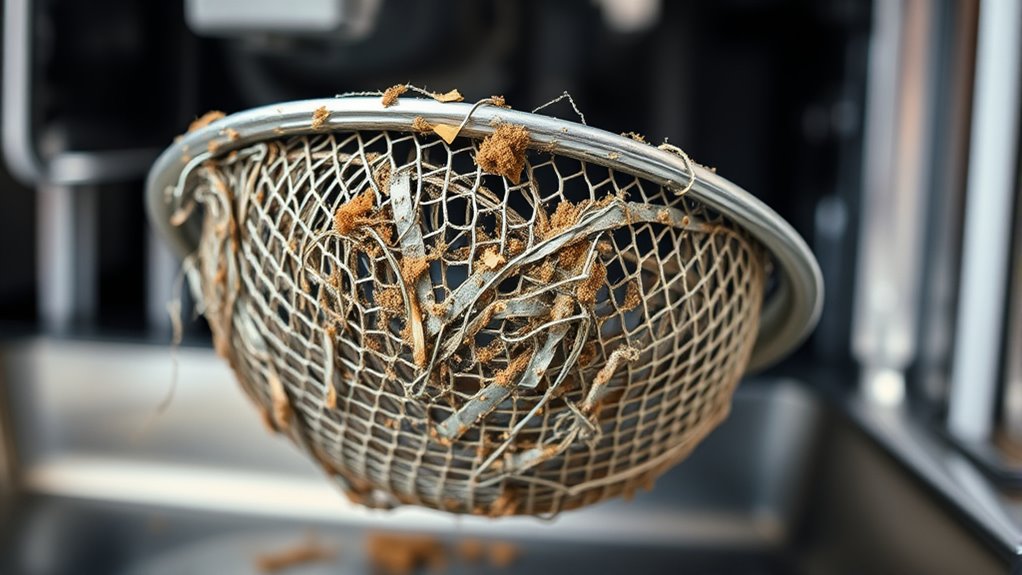
A dirty filter can considerably disrupt your dishwasher’s performance, leading to poor cleaning results and increased energy consumption. When the filter is clogged, water flow is restricted, preventing dishes from rinsing thoroughly. This can cause food particles to redeposit on your dishes, making them appear dirty even after a cycle. Additionally, a blocked filter causes the dishwasher to work harder, consuming more electricity and wearing out components faster. Here’s what happens when you neglect cleaning it:
- Water circulation slows down, reducing cleaning effectiveness.
- Food debris accumulates, leading to foul odors.
- The dishwasher’s motor strains, risking damage.
- Energy efficiency drops, increasing utility bills.
Regular filter maintenance keeps your dishwasher running smoothly and dishes spotless.
Tips for Preventing Filter Blockages
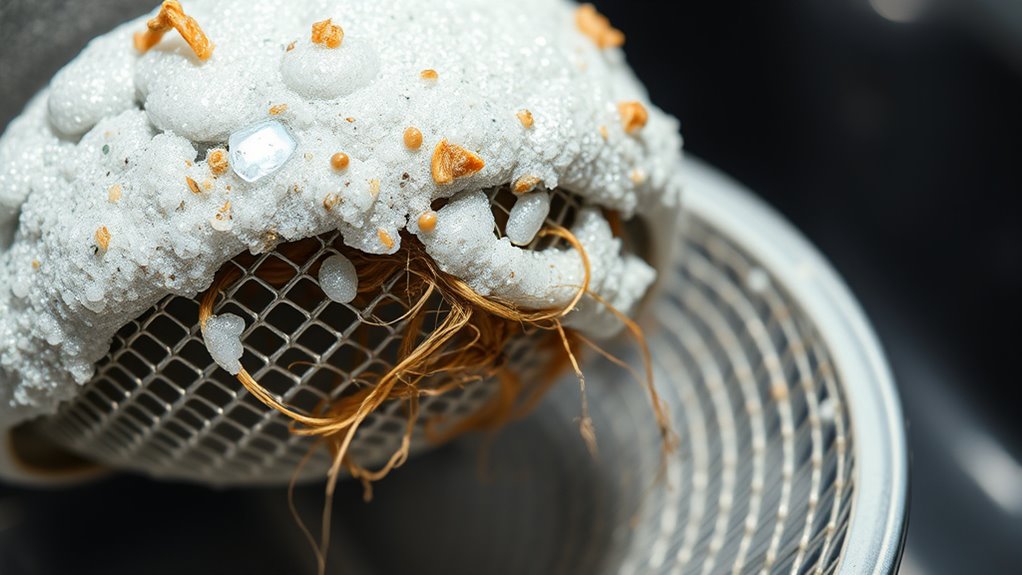
Keeping your dishwasher’s filter clear of debris is essential for maintaining peak performance. To prevent blockages, regularly inspect and clean the filter—ideally once a month. Remove loose food particles and rinse the filter under warm water. Avoid overloading the dishwasher, which can trap debris and strain the filter. Use a rinse aid to help prevent mineral buildup that can clog the filter. Also, scrape dishes thoroughly before loading to minimize debris. Consider running an empty cycle with vinegar monthly to remove grease and mineral deposits. Here’s a quick guide:
| Tip | Benefit |
|---|---|
| Inspect and clean regularly | Keeps debris from building up and clogging |
| Avoid overloading | Ensures proper water flow and cleaning |
| Pre-rinse dishes | Reduces debris on the filter |
| Use rinse aid | Prevents mineral buildup |
| Run vinegar cycles | Maintains filter clarity |
When to Consider Replacing Your Dishwasher Filter

While regular cleaning extends your dishwasher’s filter life, there comes a point when it’s time to replace it entirely. You should consider a replacement if:
- The filter remains clogged despite thorough cleaning.
- It shows visible signs of damage, like cracks or warping.
- Performance issues persist, such as poor cleaning or foul odors.
- The filter is more than a year old and cleaning no longer restores function.
If you notice these signs, swapping out the filter ensures your dishwasher runs efficiently and prevents further damage. Don’t wait too long; a worn or damaged filter can lead to bigger problems down the line. Regular replacement saves you time and keeps your dishes sparkling clean.
Frequently Asked Questions
Can I Clean My Dishwasher Filter With Household Cleaning Agents?
Yes, you can clean your dishwasher filter with household cleaning agents, but be careful. Avoid strong chemicals like bleach, which can damage the filter. Instead, use warm water and mild dish soap or vinegar to gently scrub away debris. Remove the filter first, soak it if needed, and rinse thoroughly. Regular cleaning with gentle products keeps your dishwasher running smoothly and prevents odors or clogs.
How Long Does a Typical Dishwasher Filter Last Before Replacement?
Your dishwasher filter is like a loyal gatekeeper, guarding against debris that threatens its efficiency. Typically, it lasts about a year before needing replacement. Over time, it can become clogged and less effective, causing your dishes to suffer. Regularly inspect and clean it to extend its lifespan. When it shows signs of wear—cracks, persistent odors, or damage—it’s time to replace, ensuring your dishwasher keeps performing at its best.
Are There Different Types of Filters for Various Dishwasher Brands?
Yes, there are different types of filters for various dishwasher brands. You’ll find some filters are circular, others are flat, and some are self-cleaning. It’s important to check your dishwasher’s manual or manufacturer’s website to identify the right filter type for your model. Using the correct filter guarantees peak performance, prevents clogs, and extends the lifespan of your dishwasher. Always replace or clean filters as recommended by the manufacturer.
What Are the Signs of a Malfunctioning Dishwasher Due to Filter Issues?
Imagine your dishwasher’s acting like a dial-up modem—slow, noisy, and unreliable. If your dishes come out greasy, there’s standing water, or it’s making strange noises, your filter might be clogged or broken. You’ll notice poor cleaning performance and persistent odors. These signs point to filter issues, so don’t wait for a full-blown breakdown. Regularly checking and cleaning your filter keeps your dishwasher running smoothly and your dishes spotless.
Is Professional Cleaning Recommended for Stubborn Filter Blockages?
Yes, professional cleaning is recommended for stubborn filter blockages. When you can’t remove debris or buildup yourself, a technician has specialized tools and expertise to thoroughly clean or replace the filter. This guarantees your dishwasher functions efficiently, preventing further damage or costly repairs. Don’t risk damaging your appliance; if DIY methods fail, scheduling a professional cleaning is the best way to restore peak performance.
Conclusion
Think of your dishwasher filter as the heartbeat of your machine—when it’s clear, everything runs smoothly. I once ignored mine, and clogs caused a mini flood, like a dam breaking. Regular cleaning keeps your dishwasher flowing effortlessly, preventing costly repairs. Just like tending a garden keeps it thriving, maintaining your filter guarantees your dishes come out spotless every time. Don’t let neglect turn your trusty appliance into a leaky mess—stay proactive, and it’ll serve you well.