To store rechargeable batteries safely, keep them in a cool, dry place away from direct sunlight and extreme temperatures, which can cause damage or capacity loss. Store them at a moderate charge level, around 30-50%, to prevent over-discharge and capacity reduction. Organize batteries by type and rotate older ones to avoid expiry issues. Proper handling, using protective covers for terminals, and recycling old units help prevent self-destruction. Continue exploring for more tips to make certain your batteries stay safe and efficient.
Key Takeaways
- Store batteries in a cool, dry environment away from direct sunlight and extreme temperatures.
- Keep batteries at a partial charge (around 30-50%) for long-term storage to prevent capacity loss.
- Use insulated or covered terminals to prevent accidental short circuits during storage.
- Organize batteries by type and charge level, and rotate stock to avoid aging and capacity degradation.
- Recycle old or unused batteries properly through designated recycling centers to prevent safety hazards.
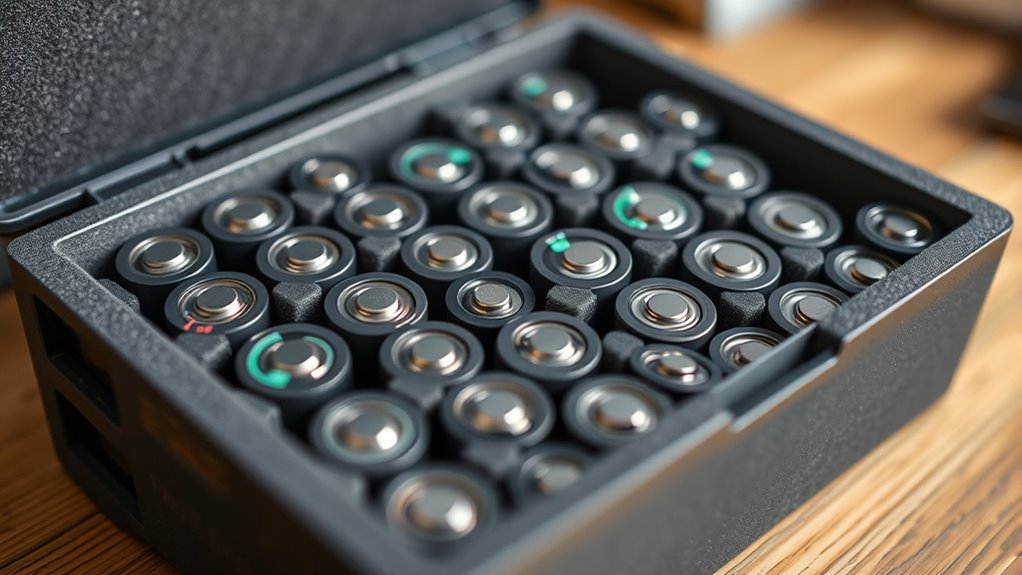
Proper storage is vital to maintaining the performance and lifespan of your rechargeable batteries. When you store your batteries correctly, you prevent capacity loss, reduce safety risks, and guarantee they’re ready to use when needed. One key aspect of proper storage involves understanding shelf life management. Rechargeable batteries don’t last forever, even if they aren’t actively being used. Over time, their capacity diminishes due to chemical changes inside the cells. To extend their usefulness, you should keep track of their age and condition, avoiding storing batteries for too long without use. Regularly checking their state of charge and replacing or recycling old ones helps prevent potential leaks or failures. When batteries reach the end of their shelf life, it’s crucial to dispose of them responsibly through battery recycling programs. Not only does this help protect the environment, but it also prevents hazardous substances from leaking into the ground or water supply.
Maintaining the right storage environment is equally important. Keep rechargeable batteries in a cool, dry place away from direct sunlight and extreme temperatures. Heat accelerates chemical reactions inside the batteries, leading to capacity loss or even dangerous failures. Cold environments can also harm them, so a stable, moderate temperature is ideal. Guarantee batteries are stored in a way that prevents accidental short circuits—keeping terminals covered or stored in individual compartments can help. When you’re managing multiple batteries, organizing them by type and charge level simplifies the process of shelf life management. This organization allows you to rotate your stock, using older batteries first and replacing them before they become unusable or unsafe. Additionally, understanding the importance of safe battery handling can further reduce risks during storage and use.
Additionally, practicing battery recycling is essential as part of responsible storage. When batteries are no longer usable or have reached their expiration, don’t just toss them in the trash. Instead, find local recycling centers that accept rechargeable batteries, ensuring they’re processed safely and reused in manufacturing. Recycling reduces environmental impact and conserves resources by recovering valuable materials like lithium, cobalt, and nickel. By integrating battery recycling into your storage routine, you’re actively participating in sustainable practices and helping prevent potential environmental hazards. Proper storage and shelf life management form the foundation of safe, efficient use of your rechargeable batteries. Keeping track of their age, storing them correctly, and recycling when necessary helps you get the most out of each charge, while also contributing to environmental preservation and safety.
Frequently Asked Questions
Can Rechargeable Batteries Be Stored in a Refrigerator?
Yes, you can store rechargeable batteries in the refrigerator, but you should do so cautiously. Keep them in a sealed plastic bag to prevent moisture damage and avoid extreme cold which can harm voltage maintenance. Remember, proper storage helps with battery recycling later and keeps their voltage stable. Always let batteries reach room temperature before use to ensure they perform well and don’t self-destruct from rapid temperature changes.
How Long Can Rechargeable Batteries Be Stored Without Losing Capacity?
Rechargeable batteries can typically be stored for about 6 months to a year without significant capacity loss, depending on their chemistry—Li-ion batteries last longer than NiMH ones. To maximize storage duration, keep them in a cool, dry place at about 40-60% charge. Investigating battery chemistry shows that proper conditions slow capacity decline, so you can enjoy longer shelf life and maintain performance over time.
Is It Safe to Store Different Types of Rechargeable Batteries Together?
It’s not safe to store different types of rechargeable batteries together because of varying battery chemistry. Mixing lithium-ion, NiMH, and other chemistries can cause leaks, overheating, or fires. To guarantee storage safety, keep each battery type separate in appropriate containers, and avoid contact between terminals. Always follow manufacturer guidelines for storage, and check batteries regularly to prevent potential hazards. Proper separation and cautious handling protect both you and your devices.
Do Temperature Fluctuations Affect Battery Lifespan During Storage?
Temperature fluctuations are like a roller coaster for your batteries, impacting their lifespan during storage. They cause thermal cycling, which stresses the internal structure, and humidity effects can lead to corrosion. To protect your batteries, keep them in a cool, consistent environment, avoiding extreme hot or cold swings. Stable temperatures minimize damage, extending their life and ensuring they work effectively when you need them most.
Should I Store Batteries in Their Original Packaging?
Yes, you should store batteries in their original packaging. The packaging helps prevent battery corrosion and keeps them from experiencing voltage imbalance, which can damage the cells. It also offers protection from physical damage and accidental short circuits. Keep the original packaging intact until you’re ready to use the batteries, and store them in a cool, dry place to extend their lifespan and maintain ideal performance.
Conclusion
To keep your rechargeable batteries safe and lasting, always store them in a cool, dry place, and avoid leaving them fully charged or completely drained for long periods. Use a proper storage case and check their charge periodically. Remember, a stitch in time saves nine—taking simple precautions now can prevent costly replacements later. Treat your batteries with care, and they’ll serve you well longer. Proper storage truly makes all the difference.