
Wiring your solar panels in series or parallel changes how voltage and current work together. Series wiring connects panels end-to-end, increasing voltage but keeping current steady, which is good for longer cable runs. Parallel wiring links panels side-by-side, boosting current while voltage stays the same, offering better performance in shade. Choosing the right setup depends on your power needs and system design. Keep exploring to get a clear picture of how each method works for you.
Key Takeaways
- Series wiring increases voltage by connecting panels end-to-end, while parallel wiring keeps voltage the same but adds current.
- Use series when needing higher voltage for longer cable runs or matching inverter requirements.
- Use parallel when boosting current, especially if panels are shaded or have different performance levels.
- Combining both methods can optimize system performance for different energy needs.
- Proper wiring and safety measures prevent overloads and ensure reliable, safe solar power system operation.
What Does Wiring Mean for Solar Panels?

Have you ever wondered how solar panels send the electricity they generate to your home? Wiring is what connects each solar panel and allows the electricity to flow smoothly. Think of it like a network of roads guiding power from the panels to your inverter and then to your appliances. The type of wiring determines how efficiently the energy moves and how much power your system can produce. Proper wiring ensures safety and maximizes energy output. If wiring isn’t done correctly, you might experience reduced power or even damage to your system. Whether you’re connecting panels in series or parallel, understanding wiring helps you get the most from your solar setup. Additionally, choosing the right wiring configuration can impact the overall system efficiency and safety of your solar energy system. It’s a critical step in turning sunlight into usable electricity. For optimal system performance, considering wiring configurations and their impact on energy flow is essential. Knowing how different wiring methods influence system performance can help you make better decisions for your installation.
How Does Series Wiring Work?
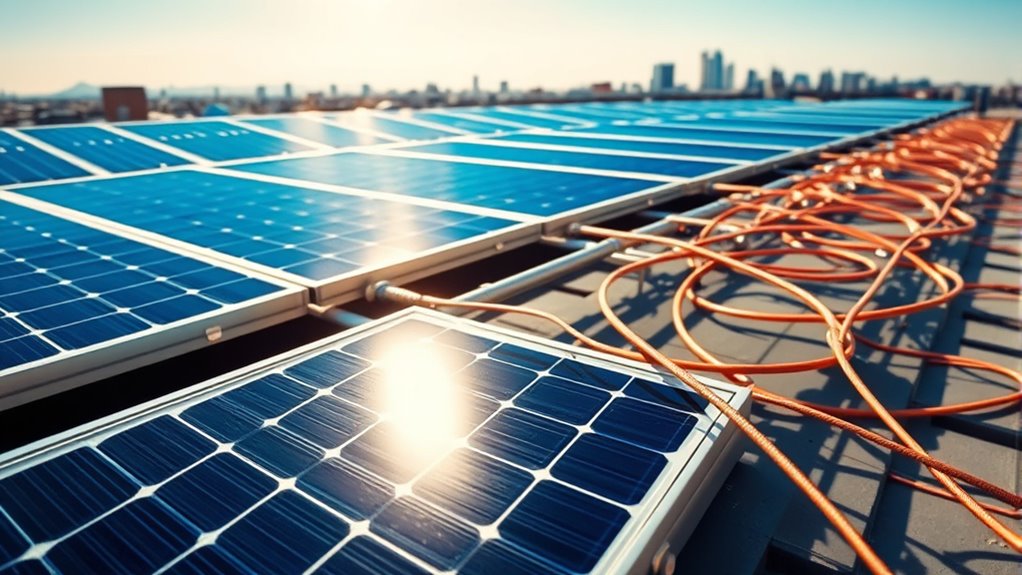
When you connect solar panels in series, the overall voltage increases, giving you more power potential. The current flows along a single pathway, so if one panel’s connection is interrupted, the entire circuit stops. This wiring method helps maximize voltage but keeps the current limited to the lowest panel’s output. Additionally, understanding modern wiring techniques can optimize your solar setup for better efficiency and safety. Properly configuring series wiring can also help in managing system performance and ensuring consistent energy flow throughout your installation. Utilizing advanced connection methods can further enhance the reliability and longevity of your solar energy system. Incorporating proper safety protocols is also essential to prevent damage and ensure safe operation over time. Moreover, understanding the philosophical insights on existence and ethics can inspire a more mindful approach to sustainable energy solutions and environmental responsibility.
Voltage Increase Effect
Connecting solar panels in series causes their voltages to add up, which is essential for increasing the overall power output. When you connect panels this way, each panel’s voltage stacks on top of the next, creating a higher total voltage. For example, if each panel produces 20 volts, two in series will give you 40 volts. This higher voltage helps your system reach the required voltage for your inverter or battery bank. It’s especially useful when you need to generate enough voltage to operate efficiently. Keep in mind, while the voltage adds up, the current (amperage) remains the same as one panel’s current. So, series wiring is a smart way to boost voltage without changing the current flow. Additionally, understanding the Voltage Increase Effect is crucial in designing an effective solar power system. Proper wiring configuration can also impact system efficiency, and considering market trends can help optimize your setup for better performance. Recognizing how system components interact under different wiring methods is vital for maximizing energy output.
Pathway for Current
Ever wonder how current flows through series-connected solar panels? When you connect panels in a series, the current has a single pathway to follow. It starts at the first panel, moves through its electrical circuit, then continues to the next panel in line. Because they’re connected end-to-end, the same current flows through all of them, regardless of individual panel output differences. Think of it like a chain: the electrons leave the positive terminal of the first panel, travel through the wire, and enter the next panel’s positive terminal. This continuous flow maintains a consistent current across all panels. Understanding the flow of electrons is essential to grasp how series wiring works effectively. The total voltage adds up, but the current remains the same throughout the series circuit. This setup makes series wiring ideal when you need higher voltage. electrical safety is crucial when working with these connections to prevent hazards. Additionally, knowing how the current behaves helps optimize the performance of your solar energy system. Incorporating proper circuit configuration can further enhance system efficiency and safety. Properly understanding and managing current flow can also prevent potential system failures.
How Does Parallel Wiring Work?

Have you ever wondered how multiple solar panels work together to produce more power? When you connect panels in parallel, each one preserves its voltage, but their currents combine. This setup allows your system to generate more overall current, which is helpful for powering larger devices or systems. In parallel wiring, each panel is linked to the same positive and negative terminals, creating a network that shares the load efficiently. This configuration is less affected by shading on individual panels, meaning one shaded panel doesn’t drastically reduce the system’s output. Understanding this helps you optimize your solar setup for higher current capacity and flexibility. Additionally, parallel wiring relies on understanding electrical concepts like current, making it easier to expand or modify your system in the future. Recognizing the electrical principles involved enables better system design and troubleshooting. Moreover, parallel wiring is often favored for its scalability, allowing for easier system expansion as energy needs grow.
Comparing Voltage and Current in Series and Parallel Setups
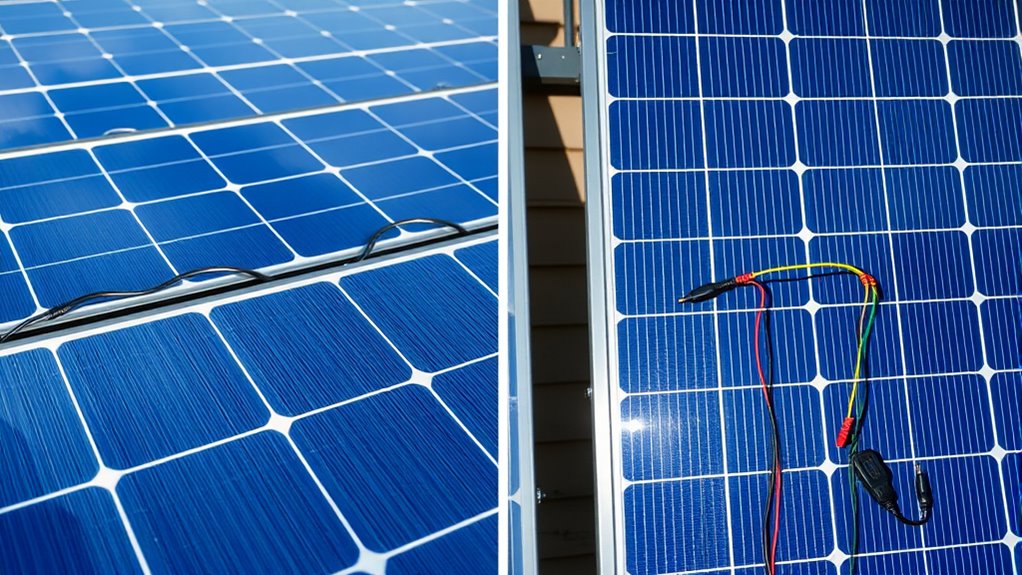
Understanding how voltage and current behave in series and parallel configurations is key to designing an effective solar system. In a series setup, the voltage adds up while the current stays the same. For example, connecting two panels with 20 volts each results in a total of 40 volts, but the current remains unchanged at, say, 5 amps. In contrast, in a parallel setup, the current adds up while the voltage stays constant. Connecting two panels with 5 amps each results in a total of 10 amps, but the voltage remains at 20 volts. This difference impacts how you match panels to your system’s needs. Choosing the right configuration depends on whether you need a higher voltage or more current for your battery bank or inverter.
Which Wiring Method Is Safer?
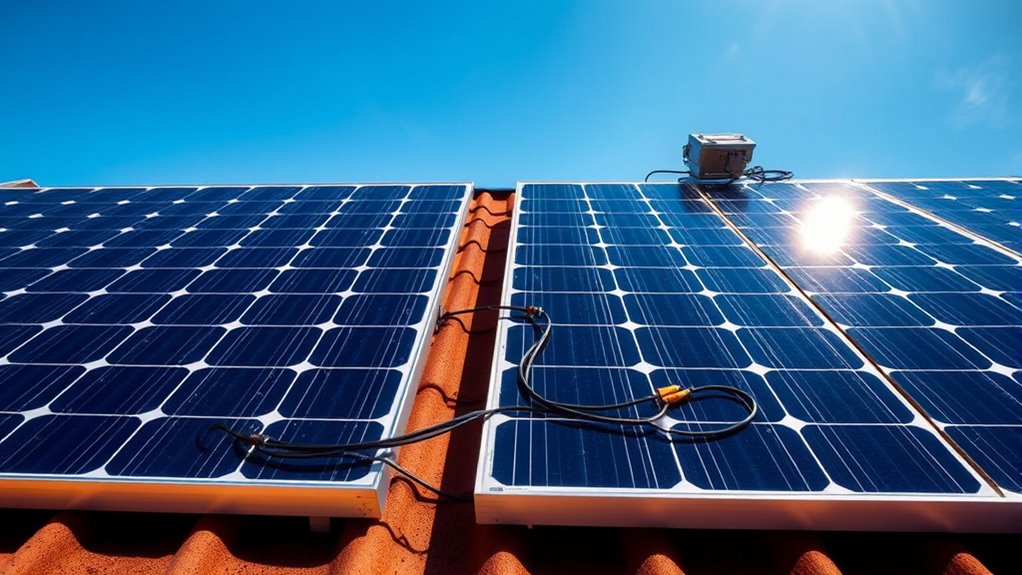
When choosing a wiring method, it’s important to take into account electrical safety standards to prevent hazards. You also need to be aware of the risk of overload, which can cause damage or fire. Understanding these safety aspects helps you select the safer wiring approach for your solar system. Additionally, proper installation practices are essential to ensure compliance with safety regulations and to protect your investment. Being familiar with electrical safety standards can further help prevent potential risks associated with improper wiring. A thorough understanding of circuit protection can also aid in designing a safer and more reliable solar power setup.
Electrical Safety Standards
Choosing the right wiring method is essential for guaranteeing electrical safety in your solar panel system. Both series and parallel wiring must meet strict safety standards to prevent hazards like shocks or fires. These standards dictate proper insulation, grounding, and overcurrent protection. When wiring your panels, verify components are certified by recognized safety organizations. Regular inspections and adherence to local electrical codes help maintain safety over time. Always use the correct wire gauge and connectors to handle the system’s voltage and current. Proper labeling of wiring aids in troubleshooting and safety checks. Using equipment designed for your chosen wiring method reduces risks. Remember, safety isn’t just about compliance—it’s about protecting yourself and your property.
- Follow manufacturer guidelines and local codes
- Use certified, high-quality components
- Install proper grounding and insulation
- Conduct regular safety inspections
- Avoid makeshift wiring connections
Risk of Overload
Both series and parallel wiring methods have different implications for overload risk, and selecting the safer option depends on your system’s capacity and how well it’s designed. In a series setup, an overload on one panel can affect the entire string, potentially causing damage or safety hazards. Conversely, parallel wiring spreads the current across multiple paths, so an overload in one branch is less likely to impact the entire system. However, if your system isn’t properly rated or overbuilt, both methods can pose overload risks. Proper fuse sizing and circuit protection are vital regardless of wiring type. To maximize safety, make certain your system is designed with appropriate capacity limits and protective devices, reducing the chance of overload and keeping your solar setup safe and reliable.
When Should You Use Series Wiring?

Series wiring is ideal when you need to increase the overall voltage output of your solar panel system. Higher voltage helps improve efficiency, especially when running longer cable lengths or powering devices that require more voltage. Use series wiring if:
Series wiring boosts voltage for longer distances and higher-performance solar setups.
- You want to match the voltage requirements of your inverter or battery bank
- Your panels have consistent performance and similar specifications
- You need to optimize energy transfer over longer distances
- Your system requires a higher voltage to operate effectively
- You’re aiming to simplify wiring and reduce losses in your setup
When Is Parallel Wiring the Better Choice?

Parallel wiring is often the better choice when your goal is to increase the current output or guarantee consistent performance across your panels. It allows each panel to operate independently, so if one panel’s shade or dirt reduces its output, the others continue functioning reliably. This setup ensures stable power delivery, especially in situations where shading or panel mismatch occurs. Use parallel wiring when your system needs flexibility or if you want to connect multiple panels with different voltage ratings. Here’s a quick comparison:
| Feature | Series Wiring | Parallel Wiring | Best Used When |
|---|---|---|---|
| Current output | Same as the lowest current panel | Sum of all panel currents | Increasing overall current |
| Voltage | Sum of all panel voltages | Matches individual panel voltage | Ensuring consistent voltage across panels |
| Performance consistency | Affected by shading/mismatch | Maintains performance despite shading | Guaranteeing reliable output in variable conditions |
Mixing Series and Parallel: What You Need to Know
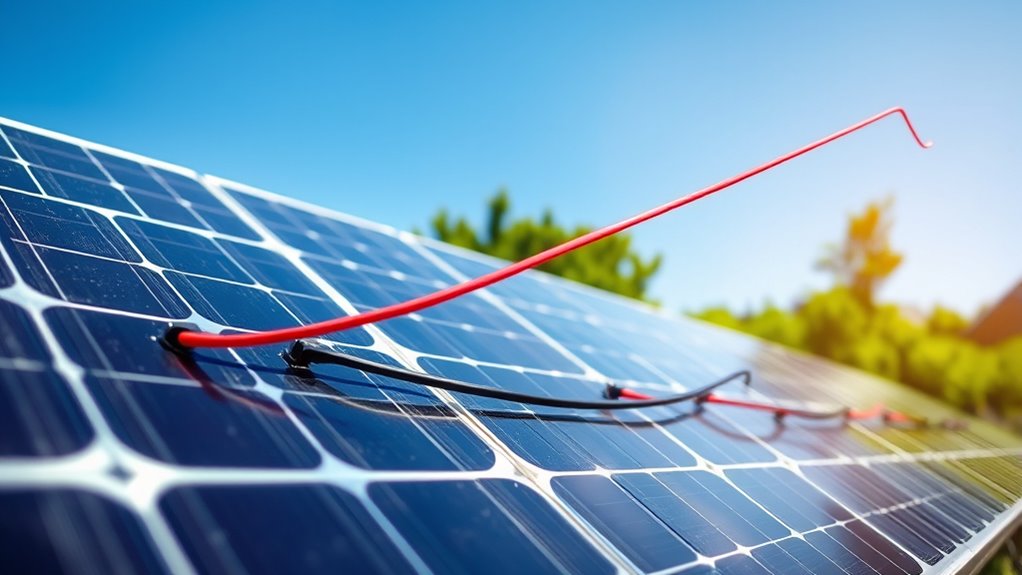
When designing a solar panel system, mixing series and parallel wiring can enhance performance by balancing voltage and current to meet your specific energy needs. This approach lets you tailor your setup for better efficiency and flexibility. By combining the two methods, you can increase voltage to power larger systems or boost current for higher energy output. Keep in mind, mixing wiring requires careful planning to avoid mismatched panels or uneven load distribution. Properly configured, it helps maximize energy harvest even in partial shading or variable sunlight. Remember, understanding how to combine series and parallel connections ensures your system operates reliably and safely.
- Achieve ideal voltage and current balance
- Adapt system to shading or uneven sunlight
- Increase overall energy output
- Prevent damage from mismatched panels
- Improve flexibility for future expansion
Tips for Choosing the Right Wiring for Your Solar System
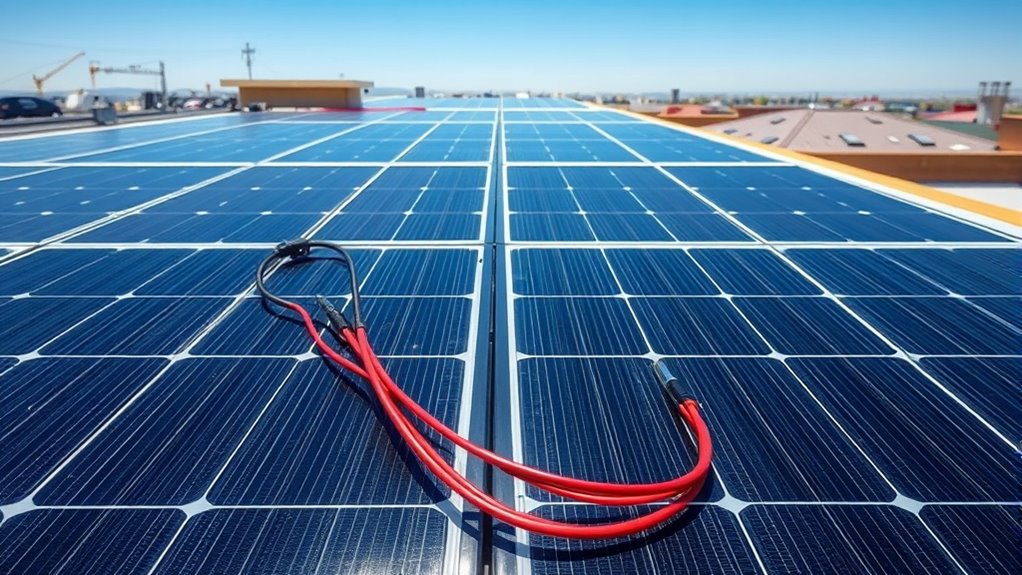
Choosing the right wiring for your solar system is key to ensuring safety, efficiency, and future scalability. Start by evaluating your power needs and understanding how different wiring configurations impact voltage and current. Use high-quality, properly rated cables to handle your system’s current; undersized wires can cause overheating and damage. Opt for durable insulation that withstands weather and UV exposure. Keep wiring organized and avoid running cables where they can be damaged or create safety hazards. Consider future expansion plans—using wiring that can support additional panels or higher power outputs simplifies upgrades. Ultimately, follow local electrical codes and, if unsure, consult a professional installer to ensure your wiring setup is safe, reliable, and optimized for your solar energy goals.
Frequently Asked Questions
Can I Combine Series and Parallel Wiring in One System?
Yes, you can combine series and parallel wiring in one system. Doing so helps you customize your setup for desired voltage and current levels. You connect some panels in series to increase voltage, then connect those strings in parallel to boost current. Just make sure the panels’ specifications match, and use proper wiring and safety measures. This approach maximizes efficiency and adapts to your specific energy needs.
How Does Wiring Affect Solar Panel Efficiency?
Wiring directly affects your solar panel system’s efficiency by influencing voltage and current flow. If you wire panels in series, you increase voltage, which helps your system perform better with longer cable runs. Parallel wiring boosts current, which can improve performance in shady conditions. Mixing wiring styles can optimize overall efficiency based on your setup. Proper wiring guarantees your panels operate at their best, maximizing energy production and system longevity.
What Tools Are Needed to Wire Solar Panels Safely?
To wire your solar panels safely, you’ll need basic tools like a wire stripper, insulated gloves, a multimeter, screwdrivers, and safety goggles. You also want a junction box, appropriate wiring, and connectors designed for solar setups. Always turn off power before working, double-check connections with a multimeter, and follow safety guidelines. Proper tools safeguard you, ensure safe installation, and help your system operate efficiently.
How Do Wiring Choices Impact Overall System Cost?
Your wiring choices directly affect your system’s cost. Series wiring usually requires fewer components, saving money on connectors and wiring, but may reduce flexibility and voltage. Parallel wiring needs more components, which can increase initial costs but allows easier expansion and maintains voltage levels. Consider your budget, future expansion plans, and system efficiency when choosing. Proper wiring can save you money upfront and in long-term maintenance.
Are There Compatibility Issues With Different Solar Panel Brands?
Think of your solar panels like a team of players; if they’re all speaking different languages, communication breaks down. Compatibility issues can arise if brands have different voltages or connector types, making it tricky for them to work together efficiently. You might experience lower power output or require adapters. To avoid this, choose panels from the same manufacturer or verify compatibility before wiring. This keeps your system running smoothly.
Conclusion
Choosing between series and parallel wiring isn’t just about numbers—sometimes, it’s about what unexpected benefits or challenges you might stumble upon. You might find yourself surprised how a simple switch in wiring can boost your system’s efficiency or safety. Keep in mind, understanding these setups helps you make smarter choices, especially when you least expect it. So, stay curious, and you might just discover the perfect wiring solution for your solar journey.