
When deciding between a battery lantern and a flashlight, consider your task and setting. Use a flashlight for quick, focused illumination like steering, searching, or inspecting small areas. Opt for a lantern when you need broad, hands-free light, such as camping, indoor tasks, or emergencies. Both tools have their strengths, but knowing when each makes more sense can enhance your safety and convenience. If you want to explore which option fits your needs best, there’s more to discover.
Key Takeaways
- Use a flashlight for quick, focused illumination during navigation or detailed tasks.
- Opt for a lantern when needing broad, hands-free light for camping, indoor, or emergency situations.
- Choose a flashlight for portability and short-term use; select a lantern for extended, stationary lighting needs.
- Lanterns often provide longer battery life, ideal for prolonged outdoor or emergency scenarios.
- For setting up tents, cooking, or reading, a lantern offers consistent coverage, while a flashlight is better for targeted tasks.

When choosing between a battery lantern and a flashlight, understanding their differences can help you pick the best lighting source for your needs. Both tools provide essential illumination, but they serve different purposes depending on the situation. If you’re planning for camping illumination or preparing for emergencies, knowing when each makes more sense can make a significant difference in safety and convenience.
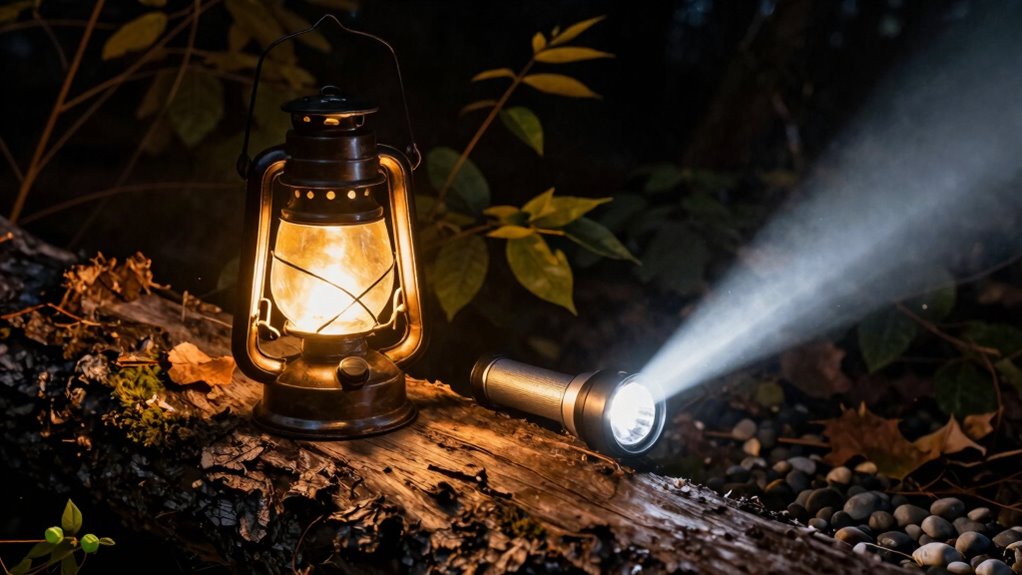
A flashlight is highly portable and offers focused, directional light. Its compact design makes it easy to carry in your pocket, backpack, or glove compartment. When you need quick, intense illumination to navigate dark trails, find your keys, or inspect something up close, a flashlight is your best bet. Its beam can be directed precisely where you want, making it ideal for tasks that require focus. During camping trips, flashlights shine when you need to move around your campsite at night or check the surroundings. They’re also perfect for emergency preparedness because you can quickly grab one and get immediate light without setting up a larger device. The simple operation and durability of modern flashlights ensure they’re reliable in various conditions.
On the other hand, a battery lantern provides broader, ambient lighting. It’s designed to illuminate larger areas evenly, making it especially useful when you want to light up your entire campsite or indoor space. If you’re setting up a tent, cooking, or reading in a communal area, a lantern offers consistent, widespread illumination that helps you see everything clearly without shadows. During emergencies, a lantern can serve as a central light source for the entire room or tent, reducing the need for multiple flashlights. Its larger size and often longer battery life make it more suitable for situations where sustained, hands-free lighting is necessary. Battery lanterns are also less likely to be dropped and damaged compared to handheld flashlights, which makes them more durable for rough outdoor conditions.
Ultimately, the choice depends on your specific needs. If you want quick, portable light for short-term tasks or emergencies, a flashlight is more practical. If you need to light up a space for a longer period, especially in a stationary setting like camping or during power outages, a lantern provides more comprehensive coverage. Understanding these distinctions ensures you’re prepared for any scenario, whether it’s setting up camp in the woods or handling an unexpected blackout. Both tools are valuable, but selecting the right one at the right time helps you maximize their advantages for camping illumination and emergency preparedness.
Additionally, considering the contrast ratio of a light source can influence how well you see in different environments, especially in low-light conditions.
Frequently Asked Questions
How Do Battery Lanterns Perform in Extreme Weather Conditions?
Battery lanterns generally perform well in extreme weather conditions, thanks to their weather resilience. You’ll find they are designed to withstand rain, snow, and windy environments better than traditional flashlights. Plus, they offer excellent power efficiency, meaning you don’t have to worry about frequent battery replacements during long outages or outdoor adventures. Just make certain you choose a model built for harsh conditions to maximize durability and reliable illumination.
Are Rechargeable Options Available for Both Lanterns and Flashlights?
Ever wondered if you can recharge your lantern or flashlight? Yes, both offer rechargeable options that extend their battery lifespan and save you money over time. You’ll find rechargeable batteries and built-in rechargeable systems in many modern lanterns and flashlights. This means you don’t have to keep buying replacements, making them more eco-friendly and convenient. So, whether you’re camping or dealing with power outages, rechargeable options make your lighting more reliable and sustainable.
What Safety Features Should I Look for in These Lighting Devices?
You should look for safety features like battery safety, such as overcharge and short-circuit protection, to prevent accidents. A waterproof design is also essential, especially if you’ll use the device outdoors or in wet conditions. These features make sure your lighting device remains reliable and safe during emergencies or outdoor activities. Prioritize models with these safety features to protect yourself and prolong the lifespan of your lantern or flashlight.
How Long Do Typical Batteries Last in Each Device?
On average, batteries last about 20-50 hours in flashlights and up to 100 hours in lanterns. Imagine a flashlight’s battery draining quickly during a power outage, while a lantern keeps shining steadily. Battery life depends on power consumption — brighter settings drain batteries faster. Choose a device with good battery life to guarantee reliable illumination when you need it most, especially during long outdoor adventures or emergencies.
Can These Devices Be Used for Outdoor Camping or Emergency Situations?
You can definitely use both devices for outdoor camping or emergencies. Opt for a solar-powered lantern or flashlight with a waterproof design to guarantee reliable illumination in any weather. Solar power allows you to recharge during the day, while waterproof features keep the devices functional in rain or damp conditions. Carrying both ensures you have versatile lighting options, making your outdoor experience safer and more convenient.
Conclusion
So, next time you’re choosing between a battery lantern and a flashlight, remember that your decision can be as vital as choosing between life and, well, a blackout. If you need broad illumination for a group or a campsite, a lantern is your shining hero. But for quick, focused lighting, a flashlight is unbeatable. Either way, you’re armed with a tool that’s more reliable than a superhero sidekick—ensuring you’re never left in the dark when it matters most.