To stay safe, use extension cords rated for your environment. Indoor cords aren’t built to handle moisture or temperature changes and can be unsafe outside. Outdoor cords, like those labeled ‘SJTW,’ are designed to resist weather, sunlight, and moisture—making them suitable for outdoor use. Always choose a cord with the correct rating for your needs to prevent shocks, fires, or damage. Keep exploring to learn more about making the best safety choices with your cords.
Key Takeaways
- Outdoor extension cords are designed to withstand moisture, sunlight, and temperature changes, unlike indoor cords.
- ‘SJTW’ indicates a flexible, weather-resistant cord suitable for outdoor use, with thermoplastic insulation.
- Indoor cords lack outdoor ratings and proper insulation, making them unsafe for outdoor environments.
- Using cords with outdoor ratings like ‘SJTW’ reduces risk of electrical hazards when used outside.
- Always check the cord’s labeling and ratings to ensure it’s appropriate for your environment and intended use.
Have you ever considered how safe your extension cords really are? Many people overlook the importance of proper plug safety and cord maintenance, especially when using cords indoors versus outdoors. Knowing the differences can prevent accidents, electrical shocks, and fire hazards. It’s essential to understand that not all extension cords are created equal, and choosing the right one depends on where and how you plan to use it. Outdoor extension cords are designed to withstand harsher conditions, like moisture, temperature changes, and exposure to sunlight, while indoor cords are made for more controlled environments. Using an indoor-rated cord outside can lead to safety issues because they often lack the insulation and durability needed for outdoor elements.
When it comes to plug safety, you should always ensure that your extension cord’s plug fits snugly into outlets and that there’s no visible damage, such as frayed wires or cracks. Damaged plugs can cause sparks, shorts, or electrical shocks. A secure connection minimizes the risk of loose fittings that can generate heat or arcing. Proper plug safety also involves avoiding overloading the cord. Check the cord’s maximum wattage rating and never connect multiple high-power devices to a single extension cord. Overloading can cause overheating and increase the risk of fire. Always unplug your extension cord when not in use, especially outside, to prevent accidental damage or exposure to weather conditions.
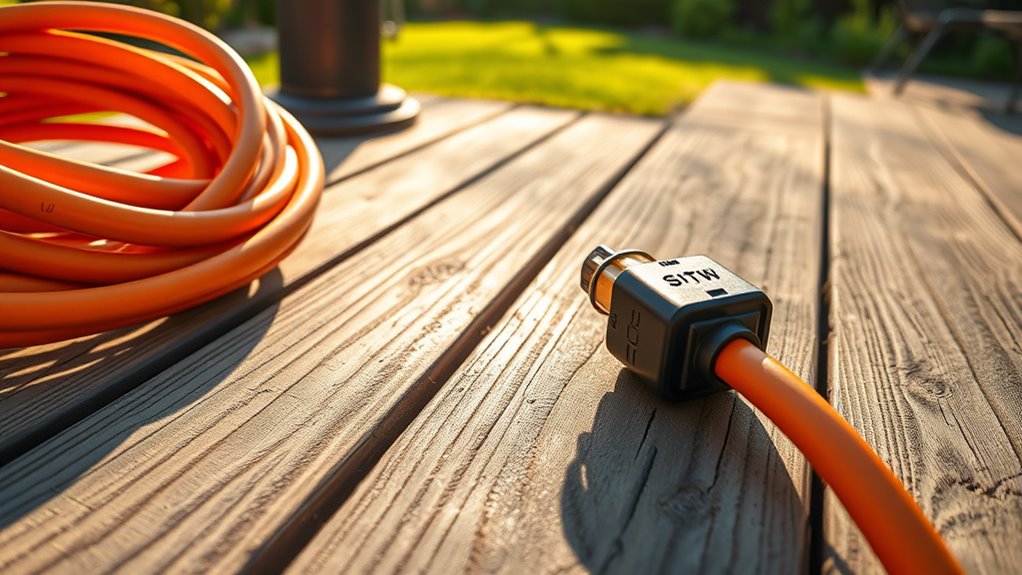
Cord maintenance is equally essential. Regularly inspect your extension cords for signs of wear and tear, such as cuts, exposed wires, or melting spots. Maintaining your cords means replacing damaged ones immediately and avoiding makeshift repairs like taping over frayed insulation. Proper storage also plays a role; coil cords loosely and keep them in a dry, cool place away from sunlight and chemicals. This prevents deterioration and prolongs their lifespan. When using cords outdoors, make sure they are rated specifically for outdoor use, usually marked with an “SJE” or “SJTW” designation. These labels indicate the cord’s insulation and durability, which are essential for outdoor safety. Additionally, selecting cords with appropriate outdoor ratings ensures they are built to withstand environmental stressors, reducing potential hazards.
Understanding what ‘SJTW’ means can help you choose the right extension cord for outdoor projects. ‘S’ indicates a flexible cord, ‘J’ means it’s rated for general outdoor use, ‘T’ refers to thermoplastic insulation, and ‘W’ signifies weather resistance. This designation confirms that the cord can handle outdoor conditions without deteriorating quickly. Always prioritize plug safety and good cord maintenance practices to keep your space safe. Properly rated cords, routine inspections, and cautious usage can make a significant difference in preventing accidents, ensuring your extension cords serve you well without compromising safety.
Frequently Asked Questions
Can I Use Indoor Extension Cords Outdoors Temporarily?
You shouldn’t use indoor extension cords outdoors, even temporarily, because they aren’t designed to withstand weather conditions. Indoor use cords lack the insulation and durability needed for outdoor environments, increasing the risk of electrical hazards. For a temporary extension outdoors, always choose a cord rated for outdoor use. This guarantees safety and prevents damage, protecting you and your equipment from potential electrical shocks or fire hazards.
How Can I Identify a Weather-Resistant Extension Cord?
Did you know that only 20% of extension cords are truly weather-resistant? To identify a weather-resistant extension cord, check its cord insulation—look for labels indicating outdoor use. Also, consider the extension cord gauge; thicker gauges handle more outdoor stress. Weather-resistant cords often have a durable, rubber-like exterior and are marked with ratings like ‘SJTW’ or ‘SJTW’. Always verify these labels prior to outdoor use to guarantee safety and durability.
Are There Specific Safety Tips for Using Extension Cords in Wet Conditions?
When using extension cords in wet conditions, you should prioritize waterproof connectors and guarantee moisture protection. Always keep the cord off the ground and avoid exposing it to standing water. Use outdoor-rated cords marked with proper safety labels, and unplug the cord when not in use. Regularly inspect for damage, and never force a cord into wet conditions. These precautions will help minimize electrical hazards and keep you safe.
What Are the Long-Term Risks of Using Improper Extension Cords Outdoors?
Using improper extension cords outdoors is like leaving a door open to trouble. You risk electrical fire hazards and equipment deterioration over time, which can lead to costly repairs or replacements. Long-term, your cords may become brittle or cracked, increasing shock risks and reducing efficiency. Always choose outdoor-rated cords to protect your devices and yourself, ensuring safety and durability for all your outdoor projects.
How Do I Properly Store Extension Cords After Outdoor Use?
After outdoor use, you should store your extension cords properly to prevent damage and guarantee safety. Use storage tips like coiling cords loosely, avoiding tight loops that can cause kinks. Keep cords in a dry, cool place, protected from sunlight and moisture. Practice cord organization by hanging or stacking them neatly, which helps prevent tangles and damage. Proper storage extends your cord’s lifespan and keeps your workspace safe.
Conclusion
Remember, choosing the right extension cord isn’t just a small decision—it’s like protecting your home from a wildfire! Always match your cord’s ratings to your needs, whether indoor or outdoor. Don’t let a simple oversight turn your safe space into a disaster zone. When in doubt, opt for higher ratings and safer options like SJTW. Your safety and peace of mind are worth more than any shortcut—so stay alert and plug in wisely!