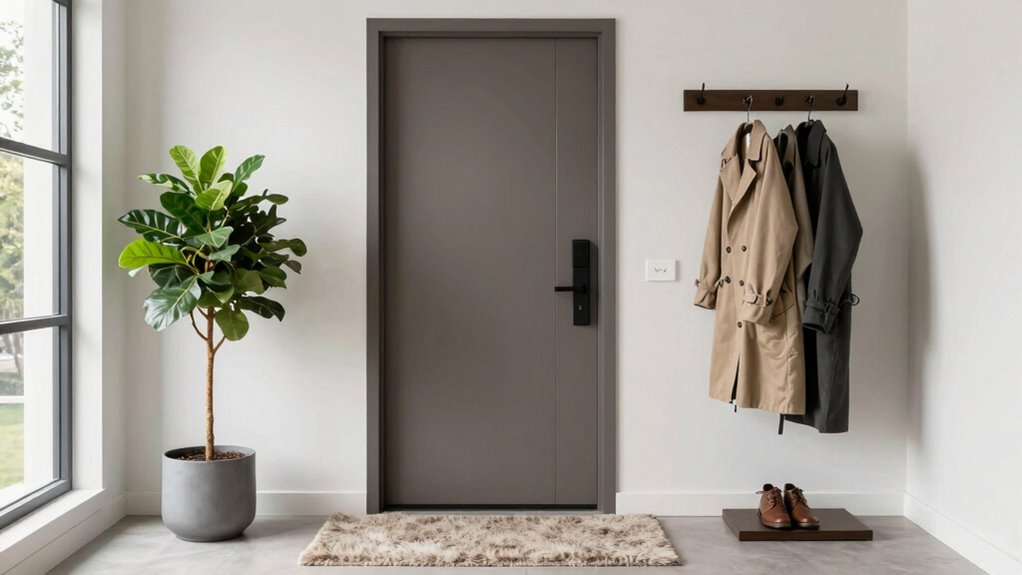

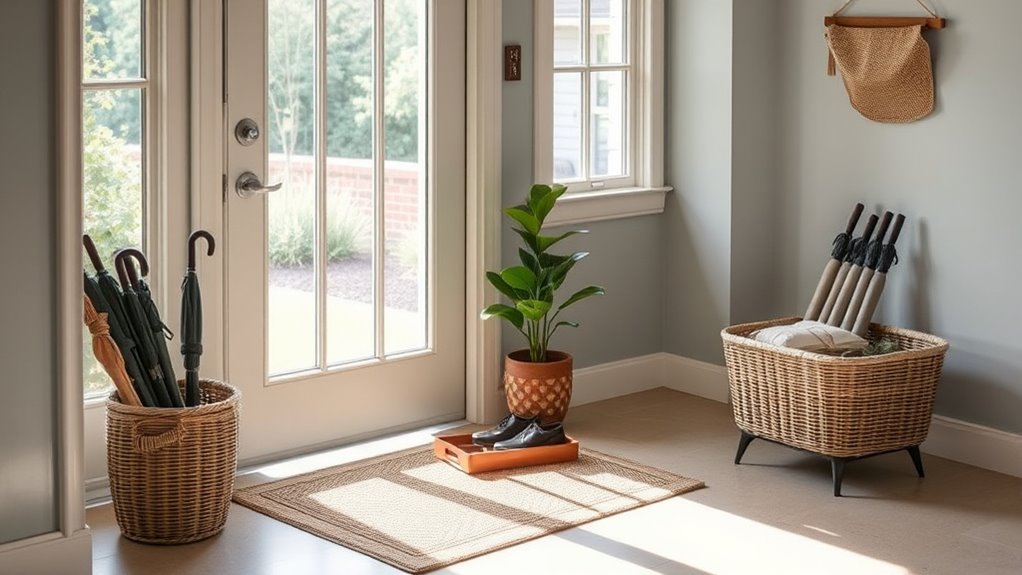
To effectively control indoor pollen, focus on your entryway. Establish a clean, organized space with a shoe rack, coat hooks, and outdoor mats, and wipe shoes thoroughly before entering. Use HEPA air purifiers near doorways and regularly clean surfaces like doormats and doorknobs with damp cloths. Keeping outdoor gear contained prevents pollen spread and reduces allergens indoors. Embracing these simple steps helps create a healthier home environment, and if you continue, you’ll discover even more ways to improve your indoor air quality.
Key Takeaways
- Establish a clean, organized entryway with shoe racks and hooks to prevent pollen from spreading inside.
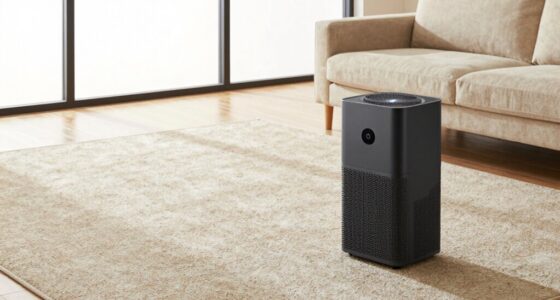
- Use air purifiers with HEPA filters near entry points to trap airborne pollen particles.
- Regularly wipe down entry surfaces and shake out shoes to remove pollen before entering.
- Keep outdoor clothing and bedding clean during high pollen seasons to reduce indoor pollen levels.
- Monitor pollen counts and adjust cleaning routines to optimize indoor air quality and minimize allergies.
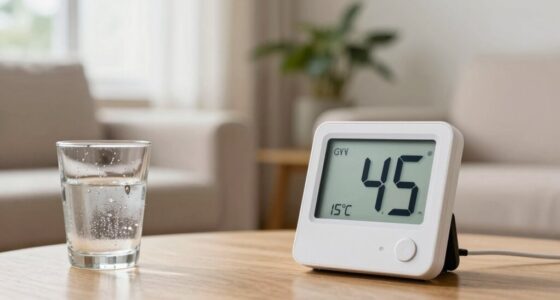
Pollen can easily infiltrate your home, triggering allergies and causing discomfort. No matter how much you try to keep it out, tiny pollen particles cling to your clothes, shoes,, and belongings, making their way inside. That’s why establishing a strong entryway strategy is vital for effective pollen control indoors. When you focus on your entry area, you create a first line of defense that considerably reduces the amount of pollen entering your living spaces. Implementing air purification at the entry points can help trap airborne pollen before it spreads throughout your home. Air purifiers equipped with HEPA filters are especially effective because they capture fine particles, including pollen, as air circulates through them. Placing a high-quality air purifier near your doorway or in the foyer ensures that pollen-laden air gets filtered before it reaches the rest of your house. Additionally, using air quality monitoring devices can help you keep track of pollen levels and adjust your strategies accordingly.
In addition to air purification, establishing diligent cleaning routines is vital. Regularly wiping down entryway surfaces—such as doorknobs, shoe racks, and mats—removes pollen that settles there. Use a damp cloth rather than a dry duster to effectively pick up and trap pollen particles. Incorporate a habit of shaking out or vacuuming shoes outside or in a designated area to prevent pollen from being tracked further into your living spaces. Keep a dedicated mat outside your door and encourage everyone to wipe their shoes thoroughly before stepping inside. This simple step can drastically cut down on pollen being carried indoors on footwear. Likewise, changing and washing outdoor clothing and bedding frequently during high pollen seasons prevents pollen buildup indoors. When you prioritize these cleaning routines, you nip pollen contamination in the bud, minimizing allergy symptoms and indoor discomfort.
A key part of your strategy should also involve maintaining a clean and organized entryway. Decluttering this space makes it easier to clean thoroughly and quickly. Consider installing a shoe rack, a coat hook, and a storage bin for outdoor gear, so everything stays contained and doesn’t spread pollen throughout your home. By keeping your entryway tidy, you reduce the chances of pollen sneaking into other rooms. Combining these practices—air purification, rigorous cleaning routines, and organized entry spaces—creates an effective barrier against pollen infiltration. When you’re proactive about controlling pollen at the entry point, you greatly improve indoor air quality and lessen allergy symptoms. With consistent effort, you can enjoy a cleaner, more comfortable home environment, even during peak pollen seasons. Taking these steps ensures that your home remains a refuge from outdoor allergens, making allergy season more manageable and less disruptive.
Frequently Asked Questions
How Effective Are Air Purifiers in Pollen Control?
Air purifiers with HEPA filters are quite effective at pollen control, especially when used properly. They trap airborne pollen particles and improve air circulation, reducing allergens in your home. For best results, place the purifier in high-traffic areas and keep doors and windows closed during high pollen seasons. Regularly changing filters guarantees maximum performance, helping you breathe easier and lessen allergy symptoms indoors.
Can Plants in the Entryway Increase Pollen Levels?
Plants in your entryway are like welcoming greeters, but they can also bring in more pollen. While indoor plant benefits include air purification and humidity control, poorly placed plants near the door might increase pollen levels. To keep pollen at bay, focus on strategic entryway plant placement, choosing low-pollen varieties, and regularly cleaning your plants. This way, you enjoy the benefits without inviting extra allergens into your home.
What Are the Best Materials for Entryway Flooring?
For entryway material selection, choose durable flooring like ceramic tile, vinyl, or hardwood. These options stand up well to foot traffic, dirt, and moisture, making them ideal for maintaining cleanliness. You want flooring that’s easy to clean and resists wear, ensuring your entryway stays functional and attractive over time. Prioritize durability and low maintenance in your choice, so your entryway remains welcoming and practical every day.
How Often Should Entryway Mats Be Cleaned?
You should clean your entryway mats at least once a week, especially during peak pollen seasons. Regular cleaning helps prevent pollen buildup, blocking pollen from entering your home and improving entryway airflow. By maintaining clean mats, you create a barrier that keeps seasonal pollen out, minimizes indoor allergens, and maintains a fresh, functional entryway. Consistent cleaning is key to keeping pollen, dirt, and debris from infiltrating your space.
Are There Specific Entryway Designs That Minimize Pollen Entry?
Yes, choosing an entryway with built-in storage and a tight door sealant helps minimize pollen entry. Opt for designs with enclosed storage to keep outdoor gear contained, reducing pollen spread. Guarantee the door sealant is in good condition to prevent gaps where pollen can sneak inside. Regularly cleaning and maintaining these features maximizes their effectiveness, keeping pollen out and your indoor air cleaner.
Conclusion
By implementing an entryway pollen control strategy, you can markedly reduce indoor allergens. Imagine a family with seasonal allergies who keeps a shoe rack and a dedicated mat at the door—after just a week, they notice fewer sneezes and clearer air. Taking simple steps like this transforms your home into a pollen-free zone. Start today, and enjoy a healthier, more comfortable indoor environment all year round.