Activated carbon filters are excellent at removing odors, gases, and chemicals like VOCs from your air and water, thanks to their porous surface that traps pollutants through adsorption. However, they don’t effectively trap biological contaminants such as bacteria, viruses, or heavy metals like lead and mercury. Their effectiveness depends on filter quality and maintenance. Want to discover more about how these filters work and their limitations? Keep exploring to get the full picture.
Key Takeaways
- Activated carbon filters effectively remove gases, VOCs, odors, cigarette smoke, and chemical vapors but do not trap biological particles or viruses.
- They work through adsorption, capturing pollutants on the porous surface, but their effectiveness diminishes over time and with saturation.
- They are highly efficient at odor elimination and chemical absorption but are limited in removing heavy metals and very small particles.
- Biological contaminants like bacteria and viruses are not effectively filtered, requiring additional methods such as HEPA or UV sterilization.
- Filter performance depends on factors like carbon quality, flow rate, pollutant concentration, and regular maintenance or replacement.
How Activated Carbon Filters Work
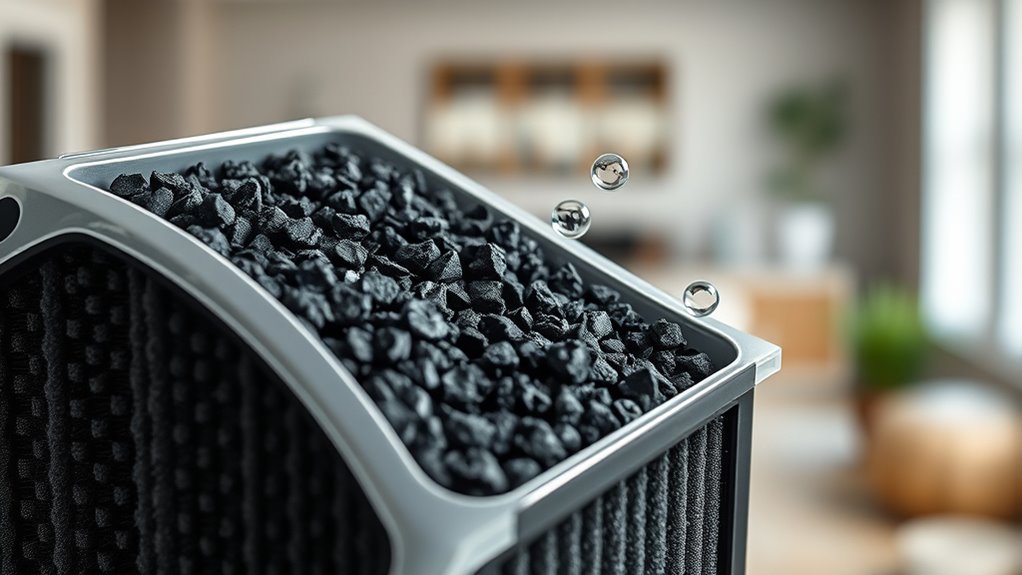
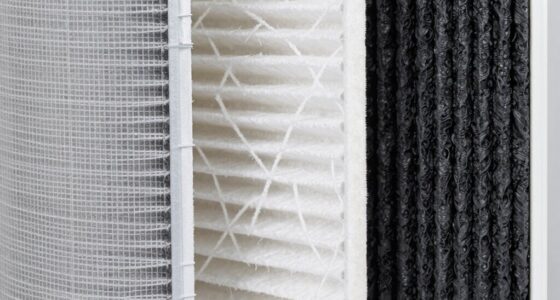
Activated carbon filters work by trapping contaminants through a process called adsorption, where pollutants adhere to the surface of the carbon particles. When air passes through the filter, molecules of gases, chemicals, or odors stick to the porous surface of the activated carbon. This surface area is highly expansive due to the tiny pores within the carbon, increasing its ability to attract and hold various substances. The process doesn’t involve chemical reactions but relies on physical attraction. As pollutants contact the surface, they become bound, effectively removing them from the air. Over time, the filter’s capacity to adsorb diminishes, requiring replacement to maintain its effectiveness. This mechanism makes activated carbon especially good at removing certain gases and odors from indoor environments. Understanding adsorption is key to recognizing how these filters improve air quality. Additionally, the effectiveness of activated carbon filters depends on the quality of the carbon used and how well the filter is maintained over time. Proper filter maintenance ensures the carbon remains effective, maximizing its lifespan and performance. Regularly monitoring the filter’s condition can help prevent reduced efficiency and ensure optimal air purification. Maintaining the air flow rate through the filter is also important to keep it functioning effectively and prevent clogging.
Common Indoor Pollutants Removed by Activated Carbon

Many common indoor pollutants can be effectively removed by activated carbon filters, making your indoor environment healthier and more comfortable. These filters excel at trapping volatile organic compounds (VOCs) released from cleaning products, paints, and furniture, reducing chemical odors and potential health risks. They also absorb cigarette smoke, capturing harmful chemicals and particulates that linger in the air. Additionally, activated carbon is effective against certain gases like radon and formaldehyde, which can seep into your home from the outside or off-gas from materials. By removing these pollutants, activated carbon filters help improve air quality, decrease allergic reactions, and create a fresher, safer living space. High refresh rates enhance the efficiency of filtration systems in removing airborne pollutants, ensuring cleaner indoor air. Keep in mind, however, that they work best when combined with other filtration methods for all-encompassing indoor air purification, such as HEPA filters or UV sterilization, to address a broader range of contaminants. Incorporating proper ventilation can further enhance overall air quality and reduce pollutant buildup indoors. Understanding the air filtration process can help you optimize your home’s air quality and select the most effective combination of filters for your needs. Moreover, understanding filtration efficiency can guide you in choosing the right systems for your specific indoor environment.
Odor Elimination Capabilities
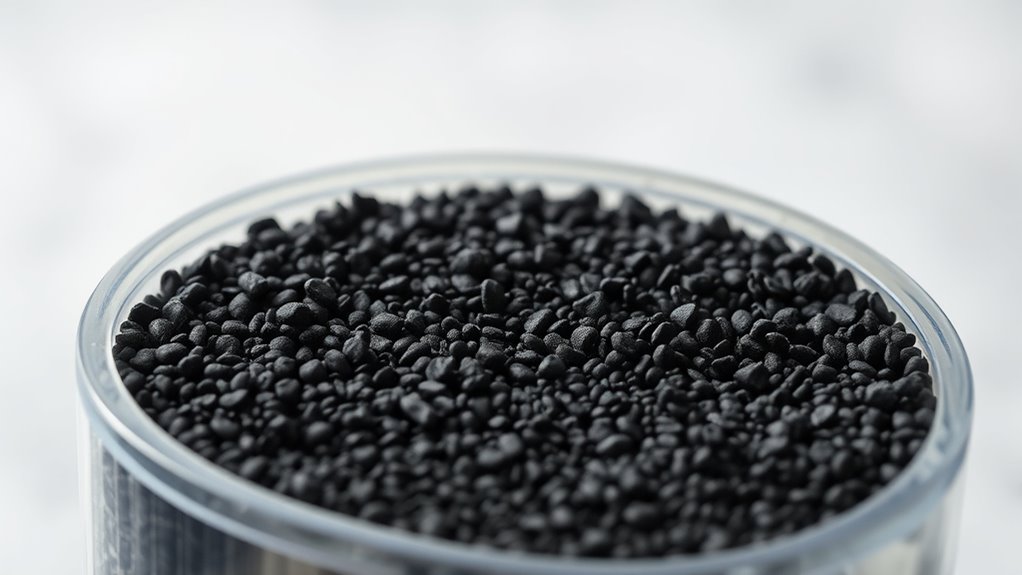
Activated carbon filters are highly effective at eliminating odors, making indoor spaces smell fresher and more inviting. They trap odor-causing molecules through a process called adsorption, preventing unpleasant smells from spreading. These filters work well against common indoor odors like cooking fumes, pet smells, smoke, and mustiness. When air passes through, the activated carbon captures and neutralizes these volatile compounds, improving air quality. Keep in mind, their effectiveness depends on factors like the amount of carbon used, air flow, and odor intensity. For peak results, replace filters regularly. Activated carbon filters are a practical way to maintain a fresh-smelling environment, especially in homes with pets or cooking activities. They don’t just mask odors—they actively remove the source, creating a cleaner, more pleasant indoor atmosphere. Additionally, the effectiveness of these filters can be enhanced by proper air flow management and regular maintenance, which ensures optimal contact between air and the activated carbon. Proper filter lifespan also plays a crucial role in maintaining their odor-eliminating capabilities over time. Regularly monitoring filter condition helps ensure ongoing performance and prevents odors from slipping through.
Chemical and Gas Absorption
Activated carbon filters are effective at removing many chemical vapors and gases, especially volatile organic compounds (VOCs). However, their efficiency varies depending on the specific substance and exposure time. Keep in mind that absorption has limitations and may not eliminate all harmful gases completely.
VOC Removal Efficiency
Have you ever wondered how effectively activated carbon filters can remove volatile organic compounds (VOCs) from the air? Their removal efficiency depends on factors like surface area, pore size, and contact time. When VOCs pass through, they bind to the carbon’s surface, removing harmful gases. However, not all VOCs are equally absorbed; some may slip through if the filter’s capacity is overwhelmed. To maximize efficiency, verify your filter has a high surface area and is replaced regularly. Keep in mind:
- Larger surface area improves adsorption
- Smaller pore sizes target smaller VOC molecules
- Longer contact time increases removal
- Saturated filters lose absorption ability
Understanding these factors helps you optimize your filtration system for better air quality. Additionally, adsorption capacity is a crucial aspect that determines how much VOCs a filter can effectively remove before becoming saturated. Regular maintenance and monitoring can help prevent filter saturation, ensuring continued air purification performance. Moreover, pore size distribution influences the range of VOCs that can be effectively captured, making it an important consideration when selecting a filter. Recognizing how surface area impacts the overall efficiency can further guide you in choosing the most suitable filter for your needs. For example, high-quality activated charcoal used in premium filters often has a large surface area, which enhances its VOC removal capabilities.
Limitations of Absorption
While absorption is effective for removing certain gases and chemicals, it has notable limitations that can reduce its overall efficiency. One major issue is that activated carbon can become saturated quickly, especially in environments with high contaminant levels, requiring frequent replacement or regeneration. Some chemicals or gases have a low affinity for carbon, meaning they’re not absorbed well and can slip through the filter. Also, certain volatile compounds can break down or react within the carbon, reducing its ability to trap future pollutants. Additionally, absorption doesn’t eliminate all types of contaminants, such as particulate matter or very small molecules. The Filter lifespan can be limited in highly contaminated environments, making it necessary to replace or regenerate the carbon more often. The adsorption capacity of activated carbon varies depending on the specific contaminants present and the surface area of the media. Its selectivity can also influence which pollutants are effectively removed, highlighting the importance of combining filtration methods for all-encompassing air treatment. Moreover, the effectiveness of absorption depends on the chemical properties of the contaminants involved, which can vary widely. Understanding these limitations can help optimize the use of activated carbon filters for better air quality management.
Effectiveness Against Volatile Organic Compounds (VOCs)
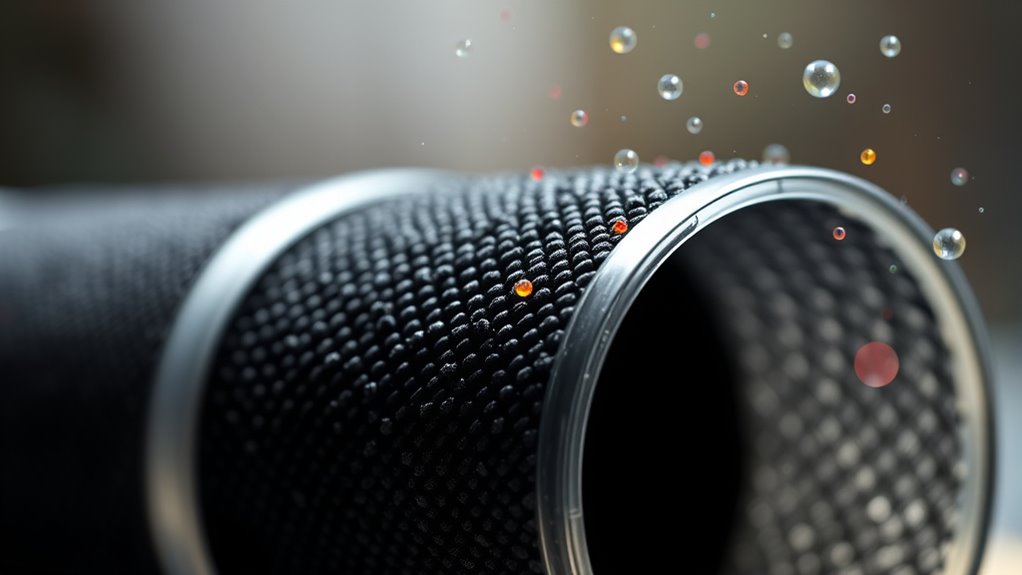
Activated carbon filters are highly effective at reducing volatile organic compounds (VOCs) from indoor air, thanks to their porous structure that traps these harmful molecules. VOCs come from paints, cleaning products, and furnishings, and can cause health issues. The porous surface of activated carbon provides a large surface area, enabling it to adsorb many VOCs effectively. However, their efficiency depends on factors like carbon type, filter size, and exposure duration. To maximize performance, guarantee your filter is replaced regularly. Keep in mind that not all VOCs are equally absorbed, and some may require additional filtration methods. Proper maintenance and choosing high-quality filters enhance VOC removal, improving indoor air quality and safeguarding your health. The adsorption process depends on the chemical properties of the VOCs and the specific characteristics of the activated carbon used.
Limitations in Removing Microorganisms and Viruses
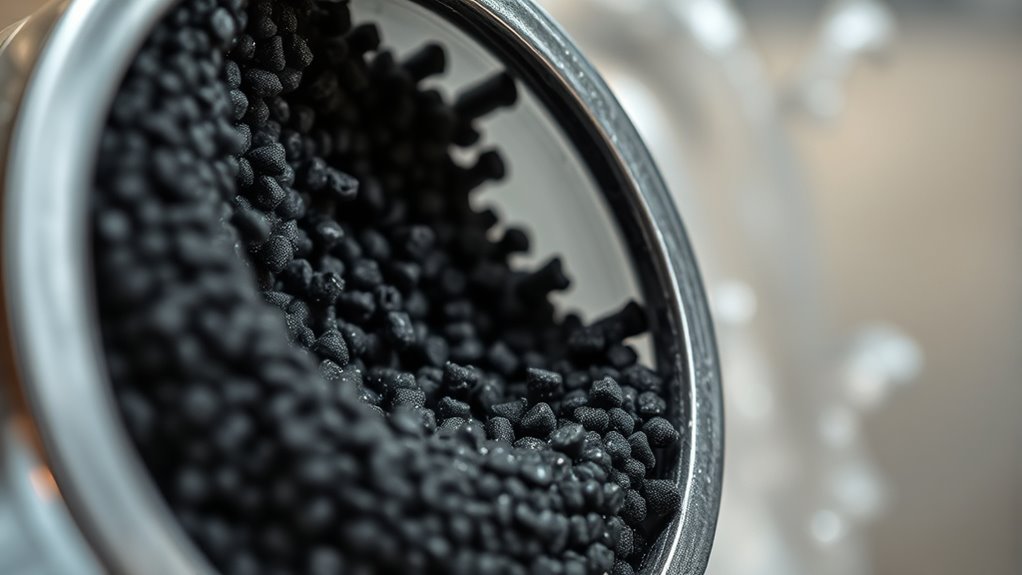
Although activated carbon filters excel at trapping gases and chemical vapors, they have limited effectiveness against microorganisms and viruses. These filters rely on adsorption, which isn’t sufficient to destroy or block tiny biological particles. Microorganisms and viruses are often too small to be captured effectively, especially if the filter isn’t designed for biological filtration. Their porous structure doesn’t inactivate pathogens, so they can pass through or remain on the surface. Here’s a comparison of filter capabilities:
| Feature | Activated Carbon | HEPA Filter | UV Sterilization |
|---|---|---|---|
| Microorganism removal | Limited | High | Very High |
| Virus removal | Limited | High | Very High |
| Biological inactivation | Not standard | Not standard | Yes |
This shows why relying solely on activated carbon isn’t enough for biological safety.
Inability to Filter Heavy Metals and Particulates
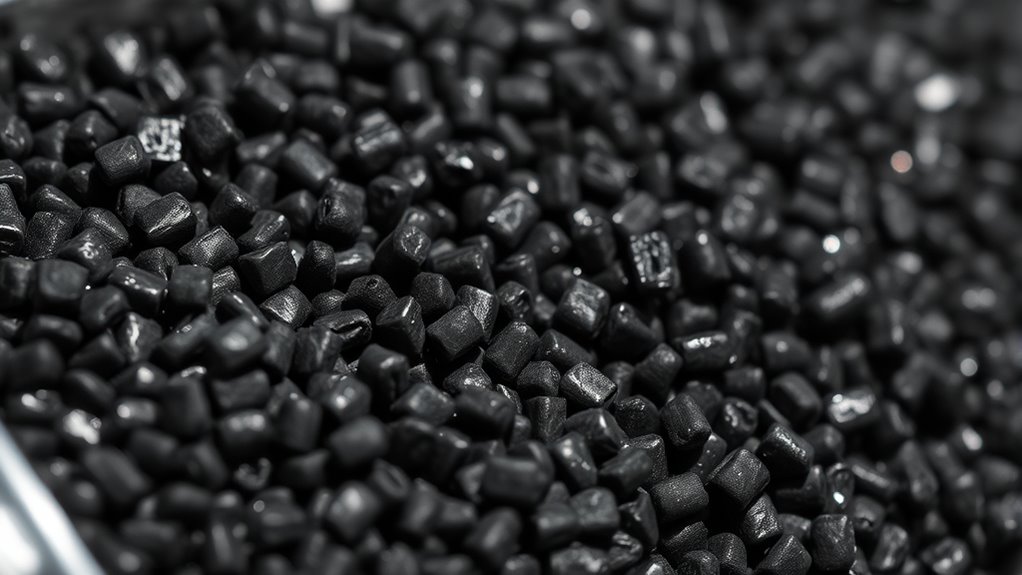
Activated carbon filters are ineffective at removing heavy metals and particulates because these contaminants are often too small or too chemically stable to be captured through adsorption alone. Heavy metals like lead, mercury, and cadmium, along with fine particles, can easily bypass the filter media. This limitation means you won’t get protection from contaminants that pose serious health risks. To better understand why, consider these points:
- Heavy metals don’t bind well to activated carbon.
- Particulates are often too large for adsorption and require physical filtration.
- Small size allows many contaminants to pass through unfiltered.
- Chemical stability prevents metals from adhering to the carbon surface effectively.
Knowing this helps you choose the right filtration system for extensive protection.
Factors Influencing Filter Performance and Longevity
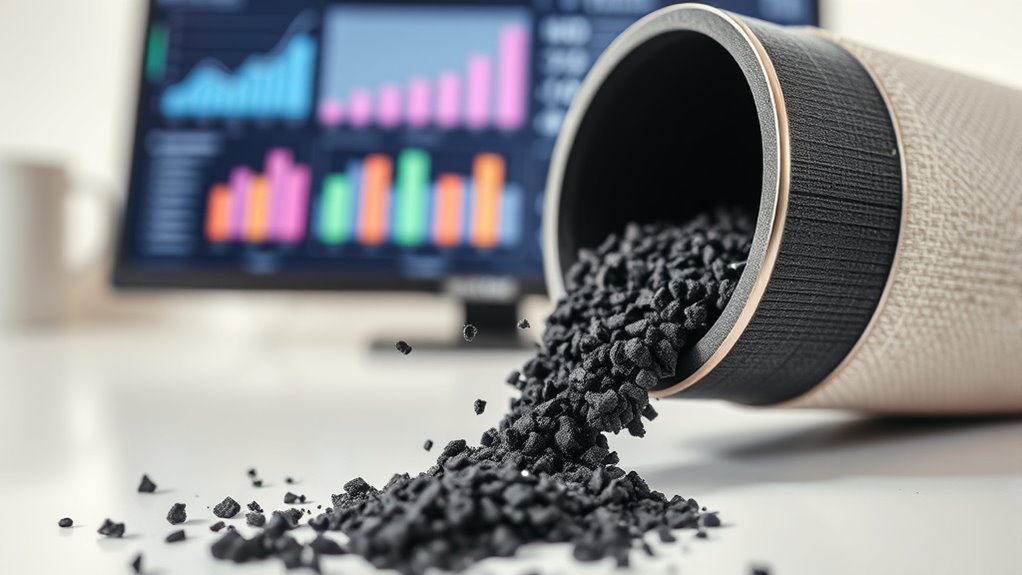
Several factors directly impact how well a filter performs and how long it lasts, making it vital to understand what influences its effectiveness. The type and quality of activated carbon play a significant role; higher-grade carbons generally offer better adsorption and longer lifespan. The flow rate of water through the filter also matters—too fast, and contaminants may not be fully absorbed; too slow, and the filter can clog quickly. The concentration and types of pollutants present determine how quickly the carbon becomes saturated. Regular maintenance, like timely replacement or regeneration, is essential to maintain peak performance. Additionally, water temperature and pH levels can affect adsorption efficiency. By considering these factors, you guarantee your activated carbon filter provides clean, safe water for as long as possible.
Combining Activated Carbon With Other Filtration Technologies
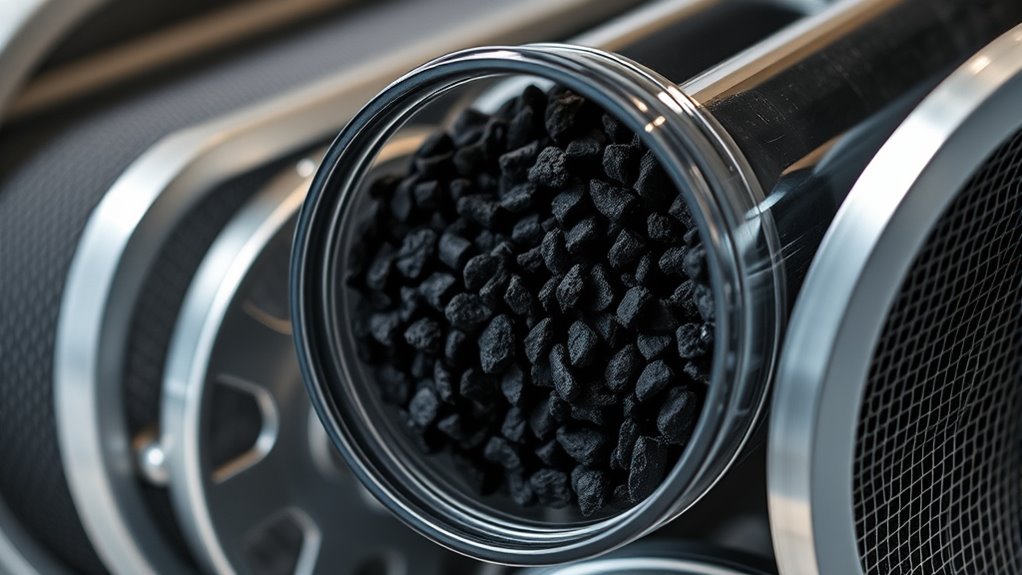
Combining activated carbon with other filtration technologies can considerably enhance water purification by addressing a broader range of contaminants. This multi-layer approach guarantees you remove not only chemicals and odors but also microorganisms, sediments, and heavy metals more effectively. For example, pairing activated carbon with a sediment filter captures larger particles upfront, preventing clogging and extending filter life. Using UV sterilization alongside carbon filtration destroys bacteria and viruses that carbon alone can’t eliminate. Reverse osmosis systems combined with activated carbon improve mineral removal and taste. Additionally, integrating catalytic media can target chloramines and other chemical compounds. Such combinations maximize contaminant removal, improve water quality, and extend filter lifespan, giving you cleaner, safer water with fewer maintenance needs.
Tips for Maximizing the Benefits of Activated Carbon Filters

To get the most out of your activated carbon filter, maintaining it properly and using it correctly is vital. Regularly replace the filter as recommended, usually every 3-6 months, to guarantee maximum effectiveness. Keep an eye on signs of saturation, like odors or reduced flow. Always pre-filter tap water to extend the carbon’s lifespan. For best results, store your filter in a cool, dry place. Here’s a quick guide:
| Tip | Why It Matters | How to Do It |
|---|---|---|
| Replace filters timely | Prevents bacteria buildup | Mark calendar for replacements |
| Pre-filter water | Extends carbon’s lifespan | Use a fine mesh or sediment filter |
| Keep it dry | Avoid mold and degradation | Store in a dry place |
| Monitor water quality | Detects when to replace filter | Check for odors or discoloration |
| Follow manufacturer guidelines | Guarantees proper use | Read instructions carefully |
Frequently Asked Questions
Can Activated Carbon Filters Remove Biological Allergens Like Pollen?
Activated carbon filters don’t effectively remove biological allergens like pollen. They excel at trapping chemicals, odors, and volatile organic compounds, but pollen particles are typically too large or too small for these filters to catch. If you’re trying to reduce pollen in your indoor air, consider using HEPA filters, which are specifically designed to capture airborne particles like pollen, dust mites, and pet dander more efficiently than activated carbon alone.
How Often Should I Replace My Activated Carbon Filter?
You should replace your activated carbon filter every 3 to 6 months to guarantee peak performance. Factors like air quality, usage, and the specific filter model can influence this timeframe. If you notice a musty smell, decreased airflow, or reduced effectiveness, it’s a sign to change it sooner. Regular replacement keeps your air clean, odor-free, and helps your filter work efficiently. Always follow the manufacturer’s recommendations for best results.
Are There Specific Conditions That Reduce Filter Effectiveness?
Like a sponge soaking up water, your filter’s effectiveness drops under certain conditions. If you expose it to high levels of pollutants, chemicals, or heavy odors constantly, it gets overwhelmed fast. Also, if you neglect regular replacements, dirt and contaminants clog the pores. Humidity and temperature swings can weaken it too. Keep an eye on usage and environment to guarantee your filter performs its best.
Do Activated Carbon Filters Produce Any Harmful Byproducts?
Activated carbon filters generally don’t produce harmful byproducts, making them safe for your use. However, if the filter isn’t maintained properly, bacteria or mold can grow, potentially causing health issues. Also, when the filter becomes saturated, it might release trapped pollutants back into the air. To avoid this, change the filter regularly and make certain your device is cleaned according to the manufacturer’s instructions, keeping your air safe and clean.
Can Activated Carbon Filters Be Used in Outdoor Air Purification?
Think of activated carbon filters as your outdoor air’s loyal gatekeeper. You can definitely use them outside to trap odors, pollutants, and gases, just like a vigilant guard. They work best in small-scale settings like patios or backyard spaces. However, heavy rain, wind, or large pollution sources can challenge their effectiveness. So, while they’re useful, remember they’re not a magic shield against all outdoor air contaminants.
Conclusion
Remember, activated carbon filters are your frontline defense against odors and chemicals, but they’re not magic. They can transform your indoor air faster than you can blink, making your space smell fresh and clean. However, they won’t catch heavy metals or dust particles. To keep your air truly pristine, combine them with other filters and follow maintenance tips. With the right approach, your home’s air quality will soar to new heights—like breathing pure mountain air every day.