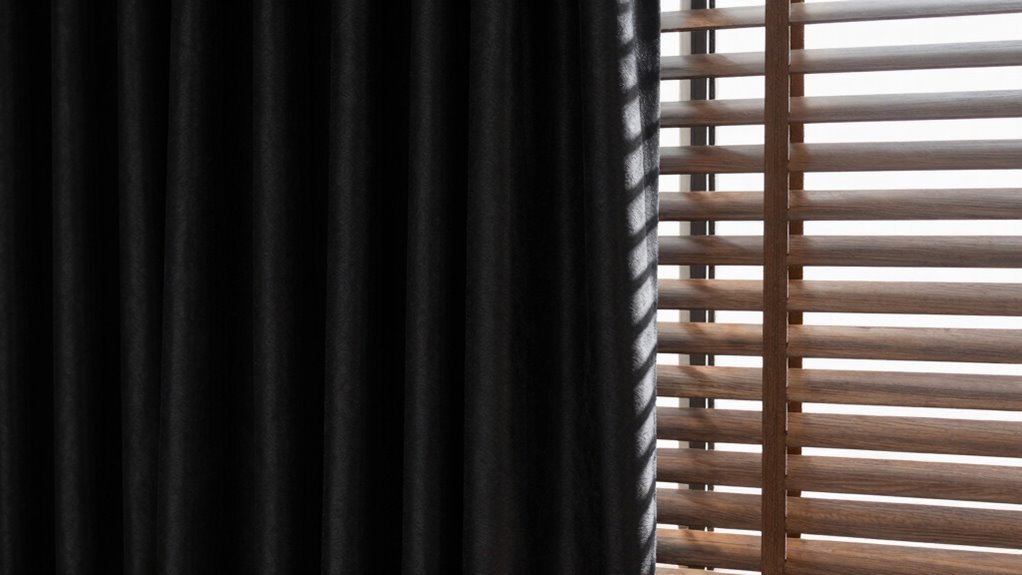

Blackout curtains usually block more light than blinds because they use dense, layered fabrics with blackout linings that create a tight barrier against light leaks. Blinds, with adjustable slats, can leave gaps or seams that allow light through. Proper fit and installation make a difference too. To find out which option is best for your space and how to maximize darkness, explore the detailed differences ahead.
Open a free Amazon Business account
Business pricing, bulk buying and tax-exempt orders.
As an affiliate, we earn on qualifying purchases.
Key Takeaways
- Blackout curtains generally block more light due to dense fabrics, blackout linings, and full-length coverage with minimal gaps.
- Blinds can effectively block light when fully closed with tight-fitting slats and custom edge seals, but gaps may cause light leaks.
- Fabric thickness and weave tightness are crucial; heavier, layered, or multi-layer blackout fabrics provide superior darkness.
- Proper installation and fit—such as wall-to-wall coverage and sealing gaps—significantly improve light blocking for both options.
- Curtains often offer better light control in larger or irregular windows, while blinds provide quick, adjustable light management in standard shapes.

AOSKY Blackout Cordless Roller Shade for Indoor Windows, 23"W x 72"H, Black
- Premium Polyester Fabric: Soft, durable, and easy to clean
- Complete Light Blockage: Blocks 100% sunlight and UV rays
- Energy Efficient Design: Reduces heat loss and saves energy
As an affiliate, we earn on qualifying purchases.
How Do Blackout Curtains and Blinds Block Light?
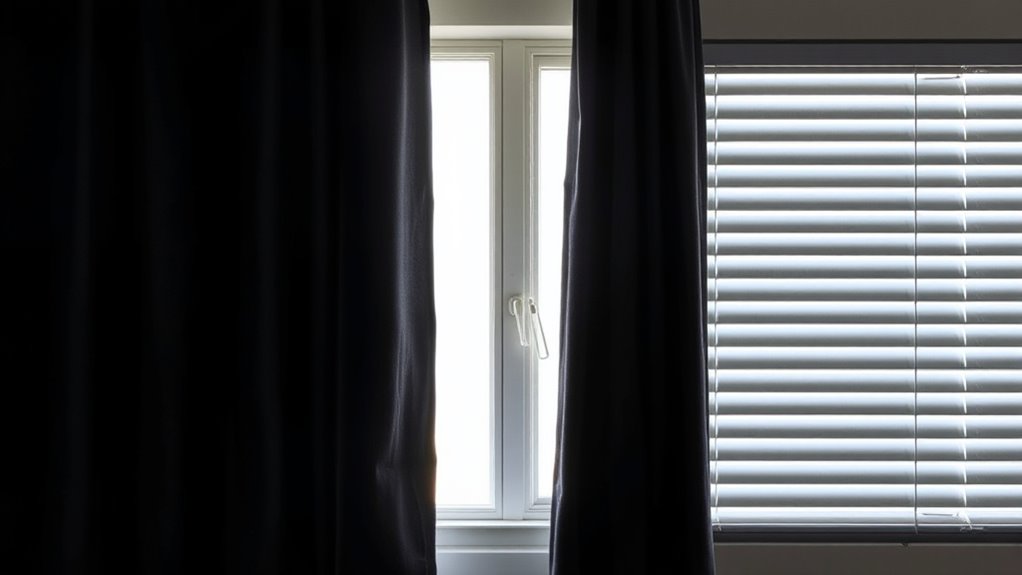
Ever wonder how blackout curtains and blinds actually block out light? Blackout curtains are made with dense, layered fabrics that absorb and prevent light from passing through. They typically have multiple fabric layers, sometimes with a blackout lining, which enhances their ability to keep light out. Blinds, on the other hand, use adjustable slats or panels that can be tilted or closed completely to block light. When fully closed, they create a barrier that stops light from entering the room. Both options rely on their physical structure to obstruct light, but blackout curtains cover a larger surface area and can seal windows more effectively. This makes them especially good for completely darkening a room, while blinds offer more flexibility in controlling light levels.
Material Composition and Its Impact on Light Blocking
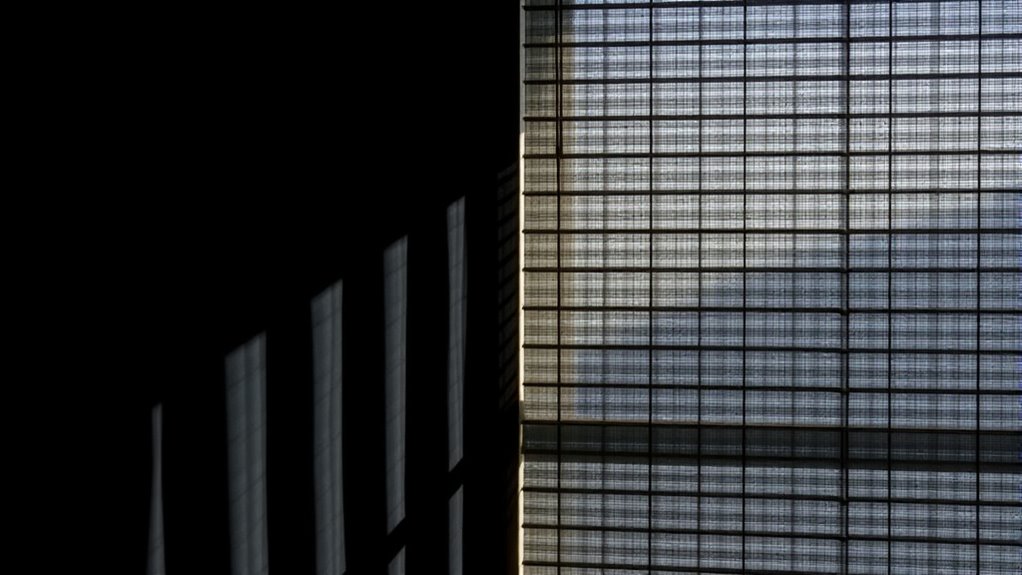
The material composition of blackout curtains and blinds directly influences how effectively they block light. For curtains, thick fabrics like polyester, suede, or multi-layered materials create a dense barrier that prevents most light from passing through. Heavier fabrics with special blackout linings enhance light blocking even further. Blinds, on the other hand, are typically made of wood, faux wood, aluminum, or PVC. These materials are rigid and can be designed with overlapping slats or tightly woven fabrics to reduce gaps. The density and finish of the material determine how much light leaks around the edges or through tiny gaps. Additionally, the material density plays a critical role in minimizing light seepage, especially around edges and seams. Choosing high-density materials can improve overall light blocking efficiency, making a significant difference in darkening a room. The fabric weave also impacts how much light can pass through, with tighter weaves providing better coverage. Moreover, the surface finish of the material, such as matte or semi-gloss, can influence the light reflectivity and further enhance light blocking. Ultimately, the composition affects not only light blocking but also durability, ease of maintenance, and aesthetic appeal, making it an essential factor when choosing between curtains and blinds.

LazBlinds No Drill Cordless Cellular Shades, 34" W x 64" H, White
- Installation Type: Inside mount only with adjustable fit
- No Tools Required: Easy to install without drilling or screws
- Suitable for Various Walls: Fits wood, tile, marble, and concrete walls
As an affiliate, we earn on qualifying purchases.
Design and Fit: The Role of Coverage in Light Prevention
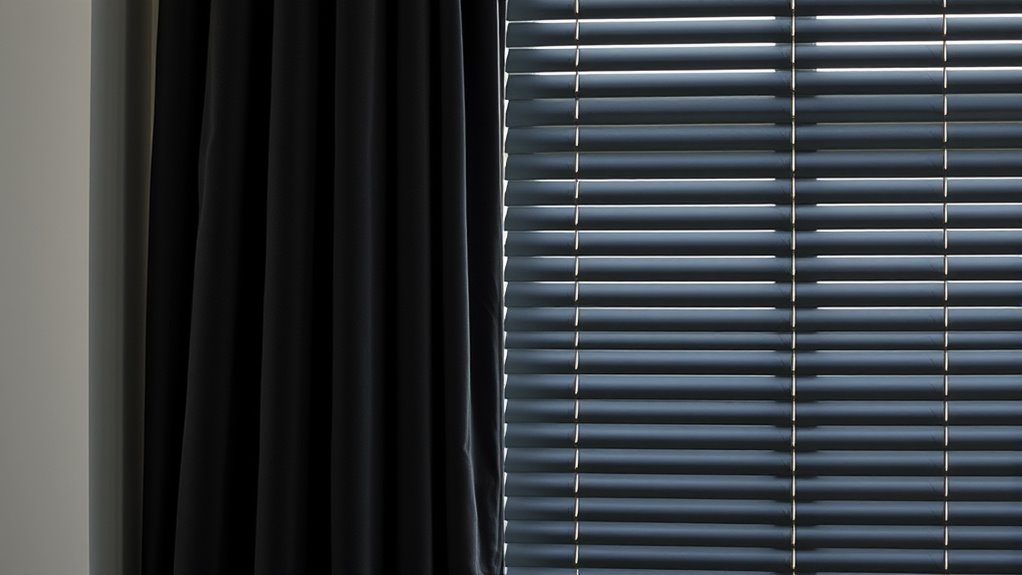
Proper coverage is essential for preventing light from seeping through gaps or edges. Well-fitted window coverings block more light by fitting snugly against your window frame. Curtains that hang past the edges or blinds that don’t fully extend leave gaps where light can escape. To maximize darkness, choose options designed specifically for full coverage. Here’s a quick comparison:
| Feature | Blackout Curtains | Blinds | Tips |
|---|---|---|---|
| Fit | Full-length, wall-to-wall coverage | Custom or adjustable fit | Ensure curtains are wide enough to cover edges |
| Overlap | Overlap window frame slightly | Extend fully beyond edges | Add side panels for extra coverage |
| Edge Sealing | Often lined or with seal strips | Sealed with proper installation | Seal gaps with weather stripping or liners |
| Coverage Ease | Easy to adjust for perfect fit | Adjustable slats or panels | Double check fit before installation |
Additionally, selecting window coverings with thermal insulation properties can help enhance light blocking by reducing gaps and drafts.

CHICOLOGY Cordless Cellular Shades, Room Darkening, Evening Mist, 46x48
- Room Darkening with R-3 Insulation: Blocks up to 90% of light and insulates
- Cordless & Screw-Mount Secure: Child-safe, no cords, easy to install
- Cost-Effective Custom Window Treatment: Affordable alternative to custom blinds
As an affiliate, we earn on qualifying purchases.
Thickness and Density of the Window Coverings
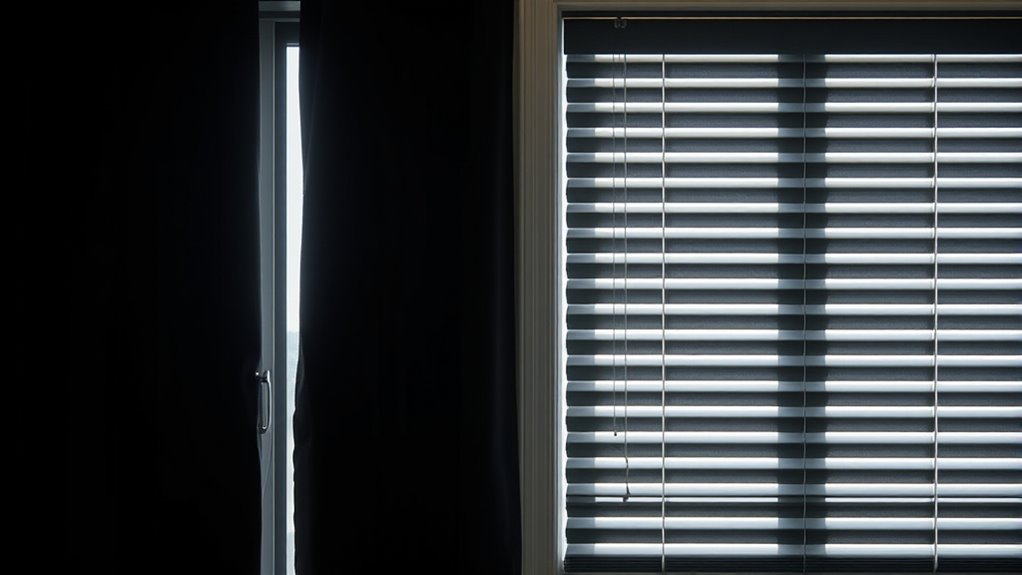
Thicker and denser window coverings are more effective at blocking out light because they prevent it from passing through the material itself. When you choose heavy fabrics or materials with tight weaves, fewer light particles slip through the gaps. Blackout curtains made from dense, layered fabrics are specifically designed to absorb and block light, providing near-total darkness. Blinds with thick slats or those made from substantial materials also reduce light infiltration, but generally aren’t as effective as blackout curtains in completely darkening a room. The key is the material’s weight and weave tightness, which minimize gaps and prevent light from leaking. Additionally, light-blocking properties of the fabric play a crucial role in achieving maximum darkness. The density of the fabric directly influences how much light is absorbed or reflected, making it a vital factor. For optimal results, consider the piercing and material composition of window coverings, as these aspects also impact their effectiveness. In addition, the manufacturing process can influence the overall quality and light-blocking capabilities of window coverings. To enhance their effectiveness, choosing window coverings with advanced light-blocking technology can provide an even better barrier against light. So, if you want maximum darkness, opt for window coverings with high thickness and density.
Installation Techniques and Their Effectiveness
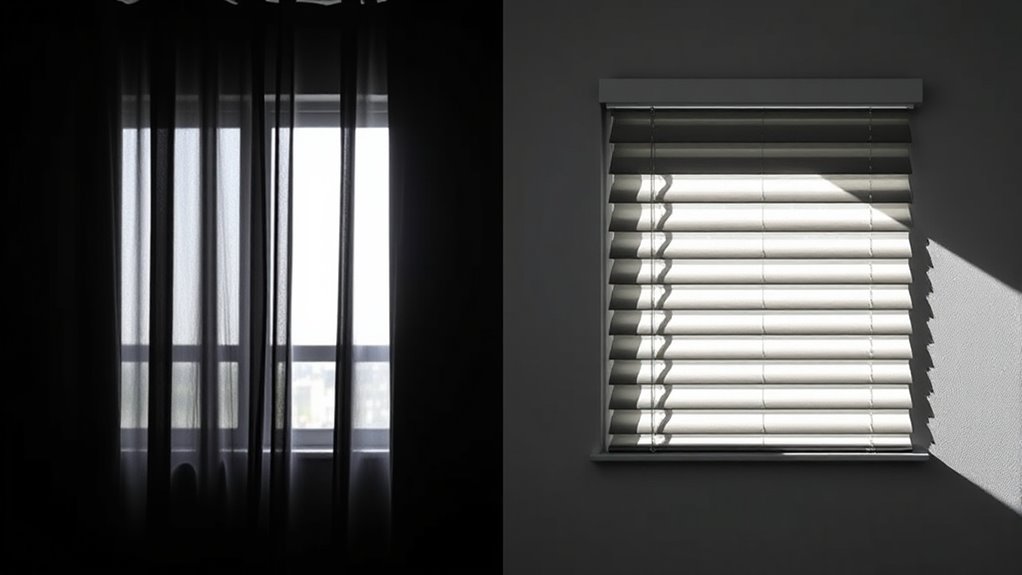
Installing window coverings correctly can considerably enhance their light-blocking effectiveness. For blackout curtains, ensure they hang close to the wall and reach the floor, minimizing gaps where light can seep through. Use sturdy curtain rods and secure the fabric tightly to prevent sagging. Proper alignment is key; even small misalignments can let in unwanted light. Additionally, consider sealing gaps with weatherstripping or blackout liners for extra coverage. For blinds, make sure they are mounted flush against the window frame, with no gaps around the edges. Adjust the slats tightly to block light from gaps. Precise window treatment installation is essential for optimal light control and energy efficiency. Properly installed window coverings also contribute to energy conservation by reducing heat transfer and drafts. Ensuring correct installation techniques can significantly improve overall effectiveness and durability, especially when combined with the use of multi-functional gear to optimize coverage.
Comparing Light Leakage in Blackout Curtains and Blinds
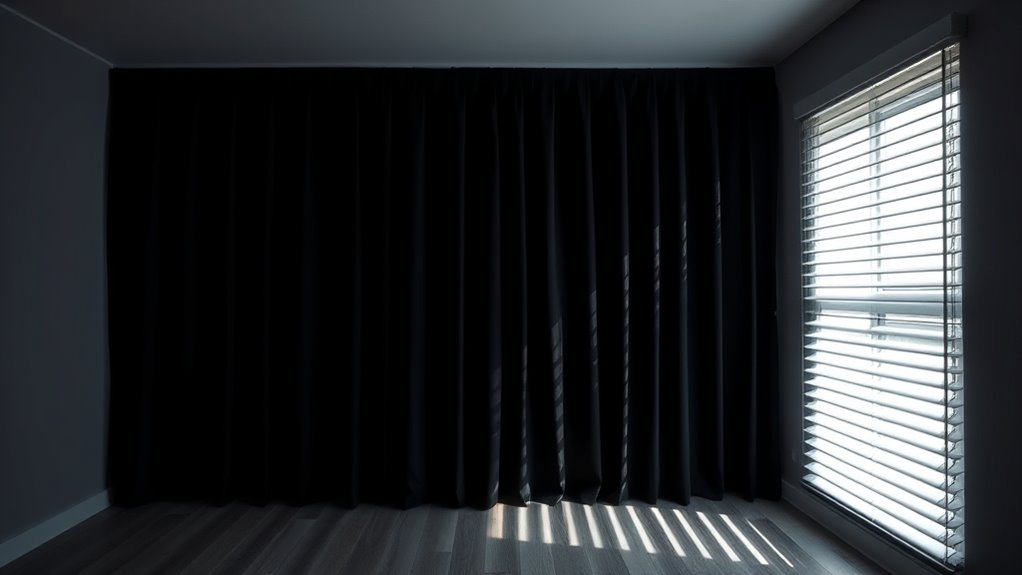
When it comes to blocking out light effectively, the amount of light leakage varies markedly between blackout curtains and blinds. Blackout curtains typically provide a more complete seal, especially if they are thick and properly hung, minimizing gaps that let light seep through. They are designed to absorb and block most light, creating a dark room. On the other hand, blinds, especially horizontal or vertical types, often have small gaps around the edges and between slats, allowing some light to leak in even when closed tightly. The material and fit play vital roles; tighter-fitting, thicker blinds reduce leakage but rarely match the blackout curtains’ ability to completely block out light. Additionally, the material quality of blackout curtains often surpasses that of blinds, further enhancing their light-blocking effectiveness. The installation method also influences how well light is blocked, as improper hanging can create gaps that compromise their effectiveness. Properly measuring window size is crucial to ensure a snug fit and maximize light blockage. Using window treatments designed specifically for light control can provide additional benefits in preventing light intrusion. For optimal results, choosing the right window coverings involves considering both light-blocking capabilities and ease of installation to suit your specific needs. Your choice depends on how much light intrusion you’re willing to accept.
Additional Features That Enhance Light Blocking
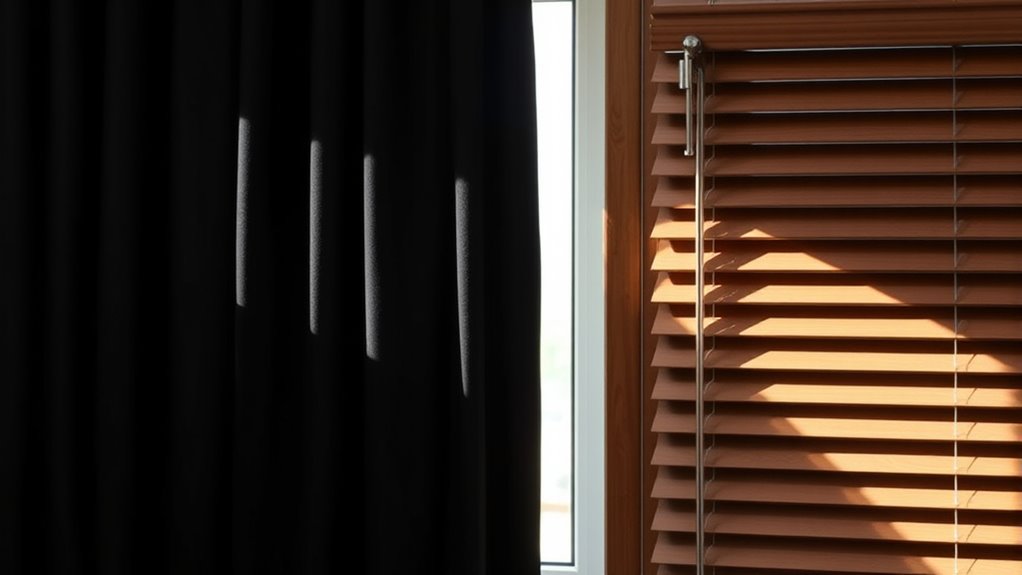
To maximize light blocking, consider additional features that enhance the effectiveness of your window coverings. Look for curtains with side and bottom tracks that seal tightly against the window frame, preventing light from slipping in around the edges. For blinds, choose versions with adjustable side channels or light-blocking inserts that fill gaps and improve coverage. Blackout linings or multi-layer fabrics add extra insulation and block more light. Some curtains and blinds come with magnetic or velcro strips along the edges, creating a snug fit. Installing window seals or weatherstripping around your window frame also minimizes light leaks. Additionally, load calculations can help you select the right size and type of window coverings for optimal light control. Properly installed light sealing techniques work together to create a more complete barrier, ensuring that unwanted light stays out and your room stays dark. Incorporating professional installation can further ensure that all gaps are properly sealed for maximum darkness. Ensuring the correct fabric choice can also significantly improve light blocking capabilities. Using high-quality window treatments designed specifically for blackout purposes can make a noticeable difference in achieving complete darkness.
Practical Considerations When Choosing Between Curtains and Blinds
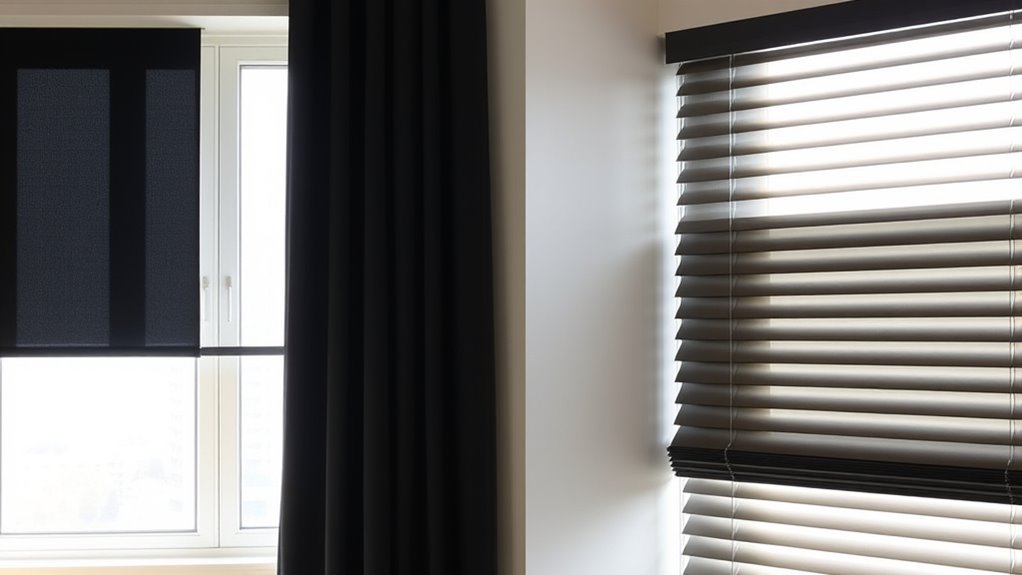
When choosing between curtains and blinds, consider how your room’s function influences your decision—do you need privacy, light control, or style? Think about window size and shape, since some options work better on large or oddly shaped openings. Also, factor in your budget and how much time you’re willing to spend on maintenance to find the best fit.
Room Functionality Needs
Choosing between blackout curtains and blinds depends heavily on your room’s primary functions and your practical needs. If you need complete darkness for a home theater or bedroom, blackout curtains are usually more effective, as they cover the entire window and block out light completely. For spaces requiring quick adjustments—like kitchens or offices—blinds offer better flexibility, allowing you to easily control light levels and airflow. Consider how often you’ll need to open or close your window coverings; blinds tend to be more convenient for frequent use. Also, think about noise reduction and insulation needs. Curtains, especially heavy ones, can help dampen sound and retain heat better, making them suitable for bedrooms or media rooms. Your room’s purpose should guide your choice for *most suitable* functionality.
Window Size Compatibility
Window size plays a significant role in determining whether curtains or blinds are the better fit for your space. If your windows are large or unusually shaped, curtains often provide a better coverage option, offering flexibility in length and fullness. They can be customized to fit wide or tall windows easily, creating a seamless look. For smaller or standard-sized windows, blinds tend to be more practical, fitting snugly without overwhelming the space. Blinds also come in compact designs that suit narrow or oddly shaped windows, providing a neat, tailored appearance. Consider the size and shape of your windows carefully, as the right choice guarantees effective light blocking and aesthetic harmony. Proper sizing ensures your window treatments look polished and perform their function efficiently.
Budget and Maintenance
Budget and maintenance are key factors to contemplate when deciding between curtains and blinds. Curtains often have a lower initial cost and are easy to replace or update. They may require occasional washing or dry cleaning, which adds some ongoing maintenance but is generally straightforward. Blinds, on the other hand, tend to be more expensive upfront, especially for high-quality blackout options. They may need regular dusting or cleaning with a damp cloth to keep them looking fresh.
| Aspect | Curtains | Blinds |
|---|---|---|
| Initial Cost | Usually lower | Usually higher |
| Maintenance | Washing or dry cleaning needed | Dusting and occasional cleaning |
Long-Term Performance and Maintenance of Light-Blocking Options
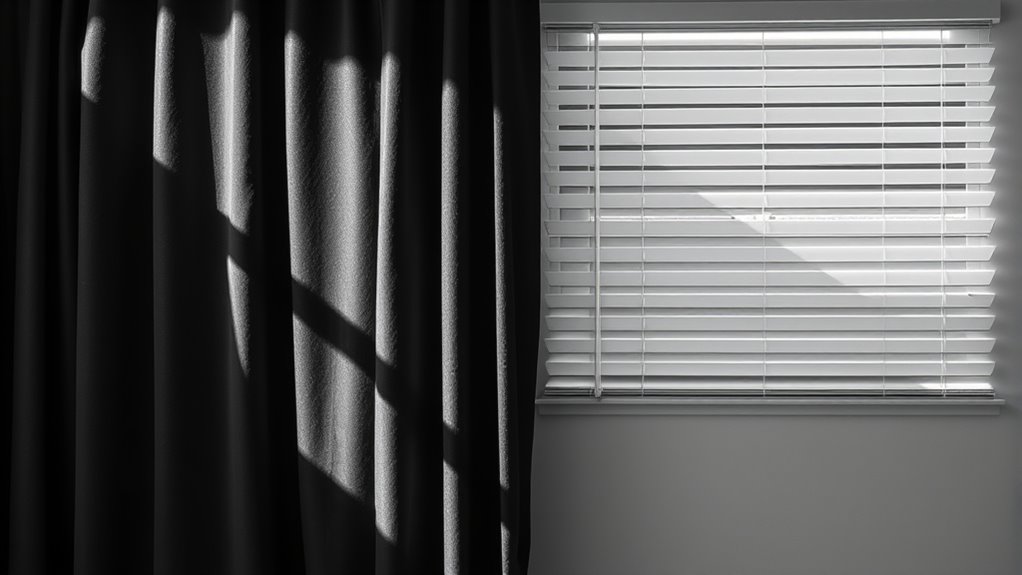
When considering long-term use, you need to think about how durable your light-blocking options are over time. Regular cleaning and upkeep can extend their lifespan and keep them looking fresh. Understanding these factors helps you choose the option that will perform well with minimal maintenance.
Durability Over Time
Over time, the durability of blackout curtains and blinds depends largely on their materials and how well you maintain them. High-quality fabrics and sturdy components tend to last longer, resisting wear and tear. To maximize their lifespan, consider these key factors:
- Material quality: Choose heavy-duty fabrics for curtains or durable aluminum for blinds to prevent fraying or warping.
- Usage habits: Avoid excessive pulling or folding that can weaken seams or mechanisms.
- Environmental exposure: Protect them from direct sunlight, moisture, and temperature fluctuations that can cause fading or damage.
Cleaning and Upkeep
Proper cleaning and maintenance are essential to guarantee your blackout curtains and blinds continue to perform effectively over time. Regularly dust your curtains and blinds to prevent buildup that can stain or damage the fabric and mechanisms. For curtains, check the manufacturer’s instructions—many are washable, so you can launder or dry clean them periodically. Blinds, especially metal or plastic, often require wiping with a damp cloth to remove dust and dirt. Avoid harsh chemicals that can degrade materials. For stubborn stains, use mild soap and water carefully. Keep moving parts functioning smoothly by lubricating hinges or joints when needed. Well-maintained blackout options not only look better but also block light more effectively, ensuring longevity and consistent performance.
Frequently Asked Questions
Can Blackout Curtains Improve Insulation and Reduce Noise?
Blackout curtains can definitely improve insulation and reduce noise. When you hang thick, heavy blackout curtains, they create a barrier that helps keep heat inside during winter and outside during summer, saving energy. They also absorb sound waves, making your room quieter by blocking out external noise. So, if you’re looking to boost comfort and privacy, blackout curtains are a smart choice for insulation and noise reduction.
Are There Eco-Friendly Options for Blackout Window Coverings?
Yes, eco-friendly options for blackout window coverings do exist, and they might surprise you. You can choose curtains made from sustainable fabrics like organic cotton or hemp, which block light effectively without harming the environment. Some brands also use recycled materials or natural dyes. These choices let you enjoy blackout benefits while reducing your ecological footprint, making your space both dark and eco-conscious.
How Do Blackout Curtains and Blinds Impact Indoor Air Quality?
Blackout curtains and blinds can affect your indoor air quality by trapping dust, allergens, and mold if not cleaned regularly. Curtains, especially fabric ones, may harbor more particles, while blinds made of metal or plastic are easier to wipe down. To maintain good air quality, you should clean your window coverings frequently and guarantee proper ventilation in your space. This helps prevent dust buildup and keeps your indoor air fresh.
What Are the Cost Differences Between Curtains and Blinds?
On average, blackout curtains cost between $50 and $200, while blinds range from $30 to $150. You might spend about 30% more on curtains due to their fabric and size, but they often last longer and provide better insulation. If you’re on a tight budget, blinds could be cheaper initially. However, consider long-term costs like maintenance and energy savings when choosing between them.
Can Blackout Window Treatments Be Customized for Unique Window Shapes?
Yes, blackout window treatments can be customized for unique window shapes. You can work with manufacturers or professionals to create tailored solutions that fit arches, bay windows, or irregular frames perfectly. They often use specialized mounting hardware and custom fabrics or materials to guarantee complete light blockage. By choosing custom options, you get a seamless, effective blackout effect regardless of your window’s shape or size.
Conclusion
So, whether you choose blackout curtains or blinds, remember that no solution is perfect. You might think curtains block more light, but a savvy installer can find a way to let the sun sneak in. Conversely, blinds might seem less effective until you pick the right material. In the end, it’s all about your patience—and your ability to accept that even the best blackout options can’t guarantee total darkness. Sleep tight, or so they say.
Flea & tick season Picks
flea and tick prevention
As an affiliate, we earn on qualifying purchases.