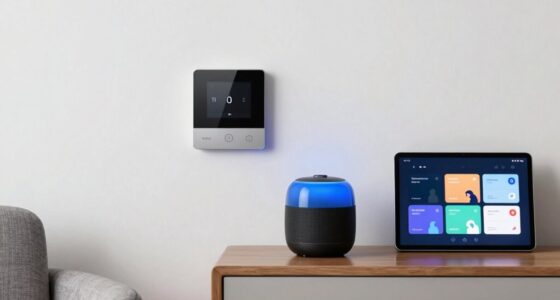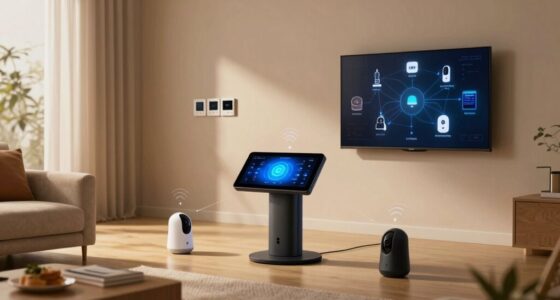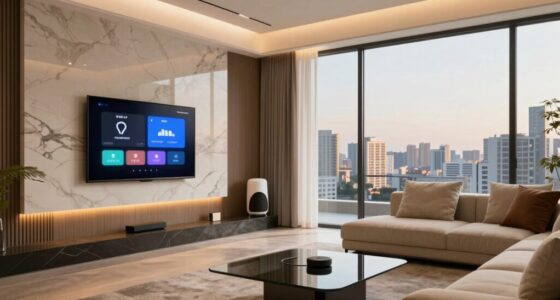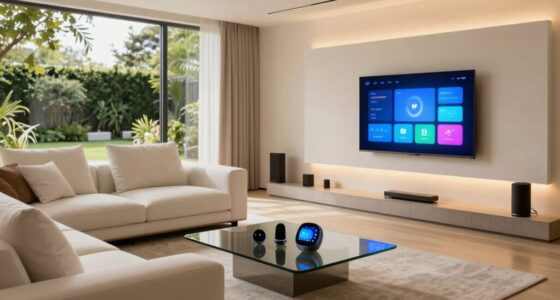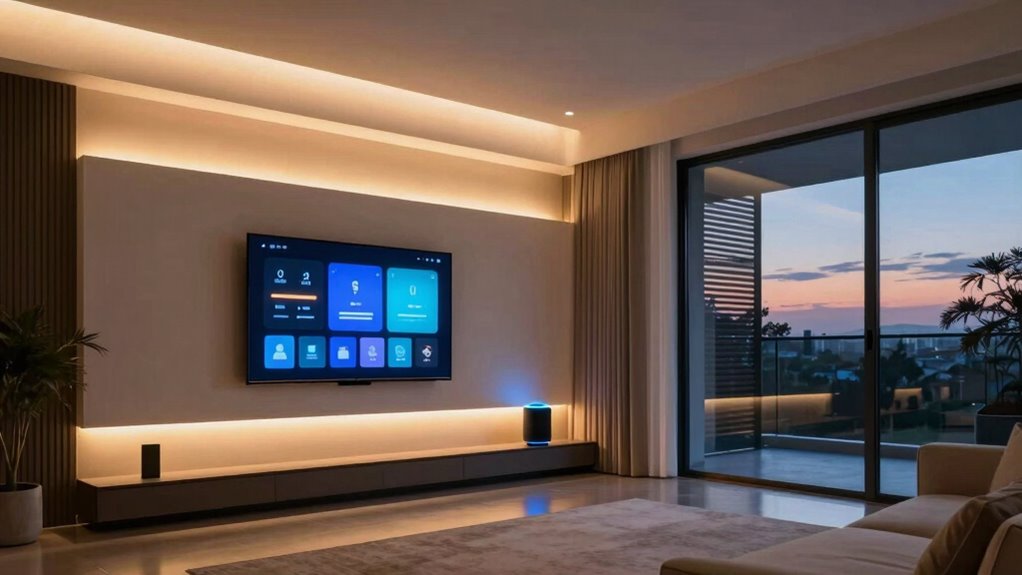

Lighting automation lets you create perfect moods for any activity, from cozy, warm lighting for relaxing to bright, cool tones for working. It also automates lights based on your presence and location, boosting security and saving energy. You can set routines that wake you gently or help you wind down. Plus, remote control and voice commands make adjustments easy, ensuring your home feels always just right. Keep exploring to discover more ways automation can enhance your space.
Key Takeaways
- Set mood and ambiance with adjustable lighting scenes for relaxation, focus, or social gatherings.
- Automate lighting based on presence, location, and security sensors for safety and convenience.
- Use gradual dimming and sunrise simulations to enhance wake-up routines and improve sleep hygiene.
- Optimize energy efficiency through motion sensors, daylight harvesting, and scheduled dimming controls.
- Integrate remote control, voice commands, and automation scenarios to customize and manage lighting effortlessly.
Setting Mood Lighting for Different Activities
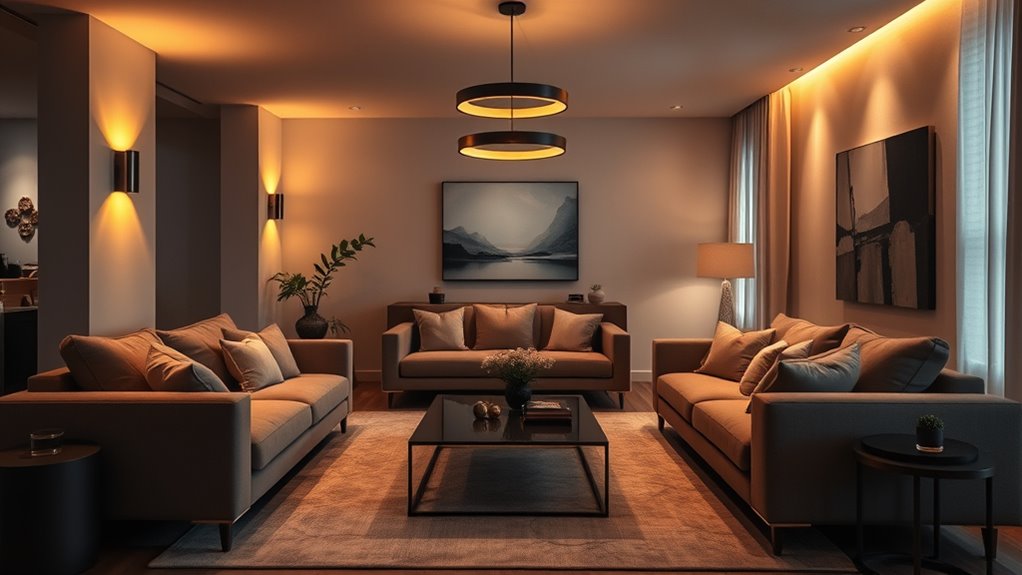
Have you ever wondered how the right lighting can transform a space for different activities? You can easily set the perfect mood by adjusting your lighting. For relaxing, choose warm, dim lights that create a cozy atmosphere. When you’re reading or working, brighter, cooler lights help improve focus and reduce eye strain. For social gatherings, opt for layered lighting—combine ambient, task, and accent lights to add depth and ambiance. Smart lighting allows you to switch between these settings effortlessly, even with a voice command or a tap on your phone. By customizing your lighting for each activity, you enhance comfort and functionality, making your space more inviting and suited to your needs. Proper lighting truly sets the tone for every moment, and integrating connected lighting systems ensures your lighting system complements your home’s design and atmosphere. Additionally, using automated lighting scenarios can streamline your experience, so your ideal setting is always ready when you need it. Incorporating smart-home integrations can further enhance your control and convenience, allowing you to manage all aspects of your lighting seamlessly. Using lighting automation not only simplifies your daily routines but also helps optimize energy use and maintain a consistent ambiance throughout your home.
Automating Lights Based on Presence and Location
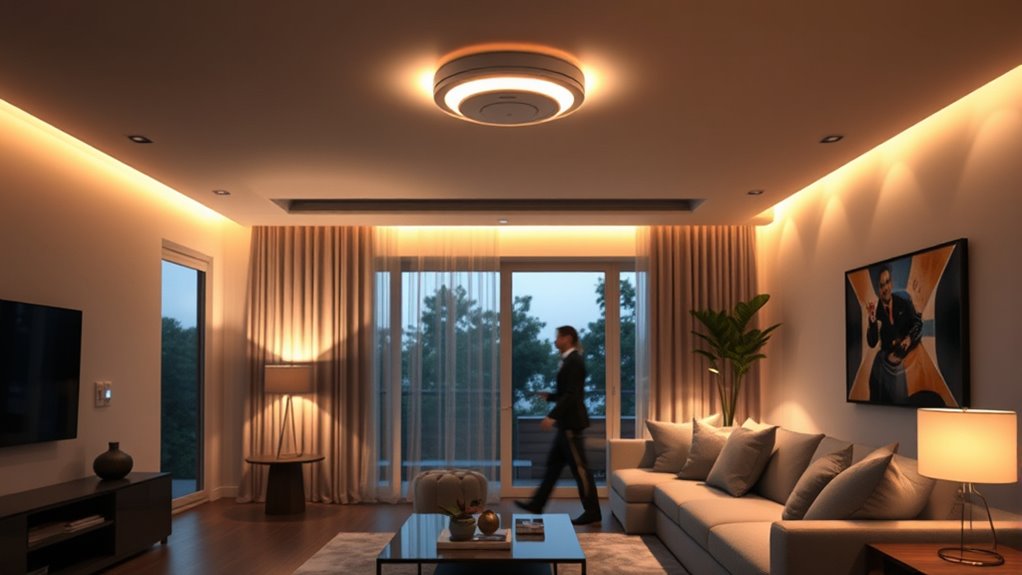
Adjusting your lighting based on activities is great, but adding automation takes it a step further. With presence and location-based lighting, your system detects when you enter or leave a room and adjusts accordingly. You don’t have to manually turn lights on or off; sensors identify your movement and trigger the appropriate lighting scene. You can customize zones to match your daily routines, ensuring lighting is always where you need it, precisely when you need it. Incorporating smart home technology can further enhance this system by integrating it with other devices for a more cohesive experience. It’s a seamless way to make your home smarter and more responsive, leveraging local automation to create a truly adaptive environment. Additionally, implementing sensor calibration ensures your system accurately detects presence, minimizing false triggers and optimizing performance. Regular feedback from system monitoring can help refine detection accuracy and improve user experience.
Creating Wake-Up and Bedtime Routines
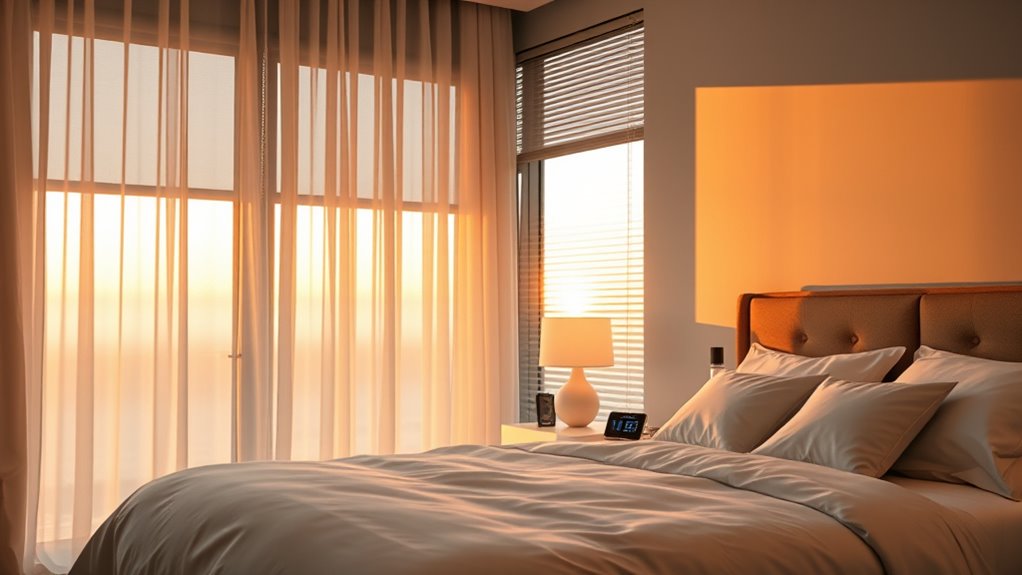
Setting up your wake-up and bedtime routines with smart lighting can make a big difference in your daily comfort. You can use gradual dimming techniques to ease into sleep and wake up more naturally. Personalized scenes guarantee your lights match your preferences, making your routines seamless and soothing. Incorporating smart home integration can further enhance these routines by coordinating lighting with other devices for a more cohesive experience. Additionally, lighting automation scenarios can be customized to adapt to your lifestyle, ensuring your home environment always feels welcoming and well-timed. To optimize these routines, understanding lighting control systems can help you select the most effective setup for your needs. Exploring adaptive lighting technology provides additional options to tailor your environment dynamically throughout the day.
Smart Wake-Up Light Settings
Creating effective wake-up and bedtime routines with your smart light involves customizing its settings to match your daily schedule. To set your wake-up light, choose a gradual brightness increase that aligns with your preferred wake-up time, mimicking sunrise to gently rouse you. You can also select a warm, soothing hue for the start of your morning, helping you feel more alert and refreshed. For bedtime, program the light to dim gradually, creating a calming environment that signals your body it’s time to relax. Adjust the brightness levels and colors to suit your preferences, ensuring progressions are smooth. These tailored settings help establish a consistent routine, making waking up and winding down more natural and less stressful. Incorporating timeless lighting principles can enhance the effectiveness of your routines and create a more comfortable environment. Understanding light color psychology can further optimize your routines by choosing hues that promote relaxation or alertness as needed. Additionally, considering lighting automation scenarios allows for seamless transitions that support your daily habits and improve overall well-being. Using dimming techniques can also improve the gradual change in light intensity, making your routines even more effective. Applying circadian lighting concepts can further optimize your routines by aligning your lighting patterns with your natural biological rhythms.
Gradual Dimming Techniques
Gradual fading enhances your sleep and wake-up routines by gently signaling your body to shift between alertness and relaxation. When you set your lights to fade gradually at bedtime, they slowly decrease brightness over a set period, helping you unwind without abrupt changes. This process encourages the production of melatonin, making it easier to fall asleep. Conversely, in the morning, gradually increasing light intensity simulates sunrise, gently waking you without sudden brightness. You can customize fading durations to match your routines, ensuring a seamless transition from activity to rest and vice versa. Smart lighting controls allow you to tailor these fading patterns precisely, creating a calming environment that promotes better sleep quality and a more natural awakening, making your automation setup feel intuitive and supportive of your daily rhythms. Incorporating gradual fading techniques can also enhance your overall well-being by aligning your lighting with your circadian rhythms, which are influenced by light exposure patterns. Understanding your body’s natural responses to light helps optimize these routines for improved sleep quality, and employing light automation can strengthen this synchronization.
Personalized Bedtime Scenes
Building personalized bedtime scenes allows you to tailor your lighting environment to support your sleep and wake-up routines. You can set gentle, warm lights to activate at a specific time, signaling it’s time to wind down. As the evening progresses, your lights can gradually dim or shift to softer hues, promoting relaxation and preparing your body for sleep. For mornings, create a scene that gradually brightens your space, simulating sunrise to wake you naturally. These scenes can be customized for each day or activity, ensuring your lighting aligns with your routine. With smart controls, activating your bedtime scene becomes effortless, helping you establish consistent sleep patterns and enhancing overall rest quality. Personalized scenes make your lighting both functional and soothing, improving your sleep environment. Incorporating lighting automation scenarios can optimize your routines and improve sleep hygiene.
Enhancing Security With Automated Lighting

Automated lighting systems substantially boost home security by deterring potential intruders and providing instant illumination when movement is detected. When sensors recognize motion near entrances or dark areas, lights turn on automatically, making it risky for intruders to linger unseen. You can set schedules to keep outdoor lights active during specific hours, creating a consistent security presence. By integrating cameras and alarms with your lighting, you enhance overall safety. Consider these options for a smarter security setup:
| Feature | Benefit | Example |
|---|---|---|
| Motion Detection | Activates lights upon movement | Porch lights turn on when someone approaches |
| Scheduled Lighting | Maintains consistent security presence | Lights turn on at dusk and off at dawn |
| Remote Control | Allows manual activation from anywhere | Turning on outdoor lights remotely |
Adjusting Lighting for Energy Efficiency
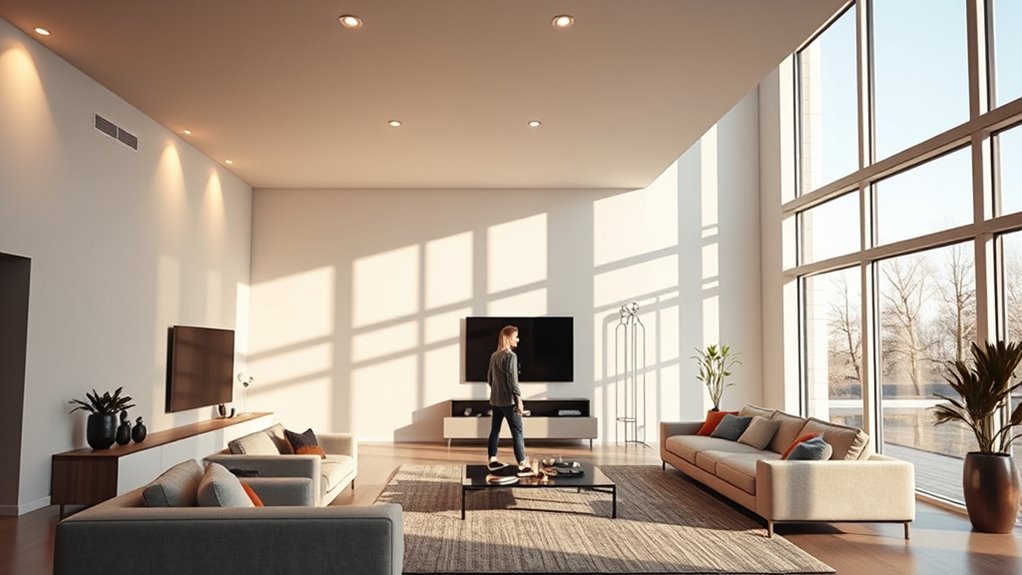
To maximize energy savings, you should adjust your lighting settings based on actual needs and usage patterns. Use motion sensors or occupancy detectors to turn lights off automatically when rooms are unoccupied, preventing unnecessary energy waste. Implement dimming features during the day or in well-lit areas to reduce power consumption without sacrificing comfort. Schedule lights to turn on only during specific hours, aligning with your daily routines. Consider integrating daylight harvesting systems that adjust indoor lighting based on natural light levels, ensuring you don’t over-illuminate spaces. Regularly review and update your automation settings to optimize efficiency. By tailoring your lighting to real occupancy and ambient conditions, you conserve energy, lower utility bills, and contribute to environmental sustainability.
Integrating Voice Control and Remote Access
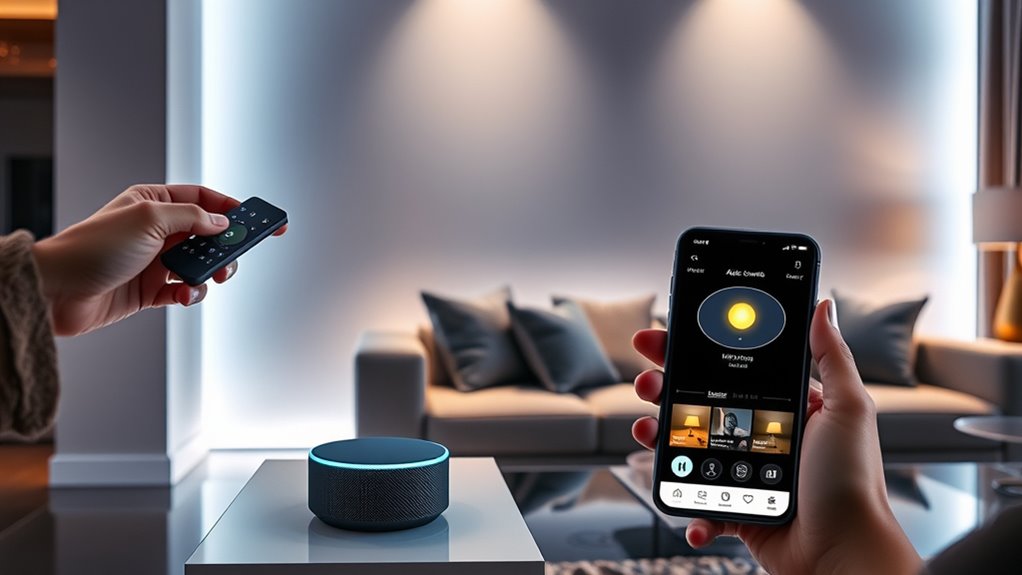
Enhancing your lighting system with voice control and remote access allows for greater convenience and flexibility. With voice commands, you can turn lights on or off, dim, or change colors effortlessly, even from across the room or outside your home. Remote access lets you control your lighting via smartphone apps, so you can adjust lighting schedules, monitor energy use, or turn lights off when you’re away. This integration increases security by simulating occupancy and improves daily routines. Setting up voice assistants like Alexa or Google Assistant makes commands simple and intuitive. Connecting your lights to a smart home hub ensures seamless operation across devices. Overall, these features give you more control, save time, and enhance your home’s comfort and security.
Frequently Asked Questions
How Do I Troubleshoot Connectivity Issues With My Lighting Automation System?
To troubleshoot connectivity issues, start by checking your Wi-Fi or Zigbee network to confirm it’s functioning properly. Make sure your lighting system’s hub or controller is powered on and within range. Restart your router and the lighting device if needed. Update the firmware or app, and verify your device’s settings. If problems persist, reset the device or contact support for further assistance.
What Are the Best Practices for Integrating Third-Party Smart Home Devices?
Ever wondered how to seamlessly integrate third-party smart home devices? Start by ensuring compatibility with your existing system and update firmware regularly. Use a unified app or hub to manage all devices easily. Keep Wi-Fi strong and secure, and follow manufacturer instructions carefully. Do you double-check device settings before connecting? Doing so helps prevent conflicts. With proper planning, your smart home becomes intuitive, reliable, and truly personalized.
Can I Customize Lighting Scenarios for Specific Holidays or Events?
Yes, you can customize lighting scenarios for specific holidays or events. You simply need to create new automation rules within your smart home app, setting triggers based on dates or special occasions. Adjust colors, brightness, and timing to match the theme or mood of the event. Once set up, your lighting will automatically adapt for holidays like Christmas, Halloween, or parties, making your home feel festive and personalized.
How Secure Is My Lighting Automation System Against Hacking Attempts?
Your lighting automation system’s security depends on its design and your practices. If you use strong passwords, keep firmware updated, and enable encryption, you’re making it harder for hackers to access your setup. Avoid connecting to unsecured Wi-Fi networks and regularly review device permissions. While no system is entirely hack-proof, these steps greatly reduce the risk, helping ensure your lighting remains safe and private.
What Is the Typical Setup Process for a New Lighting Automation System?
You start by choosing compatible smart bulbs, switches, or hubs, then connect them to your Wi-Fi network. Download the manufacturer’s app and create an account. Follow the setup instructions to pair devices, name each one, and organize them into groups or rooms. Configure automation rules, like schedules or motion detection, and test your system to guarantee everything works smoothly. Regular updates and secure passwords keep your system safe.
Conclusion
Think of your lighting setup as the conductor of your daily symphony, seamlessly guiding your mood, security, and energy use. By automating your lights for different activities, presence, and routines, you create a harmonious environment that adapts to your life. With voice control and remote access, you hold the baton in your hands, directing your home’s ambiance effortlessly. Embrace these lighting automation scenarios to turn your space into a well-orchestrated sanctuary.