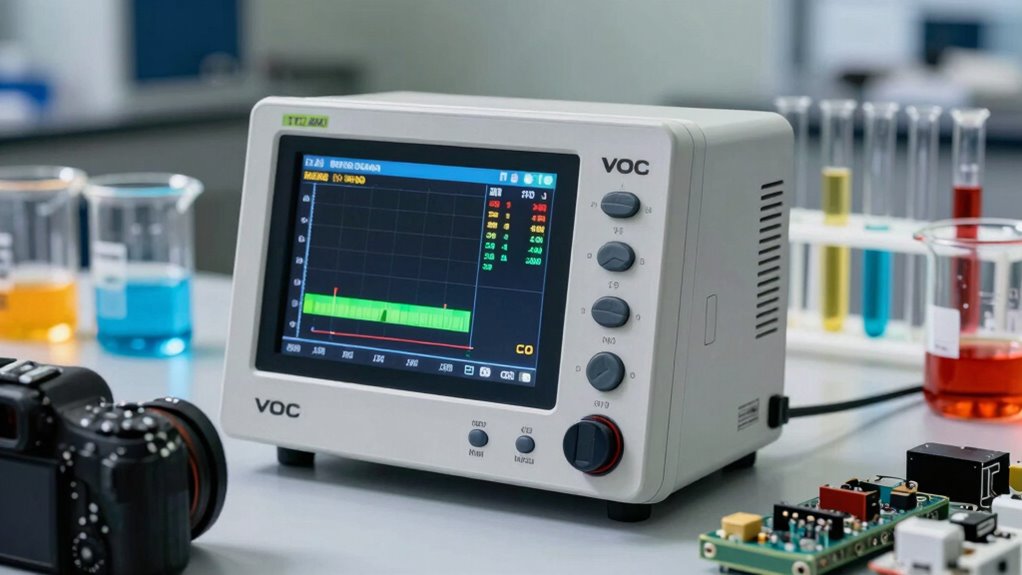

VOC monitors can give you a general idea of total VOC levels in your indoor environment, but they can’t identify specific harmful compounds or their exact concentrations. They tend to detect a broad range of organic vapors, yet often have limitations like sensitivity issues, environmental interference, and calibration drift. High readings don’t necessarily mean danger, so understanding these limits is essential. To get a clearer picture and avoid false assumptions, keep exploring what these devices can and can’t do.
Listen free for 30 days with Audible
Thousands of audiobooks and originals — cancel anytime.
As an affiliate, we earn on qualifying purchases.
Key Takeaways
- VOC monitors detect a broad range of organic compounds but cannot identify specific VOCs or their toxicity levels.
- These devices provide approximate total VOC levels, not precise measurements of individual or dangerous compounds.
- Environmental factors like humidity, temperature, and interfering chemicals can affect sensor accuracy.
- Regular calibration is essential to maintain measurement reliability, but sensors still produce estimates rather than exact data.
- High VOC readings do not necessarily indicate hazardous conditions; interpret results cautiously considering sensor limitations.
Have you ever wondered if your perception of volatile organic compounds (VOCs) matches the reality? Many people assume that VOC monitors provide a complete picture of air quality, but the truth is more complex. These devices are useful tools, yet their effectiveness hinges on proper sensor calibration. Without accurate calibration, the measurement accuracy of VOC monitors can drift over time, leading to unreliable readings. Sensor calibration involves adjusting the device so that its measurements align with known standards, ensuring that the data it produces truly reflects the VOC levels in your environment. If calibration isn’t maintained regularly, the monitor may underestimate or overestimate VOC concentrations, giving you a false sense of safety or alarm. This is why understanding the importance of calibration is essential when interpreting data from VOC monitors. Additionally, the measurement accuracy of these devices can be affected by environmental factors such as humidity, temperature, or the presence of other chemicals, which further underscores the need for proper calibration and cautious interpretation. Measurement accuracy is fundamental to making informed decisions based on these devices. While VOC sensors are designed to detect a broad range of organic compounds, their sensitivity varies depending on the technology used, such as photoionization detectors (PIDs) or metal-oxide sensors. Each type has limitations and can be affected by environmental factors like humidity, temperature, or the presence of other chemicals. These influences can skew readings, making it essential to recognize that no sensor is perfect. A highly calibrated sensor can minimize errors, but even then, the readings should be considered estimates rather than absolute values. Relying solely on a monitor’s displayed number without understanding its measurement accuracy can lead you astray. It’s also important to note what VOC monitors can’t measure accurately. They often cannot differentiate between specific compounds, providing only a general indication of total VOC levels. This means that a high reading doesn’t necessarily mean dangerous levels of a toxic compound; it could be from less harmful organic vapors. Additionally, many monitors have detection limits, so very low concentrations might go unnoticed, especially if the device isn’t sensitive enough. Understanding these limitations helps you interpret results more critically and avoid false reassurance or unnecessary alarm.

Calibrite Photo Kit w/Display Pro HL Monitor Calibration Colorimeter w/ColorChecker Passport Photo 2, Capture to Edit Color Workflow for RAW, Custom Camera Profiles, White Balance, Accurate Displays
- High Luminance Monitor Calibration: Supports modern display technologies including mini LED and OLED
- Includes ColorChecker Passport Photo 2: For accurate color reference and profiling
- Supports Custom Camera Profiles: Enhances RAW workflow with tailored profiles
As an affiliate, we earn on qualifying purchases.
As an affiliate, we earn on qualifying purchases.
Frequently Asked Questions
Can Monitors Detect All Types of Volatile Organic Compounds?
No, monitors can’t detect all types of volatile organic compounds. Their sensor sensitivity and detection limits vary, meaning some VOCs might fall below the monitor’s detection threshold. While advanced monitors can identify many common VOCs, they often struggle with trace levels or less reactive compounds. So, you’ll need to choose the right device based on the specific VOCs you’re monitoring and the sensitivity required to guarantee accurate detection.
How Accurate Are Monitor Readings Compared to Lab Analysis?
Monitor readings are generally less accurate than lab analysis due to sensor sensitivity limitations and potential interference. You should interpret data cautiously, understanding that monitors provide real-time estimates rather than precise measurements. Factors like environmental conditions can affect accuracy. While monitors give quick insights, lab analysis remains the gold standard for exact VOC levels. Always consider calibration and maintenance to improve the reliability of your monitor data.
Do Monitors Require Calibration for Reliable Measurements?
Yes, monitors require calibration to guarantee measurement reliability. Regular monitor calibration adjusts the device’s sensors and settings, helping you get accurate readings over time. Without calibration, measurements may drift or become inaccurate, leading to false data. To maintain trust in your monitor’s performance, schedule calibration checks periodically and follow the manufacturer’s instructions. This way, you can confidently rely on your monitor’s readings for precise and consistent results.
Can Monitors Measure Indoor and Outdoor VOC Levels Simultaneously?
Measuring indoor and outdoor VOC levels simultaneously is like trying to catch two butterflies at once, which many monitors can’t do accurately due to sensor limitations. Most devices are designed for specific environments and might struggle with differing conditions. You need to interpret the data carefully, understanding each monitor’s capabilities. Some advanced models can differentiate between indoor and outdoor VOCs, but always check their specs for reliable data interpretation.
What Are Common Limitations of Current VOC Monitoring Technology?
Current VOC monitoring technology has limitations mainly due to sensor sensitivity and data interpretation. You might find that sensors struggle to detect very low VOC concentrations accurately, leading to potential false positives or negatives. Additionally, interpreting the data can be complex because VOC levels fluctuate with environmental factors. These limitations mean you should be cautious when relying solely on these monitors for precise indoor or outdoor VOC assessments.

BREATHE Airmonitor Plus Indoor Air Quality Monitor with CO₂, PM & App
- Professional Indoor Air Monitoring: Tracks CO2, PM, VOC, Formaldehyde, Temp, Humidity
- Multi-Sensor Accuracy: Combines particle and gas sensors for detailed insights
- Real-Time Air Quality Data: Provides immediate updates on indoor air conditions
As an affiliate, we earn on qualifying purchases.
As an affiliate, we earn on qualifying purchases.
Conclusion
In the end, understanding what monitors can truly measure is like steering a vast ocean with a trusty compass—you’ll avoid the treacherous rocks of misconception and stay on course. While monitors provide valuable insights into VOC levels, they’re not crystal balls that reveal every detail. Recognize their limits, use them wisely, and remember that data is just one piece of the puzzle. With this knowledge, you can steer your efforts toward clearer, healthier air for all.
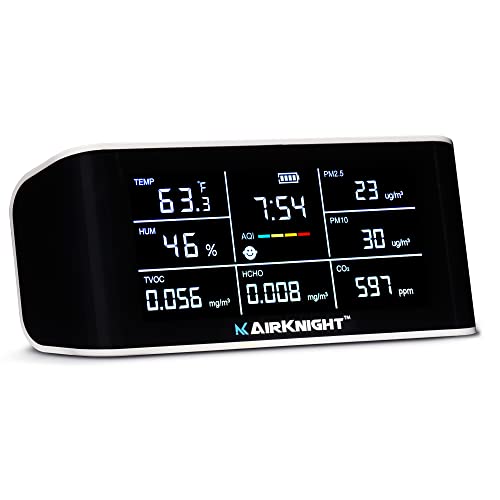
AirKnight Premium Indoor Air Quality Monitor Indoor & Air Quality Sensor. VOC Detector, CO2 Monitor, Formaldehyde Detector HCHO, AQI, PM2.5, PM10 Temperature Humidity Air AQI CO2 Meter
- Detects Multiple Air Pollutants: CO2, PM2.5, TVOC, Formaldehyde, more
- Real-Time Air Quality Display: Large LCD screen for easy reading
- User-Friendly Plug and Play: Includes instructional video and manual
As an affiliate, we earn on qualifying purchases.
As an affiliate, we earn on qualifying purchases.

TGS1820 Acetone Gas Sensor
- High sensitivity to acetone: Detects VOCs effectively
- Fast response time: Quick detection and monitoring
- Compact design: Easy integration into systems
As an affiliate, we earn on qualifying purchases.
As an affiliate, we earn on qualifying purchases.
Baby shower & registry season Picks
baby registry must-haves
As an affiliate, we earn on qualifying purchases.