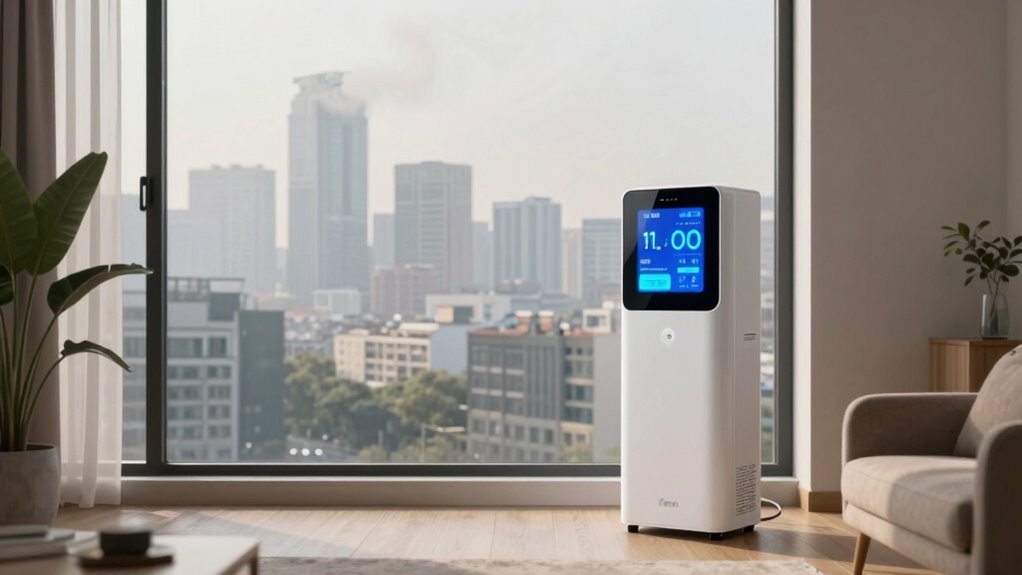

To translate outdoor smoke alerts into indoor decisions, first understand that the AQI gives an overall pollution level, while PM2.5 measures the concentration of fine particles. When AQI rises into unhealthy ranges, it’s wise to stay indoors and use air purifiers. Monitoring PM2.5 levels helps you evaluate actual particle exposure, guiding protective actions. If you want to learn how to interpret these measurements precisely, there’s more you can do to keep your indoor air safe.
Listen free for 30 days with Audible
Thousands of audiobooks and originals — cancel anytime.
As an affiliate, we earn on qualifying purchases.
Key Takeaways
- Use AQI to assess overall outdoor air quality and determine if outdoor activities are hazardous.
- Monitor PM2.5 levels during smoke events for detailed insights into fine particle concentrations.
- When AQI is unhealthy, keep windows and doors closed, and consider air purifiers to protect indoor air quality.
- High PM2.5 levels indicate the need for added indoor precautions, especially for sensitive groups.
- Regularly check real-time AQI and PM2.5 data to make timely decisions that minimize indoor exposure to outdoor smoke.
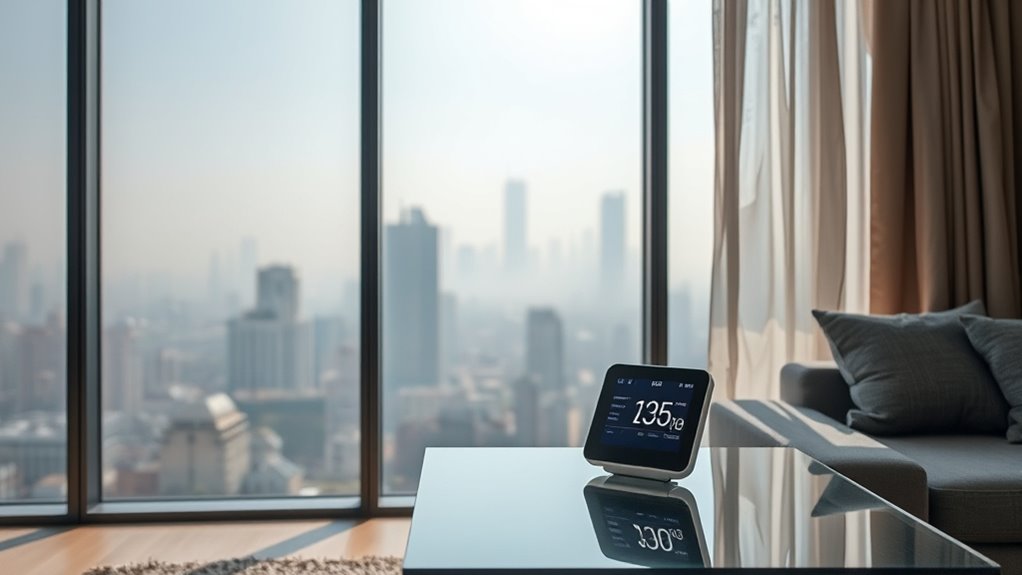
Air quality is a critical concern, and understanding the difference between AQI and PM2.5 helps you better grasp pollution levels around you. When outdoor air quality drops, it’s essential to interpret these measurements accurately to protect your health. The Air Quality Index (AQI) is a standardized tool that provides a clear, easy-to-understand snapshot of outdoor air pollution. It combines data from multiple pollutants, including PM2.5, ozone, carbon monoxide, sulfur dioxide, and nitrogen dioxide, into a single number. This number aligns with air quality standards set by regulatory agencies, offering a quick way to assess whether the air is safe or hazardous. Knowing how to read the AQI helps you decide when outdoor activities might pose health risks, especially if you belong to sensitive groups like children, the elderly, or those with respiratory conditions.
PM2.5, on the other hand, refers specifically to fine particulate matter that measures 2.5 micrometers or smaller. These tiny particles are particularly concerning because they can penetrate deep into your lungs and even enter your bloodstream, causing serious health problems over time. Unlike the AQI, which offers an overall pollution level, PM2.5 provides detailed information about a specific pollutant that’s often the primary concern during smoke alerts or pollution spikes. Monitoring PM2.5 levels allows for precise health risk assessments, giving you a clearer picture of the potential dangers posed by outdoor smoke or pollution events. When PM2.5 levels rise, it signals that the air contains a high concentration of fine particles, prompting you to take protective measures indoors.
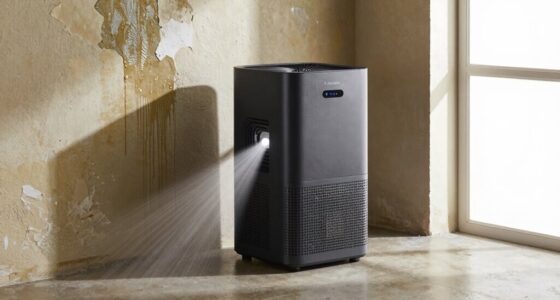
Translating outdoor smoke alerts into indoor decisions requires understanding both AQI and PM2.5 data. If the AQI indicates unhealthy levels, or if PM2.5 concentrations are high, you should consider staying indoors, especially if you’re in a vulnerable category. Using air purifiers equipped with HEPA filters can substantially reduce indoor PM2.5 levels, but it’s also wise to keep windows and doors closed during high pollution periods. Regularly checking local air quality reports helps you make timely decisions, minimizing your exposure to harmful particles. Additionally, home air filtration systems can be an effective way to reduce indoor pollution during outdoor smoke events. Remember, the goal is to maintain a safe indoor environment by interpreting pollution data accurately and taking appropriate action based on your health risk assessment. By understanding how AQI and PM2.5 relate, you can better navigate outdoor smoke alerts and protect your health effectively.

Clorox Medium Room Air Purifiers for Bedroom Home, True HEPA Filter
- High-Efficiency Filtration: Captures 99.97% allergens and 99.9% viruses
- 3-Stage 360° Air Purification: Filters allergens, particles, odors, and VOCs
- Suitable for Medium Rooms: Cleans 225 sq. ft. 5x/hour, larger spaces
As an affiliate, we earn on qualifying purchases.
Frequently Asked Questions
How Often Should I Check Indoor Air Quality During Smoke Events?
During smoke events, you should check your indoor air quality monitoring devices at least once every hour. This helps you stay informed about indoor air safety and identify when pollutant levels rise. If your monitor shows poor air quality, increase ventilation or use air purifiers. Regular checks guarantee you’re acting promptly to protect yourself and your family from harmful smoke exposure indoors.
Can Air Purifiers Effectively Reduce Indoor PM2.5 Levels?
Air purifiers can effectively reduce indoor PM2.5 levels when you choose models with high air purifier efficiency. Look for units with HEPA filters, which excel at indoor air filtration by capturing small particles like smoke. To maximize their benefits, run your air purifier continuously during smoke events, keep doors and windows closed, and maintain filters regularly. This helps create a healthier indoor environment despite outdoor smoke pollution.
Are There Specific Indoor Plants That Improve Air Quality From Smoke?
Imagine a family breathing easier during wildfire season thanks to air purifying plants like snake plants. These indoor greenery options can help improve air quality by absorbing some pollutants from smoke. While no plant fully filters out PM2.5, incorporating air purifying plants into your home provides a natural boost to indoor air quality, making your space feel fresher and healthier during smoky days.
How Does Humidity Influence Indoor PM2.5 Levels During Outdoor Smoke?
Humidity impact plays a significant role in indoor PM2.5 levels during outdoor smoke events. When indoor moisture is high, particles can cling to water droplets, causing PM2.5 to settle more quickly, but it can also make indoor air feel stuffy. Conversely, low humidity can cause particles to stay airborne longer, increasing inhalation risks. Keep your indoor humidity balanced between 40-60% to help manage PM2.5 levels effectively.
What Are the Health Risks of Long-Term Indoor Smoke Exposure?
Long-term indoor smoke exposure can greatly increase your risk of chronic respiratory issues, with studies showing a 20% rise in respiratory problems among those exposed regularly. Indoor pollution from smoke irritates your lungs and weakens your immune system over time. This ongoing exposure can lead to asthma, bronchitis, and other health problems. Protect yourself by improving ventilation and reducing indoor smoke sources to minimize these risks and safeguard your health.
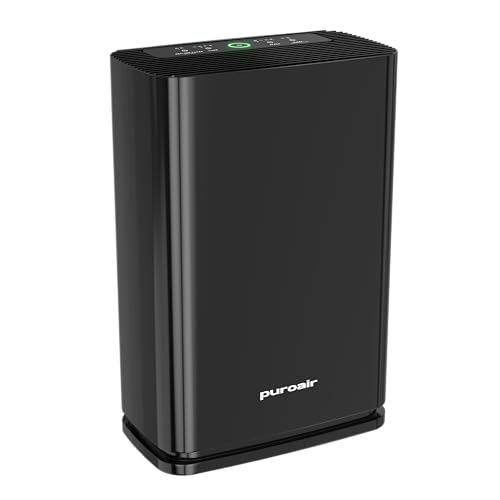
PuroAir 400 HEPA Air Purifier Large Room Air Cleaner up to 2,000 Ft² - HEPA CarbonTech Filter up to 500X Stronger - Air Quality Sensor, Auto & Quiet Sleep Modes - Air Purifiers for Large Rooms
- Cleans Large Rooms Quickly: Cleans up to 2,000 sq ft in an hour
- Advanced 3-Layer Filtration: Pre-filter, HEPA, and activated carbon
- Filters 99.9% of Pollutants: Removes dust, pollen, smoke, pet dander, VOCs
As an affiliate, we earn on qualifying purchases.
Conclusion
Understanding the difference between AQI and PM2.5 helps you make smarter indoor decisions during smoke alerts. Think of AQI as a weather forecast for air quality—it’s your quick snapshot—while PM2.5 measures tiny particles that can sneak inside. When the air outside gets smoky, treat your indoor space like a fortress, sealing out the haze. Staying informed is like having a trusted map—guiding you safely through smoky times.

Shark Clean Sense Air Purifier Max, HP201, White
- Powerful Purification: Four-speed fan for rapid air cleaning
- Dual Air Filtration: HEPA filter removes allergens, toxins, smoke
- Exceeds HEPA Standards: Captures 99.98% of tiny particles
As an affiliate, we earn on qualifying purchases.

VEWIOR H13 True HEPA Air Purifiers for Home up to 1200 sq.ft.
- Three-Stage Filtration System: Pre-filter, HEPA, activated carbon filters
- Air Quality Monitoring: Displays PM2.5 levels on control panel
- Effective Room Coverage: Purifies 1200 sq.ft. room 5 times per hour
As an affiliate, we earn on qualifying purchases.
Back to school Picks
back to school
As an affiliate, we earn on qualifying purchases.